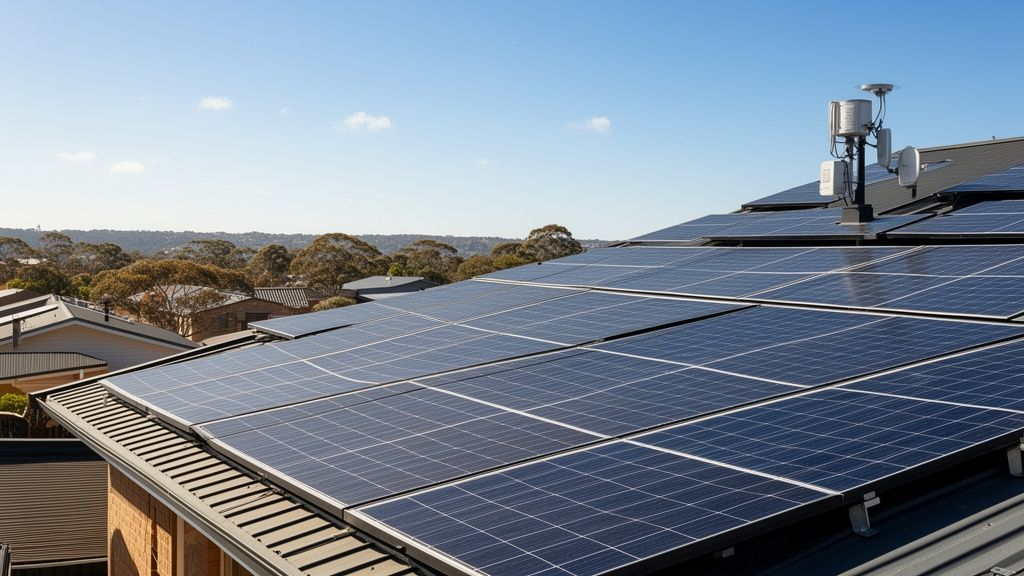
TL;DR: Australia is undergoing a rapid transition toward renewable energy, driven by soaring household adoption, next-generation hybrid inverter technologies, and massive price declines in the wholesale electricity market. As electricity generation accounted for just over one-third of all greenhouse gas emissions in Australia in 2025, adopting rooftop solar and scalable battery systems represents a highly effective way for homeowners to lower their cost of living, reduce emissions, and secure long-term energy independence.
The Transition of the Australian Energy Grid
Australia’s energy sector is experiencing a monumental shift away from traditional, high-emissions fossil fuels toward cleaner, more sustainable energy options. For years, electricity generation has been a primary contributor to the nation's environmental footprint, accounting for just over one-third of all greenhouse gas emissions in Australia in 2025. In response to this environmental impact, both consumers and businesses are increasingly turning to renewable energy technology as a primary source of power.
Recent data published by the Australian Energy Market Operator (AEMO) in their Quarterly Energy Dynamics report highlights the profound structural changes currently occurring in the National Electricity Market (NEM). Between the months of April and June, renewable energy sources supplied over 42% of the country's total power needs, marking a substantial increase from the 37% share recorded during the same period year-on-year. This surge in clean energy generation has directly displaced more expensive and polluting fossil fuel sources. Specifically, coal-fired generation dropped by 5%, while gas-fired generation plummeted by a massive 30%, reaching its lowest second-quarter average since 2003.
According to David McElrea, Chief Executive of the Smart Energy Council, this clean energy boom is directly lowering the overall cost of living for Australian households. McElrea states, "The trend is clear, the more clean energy generation and less polluting fossil we have in the grid is not only slashing power bills, it's securing system reliability and cutting emissions." This dynamic demonstrates that rooftop solar systems and utility-scale installations are successfully doing the heavy lifting in modernising Australia's electricity network.
Next-Generation Solar and Battery Hardware
To capitalise on this shifting landscape, homeowners must understand the advanced hardware that drives modern domestic solar installations. In the past, residential setups were limited to simple panels and standard string inverters. Today, manufacturers have introduced highly sophisticated hybrid systems capable of managing complex loads, oversizing capacities, and integrating battery storage seamlessly.
Among the premium options available on the Australian market is the next-generation GoodWe technology, featuring a 10kW single-phase inverter (model GW9.999KEHA-G20 / GW8.3-BAT-D-G21) that offers 200% oversizing capabilities and 4 Maximum Power Point Trackers (MPPTs) to ensure maximum solar performance even under challenging shade conditions. Additionally, brands like Neovolt are revolutionising home energy by offering comprehensive single-phase and 3-phase hybrid inverter and battery ranges, including models such as the BW-INV-SPB5K, BW-INV-SPH5K, and the BW-BAT series.
Other notable market entries include the Walara Series, specifically the G4P, which is designed and engineered by a local, experienced team based in South Australia. Built to perform and backed to last, the G4P represents the ultimate evolution in manufacturing within the Australian renewable energy industry. For those prioritising extreme durability, systems featuring "Red Centre Resilience" provide intelligent ultra-rigid structures combined with high-efficiency 16BB (16 Busbar) solar cells, which are engineered to withstand Australia’s harsh climatic conditions.
Storage solutions have also become far more versatile. The DEYE ESS Storage Solution offers a reliable photovoltaic and storage inverter package backed by a 10-year warranty, utilizing safe LiFePO4 (Lithium Iron Phosphate) cell types. Similarly, the SAJ HS2 Series offers a three-phase hybrid all-in-one solution designed to revolutionise domestic energy storage, while the AlphaESS AC Coupled Solutions (such as the G3-S5 and G3-B5) provide seamless, scalable, and efficient energy storage for both residential and commercial applications.
Understanding Off-Grid and Hybrid Configurations
When exploring renewable options, consumers can choose between standard grid-connected systems, hybrid systems, or fully off-grid configurations, which are also known as Stand-Alone Power Systems (SAPS). Each approach has distinct operational characteristics and benefits:


- Grid-Connected Systems: These systems generate solar power during the day to feed household appliances. Any excess energy generated is exported back to the main electricity grid, often yielding a solar feed-in tariff from the energy retailer.
- Hybrid Systems: These setups incorporate both solar panels and a dedicated battery storage system. A hybrid inverter manages the flow of electricity between the solar array, the home appliances, the battery, and the utility grid, ensuring optimal self-consumption.
- Off-Grid / Stand-Alone Power Systems (SAPS): These work by generating power from solar panels, which then charge a dedicated battery bank. The power is stored as Direct Current (D.C.) in the battery system, and the household's wall outlets use Alternating Current (A.C.) converted via an inverter, allowing complete independence from the traditional utility network.
System Customisation and Industry Certifications
Because every home has different energy requirements, a one-size-fits-all approach to solar design rarely yields the best performance. Homeowners are encouraged to build their own customised solar packages to perfectly match their energy consumption habits. By designing a custom system, you can tailor your setup to either supplement your existing energy plan (reducing how much you pay to the retailer) or fully switch to solar as your primary source of household energy.
When selecting a solar installer or provider, seeking industry-approved certifications is crucial for consumer protection and system reliability. Homeowners should look for providers certified as Clean Energy Council (CEC) Approved Solar Retailers or Installers. In addition, certifications such as being a New Energy Tech Approved Solar Seller (NETCC Approved) offer peace of mind, proving that the business adheres to strict consumer protection standards and provides high-quality renewable technology.
To make these systems more accessible, competitive financing plans exist. For example, some established providers offer "Install Now, Pay Later" finance options, with plans starting from as little as $1.99 per day, allowing families to transition to clean energy without facing high, immediate upfront costs.
Economic Benefits and Tariff Dynamics
Integrating solar panels with battery storage is one of the most effective ways to lower overall cost of living. During daylight hours, your solar system supplies free energy directly to your home's appliances. However, once the sun sets, a solar system without storage forces you to draw power from the main grid at peak retail rates.
As explained by Meredith O’Brien, Head of Energy at Compare the Market, installing a solar battery allows households to store excess daytime solar energy and use it when the sun isn’t shining. This significantly reduces grid reliance and lowers overall power bills.
Furthermore, the economic dynamics of exporting solar power are shifting due to the introduction of two-way solar charging. Under these new tariff structures, energy retailers may actually charge consumers for exporting excess electricity to the grid during off-peak, high-supply daytime hours. Conversely, the system incentivises consumers to export the solar energy stored in their home batteries during peak demand periods when the grid requires support. This makes smart load control and battery capacity management vital tools for maximizing financial returns on your solar investment.
Key Takeaways
- Substantial Grid Shift: Renewables supplied over 42% of Australia's power in Q2, contributing to a 47% reduction in average wholesale electricity prices.
- Technological Versatility: Modern hybrid systems from brands like GoodWe, Neovolt, DEYE, SAJ, and AlphaESS offer scalable, high-efficiency options including 16BB cells and advanced LiFePO4 battery chemistry.
- Storage Is Key: Solar batteries allow households to capture free daytime energy for night-time use, avoiding peak retail rates and avoiding negative export fees associated with two-way solar charging.
- Consumer Protection: Ensure your solar provider is NETCC Approved and a Clean Energy Council Approved Solar Retailer to guarantee high quality and strict adherence to consumer standards.
Related Guides
- Queensland's Historic Winter Energy Milestone: Solar and Battery Storage Records Shattered
- Understanding Next-Generation Solar Battery Storage: Technology Options and Two-Way Charging Dynamics
- The Economics of Renewable Energy in Australia: Wholesale Power Prices, Feed-In Tariffs, and Smart Investment
- Selecting and Customising a Residential Solar System: From Inverters to Clean Energy Council Certification


