TL;DR: On Sunday, July 26, 2026, Queensland established a historic milestone in Australia's clean energy transition by setting a new winter record for solar penetration. Large-scale utility solar supplied a record 38.2% of the state's total electricity consumption during the morning, while battery storage reached unprecedented volume limits later in the afternoon, illustrating the shifting operating conditions of the modern grid.
Breaking Down the July 26 Winter Record
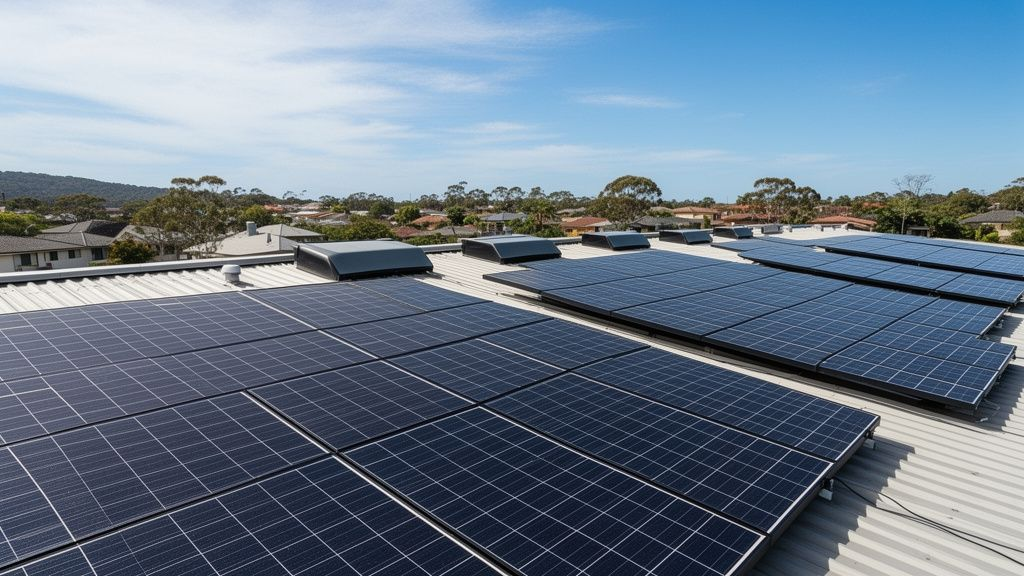
While high solar generation is traditionally associated with hot summer months or clear spring days, Queensland has demonstrated that winter is becoming an equally vital period for renewable output. According to data analyzed by Geoff Eldridge from Global Power Energy, large-scale utility solar supplied an unprecedented 38.2% of Queensland's electricity consumption at 9:10am on Sunday, July 26, 2026.
This winter milestone successfully surpassed the state's previous solar share record of 37.1%, which had been set earlier in the year on April 25. The timing of this achievement is highly notable because it occurred in the middle of winter, a season characterized by shorter daylight hours and lower sun angles. During this record-breaking morning, utility-scale solar installations generated an output of approximately 3,097 megawatts (MW) against a total state grid consumption of around 8,112 MW.
Later in the day, the solar output peaked at 3.1 MW, delivering Queensland's 10th-highest daily maximum on record. This performance underscores how rapidly daytime operating conditions are evolving in Australia's Sunshine State, showing that solar energy is capable of providing substantial baseload support even during cooler months.
Batteries and Storage Capture the Daytime Surplus
As daytime solar generation surged to record highs, Queensland's energy infrastructure capitalised on the excess power through a major increase in battery storage activity. On the exact same day, July 26, 2026, the state set a new record for battery-stored energy, which reached 5,646 megawatt-hours (MWh) at 3:30pm.
During this peak period of clean energy production, the maximum Renewable Energy Source (RES) share—which represents the combined total of renewable generation and storage discharge output—reached just under 76% of Queensland's total electricity consumption, marking the 16th-highest RES share rank recorded in the state.


However, this surge in midday generation did not come without operational challenges. Eldridge noted that there was visible curtailment on the grid, referencing the presence of a "restrained Pink Dolphin Curve" surfacing at the top of the generation charts. While big utility batteries and pumped-hydro storage systems successfully absorbed a large portion of the daytime surplus, the grid curtailment indicates that storage capacity must continue to expand to keep pace with growing solar capacity.
This expansion is already underway elsewhere in the National Electricity Market (NEM). For instance, the second stage of the massive Supernode battery project has officially commenced operations, making it the largest operating battery on Australia's main grid, with subsequent stages planned to support growing storage demands.
Addressing the Cost of Transition and Generation Scenarios
While the rapid expansion of solar and storage records has been highly praised by clean energy advocates, it has also sparked debate regarding the overall cost and direction of Australia's energy transition. Some stakeholders have recently pointed to the Commonwealth Scientific and Industrial Research Organisation's (CSIRO) "No Progress" GenCost scenario to argue that the transition to net-zero carbon emissions should be abandoned.
However, analysis by energy researchers like Johanna Bowyer highlights that the GenCost "No Progress" scenario contains seven distinct caveats and one major spoiler: it does not represent the cheapest economic path forward for the country. In contrast, the current trajectory of integrating low-cost solar panels and scalable utility batteries remains the most economically viable method to lower long-term power bills and secure system reliability.
Key Takeaways
- Record Solar Penetration: Queensland utility-scale solar supplied a record-breaking 38.2% of state electricity consumption at 9:10am on July 26, 2026.
- Unprecedented Storage Volume: Battery-stored energy in Queensland hit a historic high of 5,646 MWh at 3:30pm on the same winter day.
- 76% Clean Energy Share: The maximum RES share (renewable generation plus storage output) peaked at just under 76% of Queensland's consumption.
- Curtailment Management: Midday solar generation faced grid curtailment, highlighting the critical need for projects like the newly operational Supernode battery stage to absorb surplus energy.