TL;DR: The Clean Energy Regulator's Small-scale Renewable Energy Scheme (SRES) inspection program, established for solar batteries installed from 1 July 2025, serves to audit systems, monitor technical compliance, and work alongside state regulators to enforce high safety standards across Australia.
Overview of the SRES Inspections Program
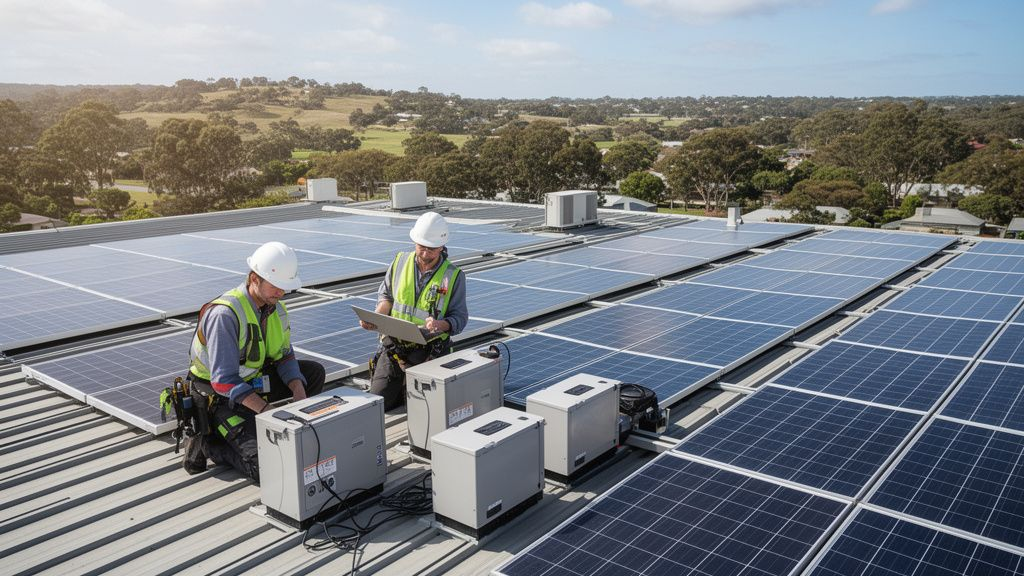
The Clean Energy Regulator (CER) administers the Small-scale Renewable Energy Scheme (SRES) inspections program, focusing on solar batteries installed on or after 1 July 2025. This specialized program is designed to complement existing regulatory frameworks, working in tandem with electrical safety laws and state or territory compliance bodies. Rather than replacing these entities, the program leverages a cross-agency approach to identify and address installer compliance issues and safety concerns.
Under this scheme, the Clean Energy Regulator randomly selects completed battery installations from the small-scale technology certificate (STC) applications it receives. Additionally, the CER conducts targeted inspections on installations performed by contractors who have previously been flagged for non-compliance. By auditing a statistically significant sample of all solar battery installations claiming STCs, the regulator monitors inspection results closely to detect systemic safety and technical compliance issues early.
Battery Installation Milestones and Safety Priorities
As of 30 June 2026, data reveals a rapid acceleration of storage capacity across the country. Since the inception of the program on 1 July 2025, a total of 478,176 solar batteries have been installed throughout Australia. This massive rollout equates to 13.58 GWh of installed storage capacity spread across households and businesses, representing a major driver for Australia's national target of 82% renewable energy by 2030.
When certifying a solar battery installation as compliant under the SRES, installers explicitly confirm that the system is safe and fully eligible under the scheme. If an inspection uncovers an unsafe or non-compliant installation, the CER takes direct enforcement action. These compliance powers can result in installers being completely removed and declared ineligible to participate in the SRES.
To manage this expanding market, the Clean Energy Regulator utilizes established systems that have successfully supported more than 4.2 million rooftop solar installations across Australia. The regulator works to improve compliance standards through:
- Providing ongoing and targeted education for installers in collaboration with Solar Accreditation Australia (SAA), utilizing the latest physical inspection findings.
- Working closely with state and territory electrical safety regulators to continuously update and refine the inspections program to address emerging technical risks.
- Taking direct enforcement action, including barring non-compliant installers from SRES participation if their work repeatedly fails requirements.
Product Standards and Recalls
To qualify for STCs under the SRES, installed equipment must be listed on the Clean Energy Council’s (CEC) approved product lists and meet all relevant Australian standards. Ongoing product safety is monitored by the CEC, state and territory regulators, and the Australian Competition and Consumer Commission (ACCC), which oversees the national electrical product recall system.
As of 17 December 2025, one SRES-eligible product has been subject to a recall. On 19 November 2025, the ACCC issued a voluntary electrical safety recall for Sigenergy single-phase 8 kW, 10 kW, and 12 kW energy controllers. Sigenergy committed to rectifying the safety issue and has worked directly with the ACCC, state and territory electrical safety regulators, and installation contractors to resolve the affected units.
Inspection Auditing Results by Jurisdiction
As of 30 June 2026, the SRES inspections program completed 3,425 physical solar battery audits on systems that received small-scale technology certificates. A geographical breakdown of these completed inspections shows how resources have been deployed across key jurisdictions, including:
- 926 inspections completed in New South Wales (NSW)
- 718 inspections completed in Victoria
Because the program is in its early stages, early auditing results are matching the performance trends observed in independent state and territory battery inspection programs. The Clean Energy Regulator notes that it is still too early to draw definitive long-term conclusions regarding overall technical compliance rates under the national scheme.
Key Takeaways
- Comprehensive Auditing: The CER randomly selects battery systems claiming STCs, alongside targeted audits of non-compliant installers, to inspect a statistically significant sample of Australian installations.
- Significant Scale: Between 1 July 2025 and 30 June 2026, 478,176 batteries (13.58 GWh of capacity) were installed, supporting Australia's 82% renewable energy target for 2030.
- Strict SRES Eligibility: All components must be on the CEC approved product list, and systems must be installed by accredited professionals to maintain eligibility.
- Enforcement Action: Installers face exclusion from the SRES if audits reveal repeated technical or safety non-compliance, with regulatory oversight supported by Solar Accreditation Australia and the ACCC.