TL;DR: Significant changes are coming to renewable energy incentives for Australian agricultural businesses. Starting 1 October 2026, the federal solar rebate limit under the Small-scale Renewable Energy Scheme (SRES) is expected to increase from 100 kW to 1 MW, reducing eligible system costs by an estimated 20% (yielding savings of around $68,000 on a 250 kW system and $136,000 on a 500 kW system). Meanwhile, New South Wales is updating its Peak Demand Reduction Scheme (PDRS) from 1 September 2026 to support commercial batteries up to 30 MWh, covering 20% to 50% of installed costs when paired with solar. Navigating these updates requires understanding state-specific feed-in tariff rules, checking battery program limits, and working with designers accredited by Solar Accreditation Australia.
Understanding the Federal Solar Rebate Expansion (SRES)
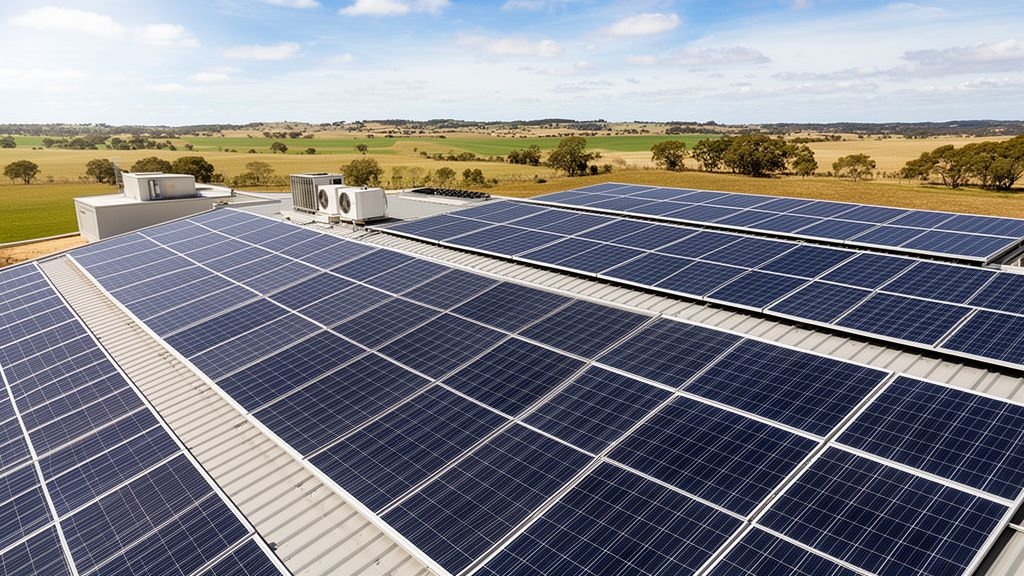
The financial landscape of agricultural solar installations is set for a major transformation. From 1 October 2026, the federal solar rebate is expected to become available for solar systems up to 1 megawatt (MW) in size. This is a massive expansion from the current 100 kilowatt (kW) limit, opening up significant opportunities for large-scale agricultural enterprises that require heavy machinery, processing, and large-scale irrigation systems.
This rebate is delivered through the Small-scale Renewable Energy Scheme (SRES), the same scheme used to administer the Cheaper Home Batteries Program (CHBP). Rather than receiving the rebate directly, customers get the discount upfront through their solar installer, who claims the government certificates on their behalf.
The government estimates the rebate will reduce the cost of eligible systems by around 20 per cent. This could mean a saving of about $68,000 on a 250 kW system and $136,000 on a 500 kW system. These figures highlight the significant capital expenditure reduction available to farms transitioning to high-capacity solar systems under the expanded SRES rules.
Solar Generation Potential and On-Farm Applications
To help farms gauge the productivity of their prospective investments, localized solar output models provide valuable context. As a guide, a 100 kW solar system at Cecil Plains could generate around 150,000 kWh of electricity each year if it is north-facing.
Actual generation will vary depending on the location, system design, and orientation, and will generally be higher in summer because of the longer daylight hours. There are many practical applications for these high-capacity solar installations on modern agricultural properties, particularly cotton farms. Key eligible infrastructures and operations include:
- Large machinery sheds: Providing large roof spaces that are ideal for mounting extensive solar arrays.
- Irrigation pumping operations: Offsetting the massive electrical demand associated with pulling and moving water.
- Packing and processing facilities: Helping reduce the high operational costs of processing machinery.
- Farm workshops and warehouses: Powering tools, heating, cooling, and daily maintenance activities.
- Grain storage infrastructure: Assisting with the continuous energy demands of storage and aeration systems.
State-by-State Feed-in Tariff Variations: Queensland vs. New South Wales
Once a solar system is active, managing the excess power it generates is critical for maximizing ROI. However, there is a stark difference in how regional networks handle excess exported solar power between Queensland and New South Wales:
Queensland Grid Export Policies
In Queensland, large Ergon customers and those with inverter capacity above 30 kW are not eligible for the regional feed-in tariff. Sites may still be permitted to export, subject to network approval, but will not be paid for exported energy. The tariff eligibility does not apply to south-east Queensland where there is full retail competition. South-east Queensland businesses and those with non-Ergon retailers in regional Queensland should check with their retailers about whether they would earn a feed-in tariff.
New South Wales Grid Export Policies
In New South Wales, the availability of feed-in tariffs depends entirely on the retailer. Note, however, that even where farms are able to earn a feed-in tariff, the future value of solar exports may reduce as more farms and businesses install solar systems. NSW operators must check directly with their chosen retailer to assess available options.


Storage Incentives: The NSW Peak Demand Reduction Scheme (PDRS)
Battery storage is an increasingly vital addition to agricultural solar systems, helping farms store excess daytime power for use during peak times. In New South Wales, the Peak Demand Reduction Scheme (PDRS) is changing to incentivise larger batteries from 1 September 2026.
Farms in New South Wales have access to the PDRS, which introduces two new incentives for commercial batteries up to 30 MWh. Industry estimates put the incentive at 20 to 50 per cent of the installed cost.
To access these PDRS incentives, farms must adhere to strict installation rules:
- Both incentives require new solar of at least a quarter of the battery's usable capacity.
- Installing the battery within 90 days of the solar attracts a higher certificate rate.
- Because the order and precise timing of the two installations materially affects the final value of the certificates, farms must meticulously plan their construction timelines.
The Cheaper Home Batteries Program (CHBP) and Solar Pairing
For smaller batteries or specific farm residences, the Cheaper Home Batteries Program (CHBP) provides another viable pathway. Farms could consider installing a solar and battery system with Small-scale Technology Certificates available for both, subject to eligibility.
Batteries up to 100 kWh are eligible for the Cheaper Home Batteries Program (CHBP), worth around 30 per cent on the first 50 kWh of usable capacity. Current eligibility requires pairing with a solar system of no more than 100 kW.
Note that whether that limit changes alongside the new 1 MW solar system cap has not been confirmed, and should be checked before contracts are signed. Farms in NSW should also check whether they can access both the PDRS and the CHBP concurrently.
Key Step-by-Step Implementation Guide for Farms
To ensure that you receive the most accurate performance estimates and secure the correct solar and battery system, you must follow these technical next steps:
- Work with Accredited Professionals: Ask for quotes from designers accredited by Solar Accreditation Australia. The system should then be installed by an accredited installer to guarantee safety and rebate compliance.
- Utilize Detailed Interval Data: The system design and quote should be based on up to two years of interval data, or bills if no interval data is available.
- Request 'Typical Day' Curves: The design and quote must include 'Typical Day' curves showing how the system will perform on key days throughout the year (e.g., high irrigation and no irrigation for both summer and winter).
- Consult Your Network Service Provider: Prior to signing any contracts or making financial commitments, check with your Network Service Provider whether there are likely to be any constraints placed on the system before committing.
Key Takeaways
- Rebate Limit Increase: Expected from 1 October 2026, expanding SRES solar system rebate limits from 100 kW up to 1 MW.
- Expected Savings: A 20 per cent cost reduction, translating to around $68,000 on a 250 kW system and $136,000 on a 500 kW system.
- Solar Yield Guide: A north-facing 100 kW system at Cecil Plains can generate roughly 150,000 kWh annually, though actual outputs vary by site.
- Queensland Exclusions: Regional Ergon customers and systems over 30 kW capacity are not eligible for regional feed-in tariffs.
- NSW Battery Incentives: Starting 1 September 2026, two new PDRS incentives support batteries up to 30 MWh, covering 20% to 50% of the installed cost when paired with solar (at least 25% of battery capacity) within a 90-day window.
- Cheaper Home Batteries Program: Offers approximately 30% savings on the first 50 kWh of usable capacity for batteries up to 100 kWh, currently limited to systems paired with up to 100 kW solar.
- Technical Verification: System design must use up to two years of interval data or utility bills, including 'Typical Day' curves for summer/winter and irrigation loads, and be verified by a Solar Accreditation Australia designer.