TL;DR: On August 31, South Australia's rooftop solar systems met 99.9% of the state's total electricity demand, driving operational demand to a record winter low of just 2 megawatts. This historic event coincided with negative wholesale electricity prices across all regions of the National Electricity Market (NEM) and highlights the rapidly evolving dynamics of balancing high renewable generation with battery storage, hydro, gas, and transmission.
The Milestone of August 31: Rooftop Solar Approaches Total Self-Sufficiency
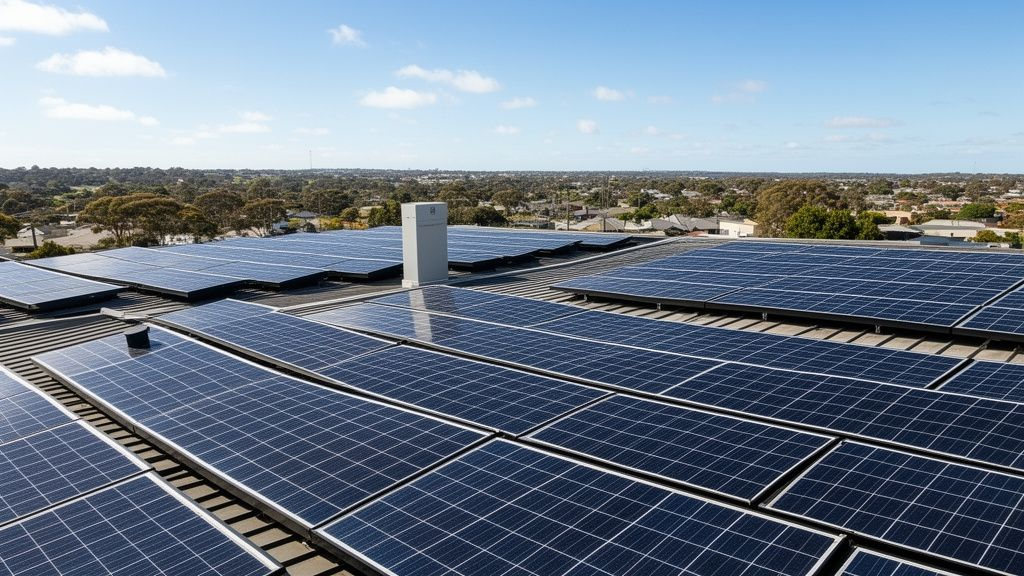
On August 31, the power system of South Australia achieved an extraordinary milestone in the history of the global energy transition. At exactly 1:30 pm, the state's vast fleet of distributed rooftop solar panels generated enough electricity to meet 99.9 percent of South Australia's total electricity demand. This surge in localized generation drastically reduced the state's operational demand—the electricity required from the centralized grid-scale generation system—to a mere two megawatts (MW). This near-zero operational demand highlights how distributed energy resources, specifically rooftop solar panels installed on homes and businesses, are actively transforming the state's power system and reshaping how energy is generated, distributed, and consumed.
This event occurred during a time of high rooftop solar output, which, when combined with lower seasonal demand, created an abundance of clean energy flowing directly from rooftops into the local grid. Because rooftop solar systems generate electricity right at the point of consumption, they minimize the need for electricity to be drawn from large, centralized power stations. When these systems operate at peak capacity, as they did during the afternoon hours of late August, the reliance on grid-scale generation falls away almost entirely. In this specific instance, the 99.9 percent supply rate demonstrates that the state was just a fraction of a percent away from being entirely powered by residential and commercial rooftop solar installations, leaving the broader grid-scale operational demand at a negligible two megawatts.
A New Winter Low for the National Electricity Market
The dramatic drop in operational demand in South Australia was not an isolated phenomenon; it coincided with broader, record-breaking trends across the entire Australian National Electricity Market (NEM). At the very same moment, 1:30 pm on August 31, the NEM recorded a new winter minimum operational demand record of 11,992 MW. This landmark achievement eclipsed the previous winter minimum operational demand record of 12,144 MW, which had been established in August 2024.
During this period of historic lows, rooftop solar systems across all regions connected to the NEM played a dominant role in powering the grid. Specifically, rooftop solar supplied close to 54 percent of the underlying total electricity demand across the entire NEM at that time. With more than half of the multi-state grid's demand being met by distributed rooftop systems, the dynamics of electricity supply were completely upended.
This massive influx of solar energy had immediate and profound effects on energy markets. Because the supply of electricity vastly exceeded the immediate consumption needs of homes and businesses, wholesale electricity prices plummeted into negative territory across every single region of the National Electricity Market. Negative pricing occurs when there is an overabundance of generation relative to demand, creating a financial signal for generators to reduce output or for storage systems to absorb the excess energy.
The Role of Storage: Batteries Capitalize on Negative Pricing
The occurrence of negative wholesale electricity prices across all NEM regions during this high solar output event served as a major catalyst for battery storage systems. As prices dipped below zero, storage operators saw a prime opportunity to charge their assets. The combination of high rooftop solar generation and negative market prices drove above-average battery charging rates.


According to data from the Australian Energy Market Operator (AEMO), battery charging accounted for approximately 10.5 percent of the total electricity generation across the system during this period. By absorbing excess solar power when prices were negative, these battery storage assets helped to stabilize the network. This energy can then be discharged back into the grid later in the day, demonstrating the vital role that storage systems play in managing a highly renewable power grid.
Lessons in Abundance: South Australia's March 8 Over-Generation Event
While the August 31 event represents a monumental achievement for winter generation, South Australia has long been recognized as a global leader in the rooftop solar revolution. Indeed, the state has previously crossed the threshold where rooftop solar generation actually exceeded the entirety of the state's electricity needs.
On March 8 of this year, South Australia's rooftop solar systems generated more electricity than the state consumed during specific periods of the day. At the peak of this event, at 1:35 pm, rooftop solar output reached an astonishing 108.5 percent of South Australia's total electricity demand. This meant that rooftop solar was generating more electricity than the entire state could utilize internally.
However, such immense abundance also presents substantial system management and balancing challenges. During the March 8 event, the sheer volume of rooftop solar generation necessitated significant interventions. Because the grid must constantly balance supply and demand to prevent instability, a massive amount of utility-scale renewable generation had to be curtailed. Specifically, 500 MW of potential utility-scale solar output and 295 MW of wind generation were curtailed to keep the power system balanced and secure.
Managing an Increasingly Dynamic Electricity System
The Australian Energy Market Operator has emphasized that these recurring milestones and records are clear indicators of a rapidly transitioning and increasingly dynamic electricity system. As rooftop solar installations continue to grow, the traditional model of steady, predictable centralized generation is being replaced by a highly variable system that requires real-time balancing.
According to AEMO, the modern power system relies on a diverse mix of technologies working in tandem to maintain stability during periods of extreme renewable output. High levels of renewable generation, such as those witnessed in South Australia, are being increasingly balanced in real time by a combination of battery storage, hydro power, and gas generation. These balancing technologies are further supported by a robust transmission network that allows excess electricity to be moved to areas of higher demand or storage facilities.
As the grid continues to evolve, the integration of distributed energy resources like rooftop solar remains a central focus for market operators. The ability of South Australia's grid to successfully navigate periods where rooftop solar meets 99.9 percent of its demand is a testament to the sophistication of modern grid management, the integration of energy storage, and the ongoing transformation of the Australian energy landscape.
Key Takeaways
- 99.9% Demand Met: On August 31 at 1:30 pm, rooftop solar met 99.9% of South Australia's total electricity demand, reducing grid-scale operational demand to just 2 MW.
- NEM Winter Record: The National Electricity Market set a new winter minimum operational demand low of 11,992 MW at the same time, beating the August 2024 record of 12,144 MW.
- Negative Pricing: Rooftop solar supplied nearly 54% of underlying NEM demand, driving wholesale electricity prices negative in every single region of the National Electricity Market.
- Battery Storage Charging: High solar output and negative prices resulted in above-average battery charging, accounting for approximately 10.5% of total generation.
- Previous 108.5% Peak: Earlier in the year, on March 8 at 1:35 pm, South Australia's rooftop solar met 108.5% of the state's total electricity demand, requiring the curtailment of 500 MW of utility-scale solar and 295 MW of wind generation.
- Dynamic Grid Balancing: AEMO highlighted that the dynamic power system is successfully balanced in real time using a combination of batteries, hydro, gas, and transmission networks.