TL;DR: Integrating solar and EV charging infrastructure into new Australian apartment developments from the outset is crucial for long-term financial viability, environmental sustainability, and meeting future resident demands. It significantly reduces upfront costs compared to retrofits, enhances property value, and positions developments at the forefront of the green energy transition.
Why is incorporating solar and EV charging from day one a sound financial decision for developers and residents?
Building new apartment developments with solar and EV charging infrastructure from the ground up offers significant economic advantages for both developers and future residents, making it a shrewd financial play. The cost of integrating these features during initial construction is substantially lower than expensive retrofitting projects down the track, which can involve complex structural modifications, rewiring, and navigating existing tenancy agreements. Developers can easily factor the necessary conduits, wiring, and panel supports into the building design, avoiding the hefty price tag and disruption of post-completion upgrades. For residents, it translates to immediate savings on energy bills, with solar power directly offsetting common area electricity consumption and potentially individual unit usage via strata-managed schemes.
How do upfront costs compare to future retrofits for solar and EV infrastructure?
The difference in cost between initial integration and retrofitting can be staggering. Installing the basic electrical conduits and structural reinforcements for solar panels during construction might add a modest percentage to the overall build cost, often in the range of a few thousand dollars per apartment equivalent when amortised across the development. Conversely, retrofitting an existing apartment building for EV charging can cost upwards of $5,000 to $10,000 per charger, factoring in trenching, switchboard upgrades, and complex wiring through completed walls and ceilings. Similarly, adding solar to an existing roof often incurs higher labour costs due to access challenges and potential need for temporary resident relocation or disruption.
What are the long-term financial benefits for residents and property value?
Residents stand to benefit immensely from reduced energy bills, especially with rising electricity prices across Australia. A well-designed communal solar system can drastically cut common area power costs for lighting, lifts, and heating/cooling, leading to lower strata fees. Individual unit owners with EV chargers will save significantly on fuel costs, potentially hundreds of dollars a month depending on usage. For developers, these features enhance the property's market appeal and resale value, commanding a premium as buyers increasingly prioritise sustainable living and lower running costs. This future-proofs the investment, making apartments more attractive in a competitive market.
How do solar and EV-ready apartments align with Australia's push for a sustainable future?
Australia is rapidly transitioning towards a low-carbon economy, and new apartment developments equipped with solar and EV charging capabilities are pivotal in this national effort. By generating clean, renewable energy on-site, these buildings significantly reduce their reliance on grid power, which is still largely coal-fired in many regions. This directly translates to a smaller carbon footprint for the building's operations, contributing to a substantial reduction in greenhouse gas emissions. Furthermore, providing accessible EV charging infrastructure encourages the uptake of electric vehicles, further accelerating the decarbonisation of Australia's transport sector, which is a major source of urban air pollution and emissions.
How do these features contribute to reducing a building's carbon footprint?
A typical 100-apartment development could potentially host a substantial solar array, perhaps a 100kW system or larger, generating hundreds of megawatt-hours (MWh) of clean electricity annually. This significantly offsets the electricity needed for communal services, such as lighting, lifts, and shared amenities. Assuming a grid emissions intensity of around 0.8 kg CO2-e per kWh, a 100kW system generating 140 MWh annually could save approximately 112 tonnes of CO2-e each year. When individual units also benefit, this impact is multiplied, making a tangible difference in the fight against climate change and demonstrating a strong commitment to environmental stewardship.
Why is accessible EV charging essential for decarbonising transport?
The lack of charging infrastructure is a significant barrier to EV adoption in Australia, particularly for apartment dwellers who may not have access to a private garage or driveway. By building EV-ready from day one, developers remove this hurdle, making electric vehicles a viable and attractive option for residents. This proactive approach supports government targets for EV uptake and helps shift our transport systems away from fossil fuels. It signals to potential buyers that the development is forward-thinking and committed to facilitating a sustainable lifestyle, directly contributing to cleaner air and reduced reliance on imported petroleum.
How does building EV and solar-ready future-proof apartment developments against evolving market demands?
The property market is increasingly driven by environmental consciousness and technological advancement, making solar and EV readiness a key differentiator that future-proofs apartment developments. Consumer preferences are shifting, with a growing segment of buyers actively seeking properties that offer sustainable features and lower running costs. Failing to integrate these elements from the outset risks rapid obsolescence, as future buyers and renters will likely favour properties that already meet these modern expectations. Investing now ensures long-term appeal and protects against depreciation in value as societal norms and regulatory landscapes evolve.
What is the growing demand for sustainable living features in Australian properties?
Surveys consistently show a strong preference among Australian homebuyers for energy-efficient homes and properties with sustainable features. A property that boasts solar panels and EV charging is immediately more attractive to eco-conscious buyers and those looking to mitigate the impact of rising energy costs. This demand isn't just about environmental virtue signalling; it's about practical financial benefits and a desire for a lifestyle aligned with a sustainable future. Developers who ignore this trend risk falling behind competitors who are embracing it, potentially leading to slower sales and lower prices.


How do government policies and industry trends impact future property values?
Government policies, both federal and state, are increasingly incentivising green building practices and the adoption of electric vehicles. Future building codes are likely to mandate or heavily favour such inclusions, making them a standard rather than a premium feature. Moreover, the cost of electricity is projected to continue its upward trajectory, making on-site renewable energy generation even more valuable. Developments without these provisions could face higher operational costs and reduced market desirability, potentially affecting their long-term value and rental yield. Being prepared means staying ahead of the curve.
What are the practical considerations for seamless integration of solar and EV infrastructure in new apartment projects?
Successfully integrating solar and EV charging infrastructure into new apartment projects requires careful planning from the earliest design stages to ensure seamless operation and cost-effectiveness. Key considerations include adequate roof space and structural capacity for solar arrays, sufficient electrical switchboard capacity, and the strategic placement of conduits for EV chargers. Body corporate structures also need to be designed with clear rules for managing shared solar generation, allocating costs, and defining access and payment for EV charging, often involving smart metering solutions.
What design elements are critical for optimal solar and EV readiness?
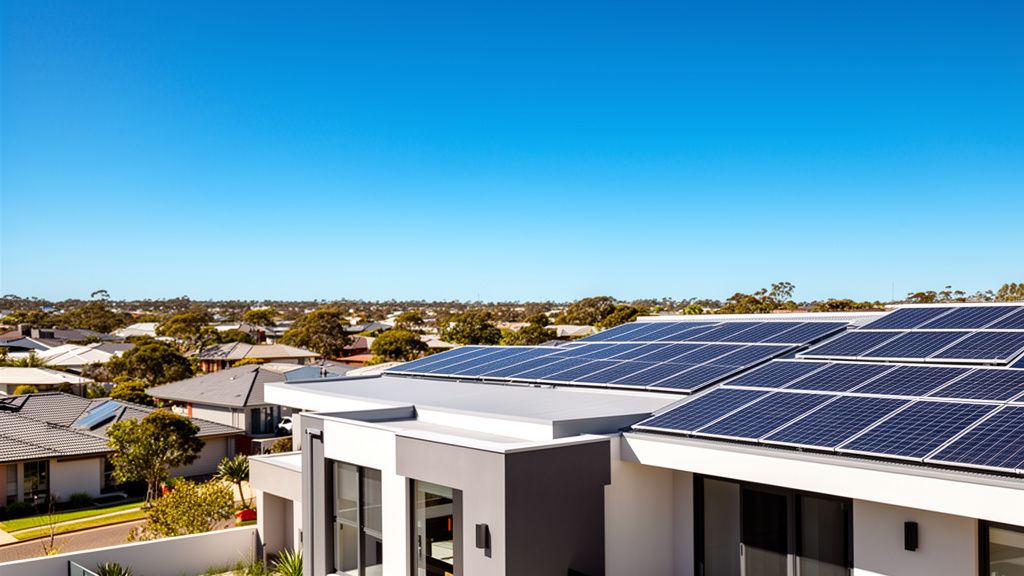
For solar, developers need to ensure unshaded roof space, appropriate roof orientation (ideally north-facing in Australia), and sufficient structural load-bearing capacity for panel weight and wind loads. The electrical design must include dedicated conduits from the roof to the main switchboard and space for inverters. For EV charging, crucial elements include ample power supply to the main switchboard, designated parking spots with future-proofed conduits, and load management systems to prevent overloading the building's electrical infrastructure, especially during peak demand. Planning for individual metering or smart allocation systems for EV charging is also vital.
How can body corporate arrangements facilitate efficient energy and EV management?
Clear and well-structured body corporate bylaws are essential for the smooth operation of shared solar and EV systems. This involves establishing how solar-generated electricity will be distributed (e.g., offsetting common area power, net metering to individual units, or a combination), how feed-in tariffs will be managed, and how maintenance costs will be shared. For EV charging, the body corporate needs to define access rules, billing mechanisms (e.g., pay-per-use, flat fee, or integrated into strata levies), and a framework for expanding charging capacity as demand grows. Proactive planning here avoids future disputes and ensures equitable access and cost recovery.
Key Takeaways
- Integrating solar and EV-ready infrastructure from day one significantly reduces costs compared to retrofitting later.
- These features enhance property value and market appeal, attracting buyers seeking sustainable and cost-effective living.
- Solar and EV charging directly contribute to Australia's climate goals by reducing carbon emissions from buildings and transport.
- Future-proofing developments against evolving market demands and potential regulatory changes ensures long-term viability.
- Careful design and clear body corporate bylaws are essential for seamless operation and fair management of shared renewable energy and EV charging.
Read More
For a comprehensive overview, check out our master guide: Read the Full Guide Here.