TL;DR: More than 2 million Australian households have adopted solar power systems, driven by high solar radiation and rising utility bills. However, experts from SA Energy and United Solar Energy emphasize that true savings depend on customized system design, optimal panel positioning, and active tracking via solar monitoring apps.
The Growth of Australian Home Solar
Australia is uniquely positioned to lead the global shift toward domestic clean energy. With the highest average solar radiation per square metre of any continent in the world, the country has a natural advantage in capturing solar light. According to data from the Australian Renewable Energy Agency, more than 2 million Australian households have already installed a residential solar power system to capture this abundant, free resource.
This rapid expansion has been supported by experienced clean energy pioneers. For instance, United Solar Energy was established in 2009 with the core purpose of creating a sustainable future and minimizing the carbon footprint of families, businesses, and government enterprises. Over more than a decade of international and local operations, the company has deployed over 500,000 solar panels, proving that residential solar is a highly reliable way to counter rising utility bills and transition away from traditional fossil-fuel energy.
The longevity of these systems depends heavily on the initial hardware choices. Over the last 10 years, solar panels and inverters have made substantial leaps in conversion efficiency, meaning today's residential solar systems generate far more power per square metre than older models. Combined with government incentives and rebates, these modern systems present an increasingly short payback period for average suburban families.
System Design vs. Panel Capacity
While the numbers show a massive uptake, many prospective solar owners operate under the assumption that simply installing more solar panels will automatically yield higher savings. According to SA Energy, South Australia's solar experts, achieving the best results requires looking past basic panel counts. The actual energy output and economic performance of a residential solar setup rely on several factors that must be planned cooperatively:
- Customized System Design: Every residential property has a distinct electricity consumption profile. A well-designed solar system takes into account when a household uses the most power, the specific roof layout, and the amount of local shade. For example, a home that uses most of its energy during the late afternoon requires a different design than one with high midday usage.
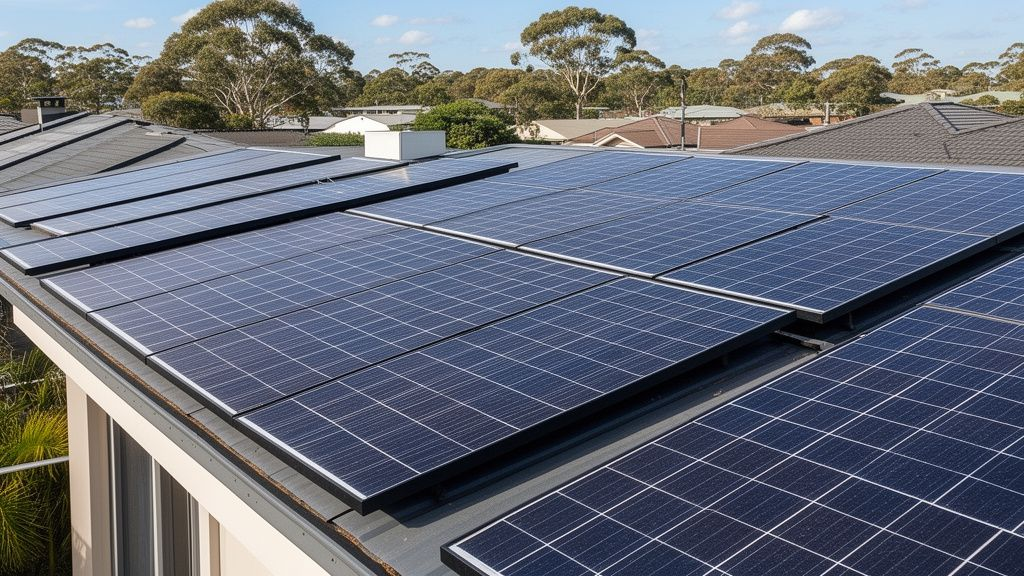
- Panel Positioning and Orientation: The physical angle and compass direction of the installed panels dictate how much sunlight they absorb throughout the day. Panels positioned poorly will fail to hit their peak output, meaning a smaller, optimally aligned array can easily outperform a larger, poorly positioned one.
- Quality of Engineering: Professional system design ensures that the inverter, wiring, and panel array are correctly matched to prevent energy losses. Working with a Clean Energy Council Approved Retailer provides a guarantee that the system will be designed and installed by qualified, approved professionals.
SA Energy highlights that a tailored approach to consulting is key. Instead of using off-the-shelf, one-size-fits-all packages, SA Energy's design methodology focuses on analyzing the specific physical structure of the roof and historical billing data before proposing any hardware. This personalized engineering prevents households from over-investing in unnecessary panels that will under-produce due to seasonal shade or structural constraints.

Maximizing Performance Through Solar Monitoring Apps
Installing a residential solar system is only the first step toward lowering electricity bills. To ensure the investment continues to perform efficiently, homeowners must actively manage and understand their generation patterns. This is where modern solar monitoring technology becomes essential.
As highlighted by SA Energy, most modern solar systems are integrated with dedicated solar monitoring apps. These applications allow homeowners to view real-time data on:
- Energy Production: Exactly how many kilowatt-hours (kWh) of clean electricity the panels are generating at any given hour of the day.
- Electricity Consumption: How much power the household is drawing from both the solar panels and the main electricity grid.
- Inverter Health and Performance: Ensuring that the solar inverter is converting direct current (DC) power into usable alternating current (AC) electricity without errors.
By analyzing this data, homeowners can shift their heavy electricity usage—such as running washing machines, dishwashers, or electric vehicle chargers—to times when solar production is at its peak. This behavior, known as load shifting, minimizes the need to buy expensive power from the main grid, maximizing the financial return on the solar installation.
Key Takeaways
- Abundant Resource: Australia possesses the highest average solar radiation per square metre globally, driving over 2 million households to adopt solar power systems.
- Quality Over Quantity: Installing a high number of panels does not guarantee maximum savings; custom system design, correct panel positioning, and roof layout are the primary factors governing efficiency.
- Active Performance Management: Modern solar monitoring apps enable homeowners to track their live energy production and consumption, allowing them to shift high-energy household tasks to peak solar hours.
- Retailer Standards: Working with a Clean Energy Council Approved Retailer ensures systems are designed and constructed safely by accredited professionals.