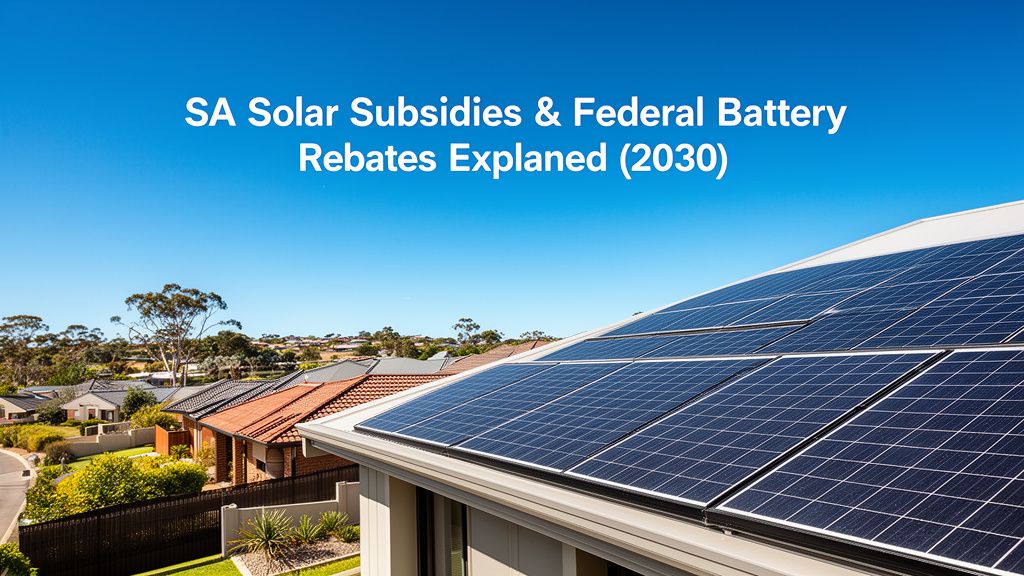
TL;DR: South Australian homeowners can significantly reduce the upfront cost of solar and battery systems through the state-based Retailer Energy Productivity Scheme (REPS) and the federal Small-scale Renewable Energy Scheme (STCs). These combined incentives make solar more affordable and indirectly support battery storage, with the federal STC benefits set to gradually phase out by 2030.
What Are the Primary State-Based Solar and Battery Incentives for SA Residents?
The primary state-based incentive for solar and battery installations in South Australia is the Retailer Energy Productivity Scheme (REPS). Unlike some other states that offered direct battery rebates, SA's approach through REPS aims to encourage energy retailers to help households and businesses reduce their energy consumption and carbon emissions, often by offering discounted solar and battery solutions. This scheme ensures a competitive market where retailers strive to meet targets by delivering eligible activities, including the installation of energy-efficient products like solar panels and home battery systems. The benefit to the homeowner often comes in the form of a direct discount on the installation price, which can vary between different providers depending on their REPS obligations and pricing structures.
How the Retailer Energy Productivity Scheme (REPS) Works
The Retailer Energy Productivity Scheme (REPS) places an obligation on electricity and gas retailers to deliver energy productivity activities to their customers. For solar and batteries, this means accredited providers can offer systems at a reduced cost to help meet these targets. Instead of applying for a rebate yourself, the discount is typically applied upfront by the installer, who then claims the REPS credits from the obligated retailer. This streamlined process makes it easier for SA households to access more affordable solar and battery storage. The value of the REPS incentive fluctuates based on market conditions and the specific activities being undertaken, but it consistently contributes to lowering the overall cost for consumers.
Estimated Savings for SA Households
While the exact savings under REPS are dynamic and depend on the specific project and provider, homeowners can expect a notable reduction in the upfront cost of their solar and battery installations. For example, on a typical 6.6kW solar system coupled with a 10kWh battery, REPS can contribute to savings often ranging from a few hundred dollars up to over a thousand dollars, bundled into the overall discount offered by the installer. These savings are in addition to any federal incentives, making the combined package significantly more attractive. It's always recommended to get multiple quotes to understand the full extent of REPS-driven discounts available in the market.
How Does the Federal Small-scale Renewable Energy Scheme (SRES) Support Solar and Battery Systems Until 2030?
The Federal Small-scale Renewable Energy Scheme (SRES) provides a significant upfront discount on the installation of eligible small-scale renewable energy systems, primarily solar panel systems, by creating Small-scale Technology Certificates (STCs). While the SRES directly subsidises solar panels and not batteries themselves, it plays a crucial role in making combined solar and battery systems more financially viable for Australian homes. By substantially reducing the cost of the solar component, it lessens the overall investment required for a complete energy independence solution. This federal scheme is set to continue until 2030, though the value of STCs diminishes annually, meaning the maximum benefits are available to those who act sooner.
Understanding Small-scale Technology Certificates (STCs)
Small-scale Technology Certificates (STCs) are electronic certificates generated when an eligible solar power system is installed. The number of STCs you receive depends on the system's size, its geographical location (zone rating), and the deeming period (number of years until the scheme ends in 2030). Each STC has a market value, which fluctuates but typically ranges from $30-$40. Installers usually apply this STC value as an upfront discount on your invoice, effectively reducing the cash outlay for your solar panels. For a standard 6.6kW solar system in Adelaide, this could equate to a discount of approximately $3,000 to $4,000, depending on the current STC market price. This direct federal support for solar makes adding a battery a more feasible next step for many households.
Impact on Combined Solar and Battery System Costs
By reducing the initial cost of the solar PV system, the SRES significantly lowers the overall capital expenditure required for a complete solar and battery setup. For instance, if a 6.6kW solar system costs approximately $9,000 before STCs, and a 10kWh battery costs around $10,000, the total system would be $19,000. With federal STCs reducing the solar component by, say, $3,500, the effective cost drops to $15,500. This substantial reduction improves the system's payback period and makes the additional investment in a battery more attractive, allowing homeowners to maximise their self-consumption of solar energy and reduce reliance on the grid.
What is the Combined Financial Impact of SA and Federal Incentives on Your Solar and Battery Investment?
The combined effect of South Australia's Retailer Energy Productivity Scheme (REPS) and the federal Small-scale Renewable Energy Scheme (SRES) offers a compelling financial advantage for homeowners investing in solar and battery storage. These incentives work in tandem to significantly reduce the upfront purchase and installation costs, thereby accelerating the payback period and enhancing the long-term return on investment. While REPS provides indirect discounts from retailers and SRES offers direct subsidies for the solar component, together they create a powerful economic argument for adopting renewable energy solutions in SA. Understanding how these incentives stack up is crucial for making an informed decision about your energy future.
Calculating Your Potential Savings
To calculate your potential savings, you'd typically start with the gross cost of your desired solar and battery system. For example, a 6.6kW solar system might be $9,000, and a 10kWh battery $10,000, totalling $19,000. First, subtract the federal STC rebate for the solar component. A 6.6kW system could yield around $3,500-$4,000 in STC value. This brings the cost down to roughly $15,000. Next, factor in the REPS benefit, which is often integrated into the discounted price offered by installers. This could shave off another $500 to $1,500 or more, depending on the specific product and provider. The final price you pay, after these combined discounts, represents your significantly reduced out-of-pocket expense, potentially bringing the total for our example system down to around $13,500 - $14,500.
Maximising Your Return on Investment
Maximising your return on investment involves not only securing the best upfront discounts through REPS and STCs but also optimising your system's performance and usage. Choosing a reputable installer who can accurately size your system to your energy consumption patterns is vital. By pairing a solar system with a battery, you can store excess solar generation for use during peak evening hours, reducing reliance on expensive grid electricity and potentially earning credits through feed-in tariffs for any surplus energy exported. With the federal STC scheme gradually phasing out by 2030, locking in the maximum available STC value by installing sooner rather than later is a key strategy for ensuring the best possible return on your clean energy investment.
Key Takeaways
- Homeowners in SA benefit from the state's REPS scheme and the federal STC program to reduce solar and battery installation costs.
- The federal Small-scale Renewable Energy Scheme (SRES), generating STCs, significantly lowers the upfront cost of solar panels until 2030.
- REPS provides indirect savings on both solar and batteries through competitive offerings from energy retailers in South Australia.
- The value of federal STCs diminishes annually, making earlier installation financially more advantageous.
- Combining these incentives allows for a substantial reduction in the overall investment, improving the payback period and long-term energy savings.
Read More
For a comprehensive overview, check out our master guide: Read the Full Guide Here.