Understanding and Managing Your Electricity Bills in Australia
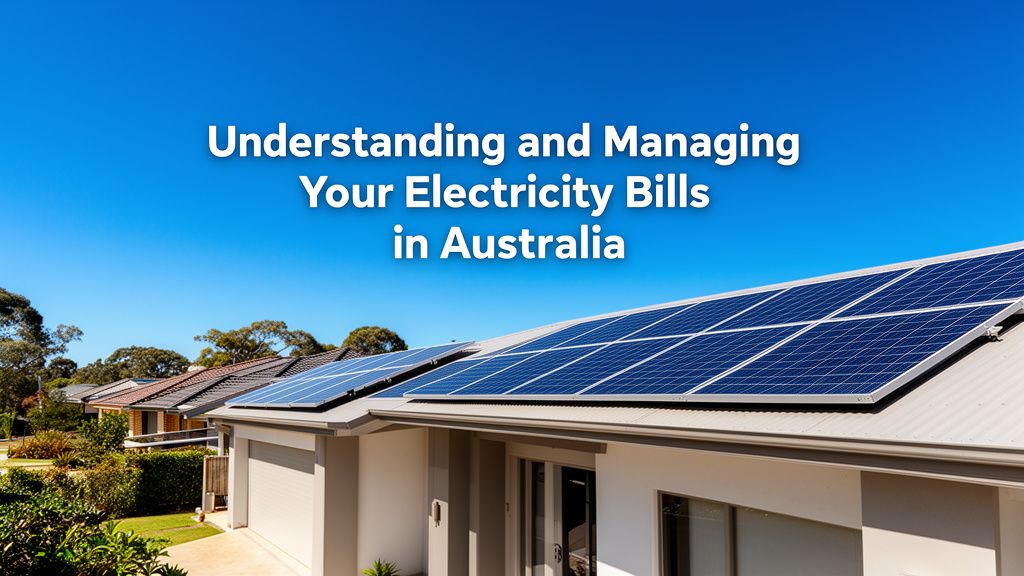
Electricity bills in Australia can often feel like deciphering an ancient scroll, especially for solar homeowners. With varying tariffs, confusing charges, and the added complexity of solar feed-in credits, it's no wonder many Aussies find themselves scratching their heads. This guide aims to demystify your electricity bill, helping you understand what you're paying for and, more importantly, how to manage and reduce those costs.
Understanding Your Electricity Bill: The Basics
Your electricity bill isn't just a single charge; it's a breakdown of several components. Grasping each part is crucial for effective management.
Supply Charge: This is a fixed daily service fee, regardless of how much power you use. It covers the cost of maintaining the poles, wires, and meters that deliver electricity to your home. Expect this to be around $0.80 to $1.20 per day in most states.
Usage Charge (Consumption): This is where you pay for the actual electricity you consume, measured in kilowatt-hours (kWh). Prices vary significantly based on your retailer, location, and tariff type. Single Rate Tariff: You pay the same rate per kWh, 24/7. Simple and predictable. Time-of-Use (TOU) Tariff: Rates vary depending on the time of day – typically higher during peak periods (e.g., 4 pm - 8 pm weekdays), moderate during shoulder periods (e.g., morning/evening weekdays), and lower during off-peak times (e.g., overnight, weekends). This is common with smart meters and crucial for solar optimisation. Controlled Load Tariff: A separate, cheaper rate for specific high-usage appliances like electric hot water systems or slab heating, which are often switched on remotely by the network at off-peak times.
Metering Charge: Some retailers itemise a separate charge for meter maintenance and readings, though it's often bundled into the supply charge.
GST: A 10% Goods and Services Tax is applied to most electricity charges.
Feed-in Tariffs (FITs): If you have solar panels, any excess electricity your system generates and sends back to the grid earns you a credit, known as a Feed-in Tariff. FITs vary widely by retailer and state, typically ranging from $0.05 to $0.15 per kWh. Some states offer premium or mandated FITs for older solar systems, but these are increasingly rare for new installations.
Billing Cycles: Most Australians receive bills quarterly, though monthly billing is becoming more common, especially with smart meters. Shorter cycles can help you track usage and adjust habits more frequently.
Decoding Your Solar Savings
Having solar panels fundamentally changes how you interact with your electricity bill. The goal with solar is to maximise "self-consumption" – using the power your panels generate directly in your home.
Self-Consumption vs. Exporting: When your solar panels generate electricity, your home uses it first. Only the excess power is sent back to the grid for a Feed-in Tariff. Because usage charges are significantly higher than FITs (e.g., paying $0.30/kWh but only getting $0.08/kWh for exporting), every kWh you use directly from your panels saves you more money than exporting it. This is why solar-equipped homes often shift high-usage activities to daylight hours.
Net Metering: Most Australian solar installations operate on a net metering basis. Your meter records how much electricity you import from the grid and how much you export to the grid. Your bill then reflects the difference, crediting your exports against your imports.

Understanding the "Still High Bill" Myth: Many solar owners are surprised when their bill isn't zero. This is often due to several factors: High fixed supply charges that solar doesn't offset. Higher than expected usage, especially during evenings or cloudy days when solar isn't generating. Low Feed-in Tariffs. An underperforming solar system.
Strategies for Managing and Reducing Your Bill
With a better understanding of your bill, you can implement effective strategies to keep costs down.
Monitor Your Usage: Knowledge is power. Smart Meters and Apps: If you have a smart meter, many retailers offer online portals or apps that provide near real-time data on your electricity consumption and solar generation. This allows you to see the impact of your actions immediately. Manual Checks: Regularly check your meter readings and compare them to your bill.
Shift Your Usage: This is paramount for solar households, especially on TOU tariffs. Daytime Appliances: Run dishwashers, washing machines, and pool pumps during the middle of the day when your solar system is producing its peak power. Schedule Appliances: Use timers on hot water systems or other large appliances to operate during solar generation hours. Avoid Peak Times: If you're on a TOU tariff, minimise grid usage during peak periods (e.g., 4 pm - 8 pm).
Improve Energy Efficiency: LED Lighting: Replace old incandescent or CFL bulbs with energy-efficient LEDs. Efficient Appliances: When upgrading, look for appliances with high energy star ratings. Insulation: Good insulation in your ceiling and walls reduces heating and cooling costs. Draught Proofing: Seal gaps around windows and doors to prevent heat loss or gain. Switch Off: Turn off lights and appliances at the wall when not in use. "Vampire power" can add up.
Compare Retailers: Don't stick with the same retailer out of habit. The energy market is competitive. Government Comparison Sites: Use independent government services like EnergyMadeEasy.gov.au (national) or Victorian Energy Compare (Victoria) to compare plans, supply charges, usage rates, and Feed-in Tariffs. These sites provide a personalised comparison based on your actual usage data. Negotiate: Call your current retailer and ask if they can offer a better deal, especially if you've found a cheaper plan elsewhere.
Optimise Your Solar Performance: Clean Panels: Dust, dirt, and bird droppings can reduce your system's efficiency. Regular cleaning (safely!) can help. Shading: Ensure no new trees or structures are casting shadows on your panels. System Monitoring: If your system has monitoring, check its performance regularly for any dips that might indicate an issue. Consider professional maintenance every few years.
Consider Battery Storage: For those looking to maximise self-consumption and further reduce reliance on the grid, a home battery stores excess solar power generated during the day for use at night. This significantly boosts energy independence.
Common Misconceptions and FAQs
Why is my bill still high with solar? As mentioned, factors like high fixed charges, higher-than-expected consumption (especially outside solar hours), a low FIT, or an underperforming system can contribute. Review your usage patterns and system output.
What's the best time to run my dishwasher with solar? Generally, mid-day (e.g., 10 am - 2 pm) when solar production is at its peak. This ensures you're using your own free electricity.
By proactively managing your electricity usage, understanding your billing details, and optimising your solar system, you can significantly reduce your power bills and enjoy the full financial benefits of your solar investment. It's about being an informed consumer and making smart energy choices for your Aussie home.