TL;DR: South Australia's deep-seated affection for solar power stems from a perfect storm of high electricity costs, strong government incentives like the Home Battery Scheme, and abundant sunshine. These factors combine to make solar an exceptionally attractive and financially rewarding investment for homeowners looking to reduce bills and increase energy independence.
How Do High Electricity Prices Drive Solar Adoption in South Australia?
South Australia consistently battles some of the nation's highest electricity prices, a critical factor making solar power an exceptionally attractive investment for residents. With average retail electricity costs often sitting above 40 cents per kilowatt-hour (kWh), every unit of self-generated solar electricity directly translates into significant savings. Homeowners are keenly aware that investing in a solar PV system offers a direct hedge against these escalating energy bills, reducing reliance on the grid and providing long-term financial stability. For a typical SA household using 15-20 kWh per day, offsetting a substantial portion of this usage with solar can lead to savings of over $1,500 to $2,000 annually, making the upfront cost of a 6.6kW system, typically ranging from $5,000 to $8,000 after rebates, highly appealing for its rapid payback period.
The Financial Incentive to Cut Down Grid Reliance
The inherent volatility and rising trajectory of South Australia's grid electricity prices provide a powerful financial incentive for homeowners to embrace solar. By generating their own power, residents are not only reducing their daily operational costs but also insulating themselves from future price hikes imposed by retailers. This pursuit of energy independence, driven by cost, often leads to an investment in larger systems or the addition of battery storage. For many, a 6.6kW system generating around 25-30 kWh per day can cover a significant portion, if not all, of their daytime electricity needs, drastically cutting down the portion of their bill that comes from the grid and offering peace of mind against an unpredictable energy market.
What Government Policies and Incentives Boost SA's Solar Market?
South Australia has a long history of proactive government support for renewable energy, significantly contributing to the state's leading solar adoption rates. Schemes like the South Australian Home Battery Scheme (SAHBS) have been instrumental in pushing solar uptake beyond just panels, encouraging residents to pair PV systems with battery storage. This scheme offers generous subsidies, often reducing the cost of a home battery system by thousands of dollars, making energy storage accessible and accelerating the transition to a more self-sufficient, greener grid. Coupled with robust feed-in tariffs (FiTs) that have, at times, been more competitive than in other states, these policies create a strong economic case for solar.
The Impact of the Home Battery Scheme on Solar Popularity
The South Australian Home Battery Scheme has fundamentally transformed the local solar market by making battery storage an attainable reality for many households. The scheme offers subsidies of up to $2,000 per battery (as of mid-2024, subject to change and specific system size/installer eligibility), making the additional investment in a battery significantly more affordable. For example, a 10kWh battery system that might otherwise cost $10,000-$15,000 could see its price reduced by a substantial margin. This incentive empowers homeowners to store their excess solar generation for use during peak evening hours, further reducing their electricity bills and increasing their energy independence, especially critical in a state prone to high peak demand charges. The SAHBS has not only made solar more attractive but also more effective, allowing households to maximise their self-consumption and reliance on clean energy.
How Does South Australia's Abundant Sunshine Enhance Solar Performance?
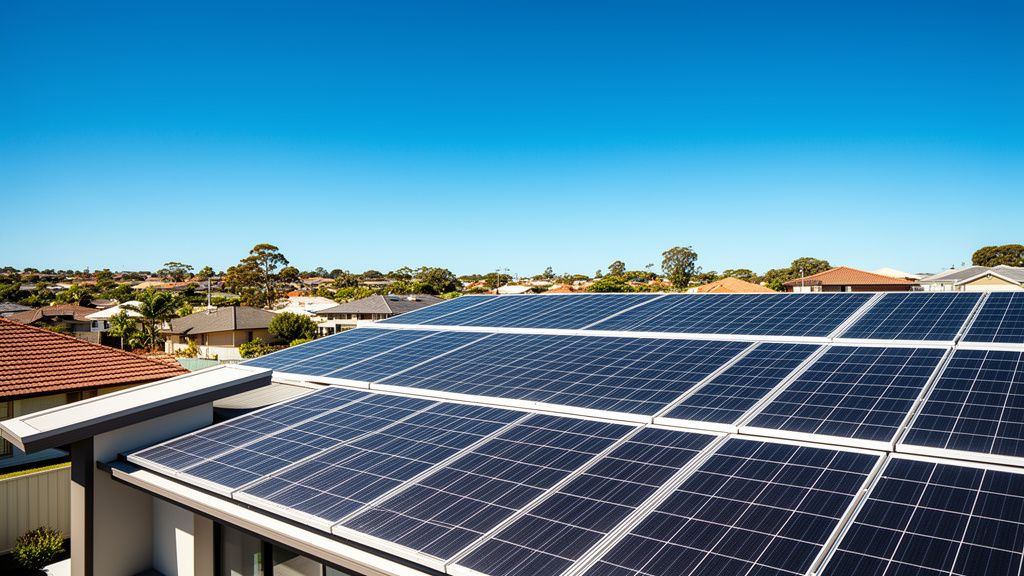
South Australia benefits from one of the highest solar irradiance levels in the country, meaning it receives a significant amount of sunshine, which directly translates into superior solar panel performance and greater energy generation. Adelaide, for example, averages over 2,500 hours of sunshine per year, making it an ideal location for solar PV systems to operate at peak efficiency. This abundant solar resource ensures that a 6.6kW solar system, for instance, can generate upwards of 25-30 kWh per day on average, significantly more than what the same system might produce in less sunny regions. The consistency of this high solar exposure throughout most of the year guarantees reliable energy output and maximises the financial returns for homeowners.

Maximising Returns with Optimal Solar Resources
The strong solar resource in South Australia directly enhances the financial viability and appeal of solar installations. With panels consistently generating ample power, homeowners can offset a larger portion of their electricity consumption and export more excess energy back to the grid, earning credits through feed-in tariffs. This high generation capacity means that solar systems in SA often have shorter payback periods compared to states with lower solar irradiance, potentially recovering their investment in as little as 3-5 years. This efficiency, combined with decreasing equipment costs, makes the "love affair" with solar in SA not just about environmental benefits, but also about sound economic sense, where the sun truly pays dividends.
Key Takeaways
- South Australia's high electricity prices make solar power a financially compelling solution for long-term savings.
- Government incentives, particularly the Home Battery Scheme, significantly reduce the cost of battery storage, enhancing solar's value.
- Abundant sunshine in SA ensures high solar generation, leading to faster payback periods and greater energy independence.
- Integrating solar with battery storage allows SA residents to maximise self-consumption and mitigate peak-hour electricity costs.
- The combination of policy support, economic drivers, and natural resources cements SA's leading position in solar adoption.
Read More
For a comprehensive overview, check out our master guide: Read the Full Guide Here.