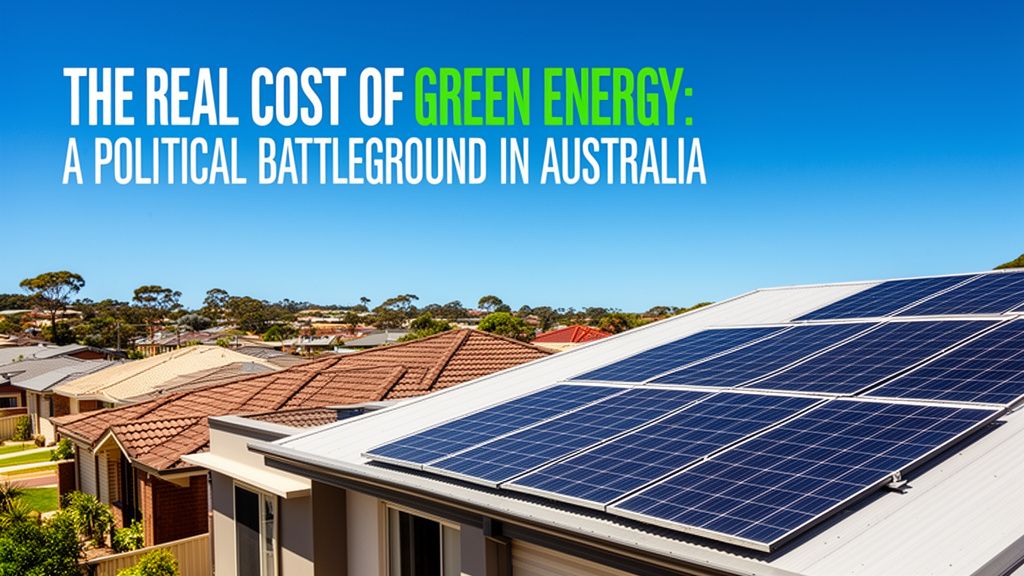
THE REAL COST OF GREEN ENERGY: A POLITICAL BATTLEGROUND IN AUSTRALIA
Introduction
Australia, a sunburnt continent blessed with abundant solar resources, stands at a pivotal crossroads in its energy journey. The shift towards green energy, particularly solar and wind, is often heralded as a no-brainer – a path to lower emissions, reduced power bills, and a healthier planet. Yet, beneath this seemingly straightforward narrative lies a complex and fiercely contested political battleground, where the "real cost" of green energy is debated with vigour, shaping the nation's energy future. While individual households often celebrate the immediate savings from installing solar panels, the broader systemic and economic implications are far from settled in Canberra and beyond.
The Obvious Upsides and the Green Dream
From an environmental perspective, the benefits of renewable energy are clear. Reduced greenhouse gas emissions combat climate change, lessening the frequency and intensity of devastating bushfires, floods, and droughts that have plagued Australia. Economically, green energy promises long-term energy independence, shielding consumers from volatile global fossil fuel prices. For many Aussie households, a rooftop solar system is a tangible win, potentially cutting annual electricity bills by thousands of dollars. An average 6.6kW solar system, for instance, might cost between $6,000 and $10,000 upfront (before rebates), but can easily save a household $1,500 to $2,500 annually, paying for itself within 3-5 years. The Clean Energy Council reports over 3.7 million Australian homes now boast solar, highlighting its widespread appeal. This individual success story, however, often clashes with the political discourse surrounding national energy policy.
The "Real Costs" Argument from Critics
Critics, often from more conservative political factions or industries reliant on fossil fuels, frequently highlight what they term the "real costs" of the green transition, portraying it as an expensive gamble. Their arguments typically focus on several key areas:
Grid Stability and Reliability
The intermittent nature of solar and wind – they only generate power when the sun shines or the wind blows – poses significant challenges to grid stability. This necessitates expensive backup "baseload" power, traditionally supplied by coal or gas, or substantial investment in large-scale battery storage and pumped hydro projects like Snowy 2.0, which carry their own multi-billion-dollar price tags and environmental concerns. The argument is that relying too heavily on renewables without sufficient firming capacity risks blackouts and threatens the reliable supply of power, particularly during peak demand or extreme weather events.
Transmission Infrastructure
Connecting remote, resource-rich renewable energy zones (REZs) to major population centres requires massive upgrades and new high-voltage transmission lines. These projects, such as the proposed HumeLink or VNI West, can cost billions of dollars, face land acquisition disputes, and generate significant local opposition from landowners concerned about environmental impact and visual amenity. The cost of this infrastructure is ultimately borne by consumers through network charges on their power bills.
System Costs and Subsidies
Beyond the initial generation cost, integrating renewables into the National Electricity Market (NEM) incurs "system costs" – expenses for maintaining grid frequency, voltage, and overall stability. Critics also point to government subsidies and rebates, arguing they distort the market and represent a hidden cost to taxpayers. While many subsidies have tapered off as renewable technologies mature, their historical presence remains a talking point in debates about market fairness.


Impact on Traditional Industries
The transition inevitably impacts traditional fossil fuel industries, leading to job losses in coal mining, power generation, and gas extraction in regional communities. While new jobs are created in renewable energy, the geographic and skill transition for affected workers can be challenging and costly, becoming a significant political football.
The Pro-Green Energy Counter-Argument
Conversely, proponents of green energy argue that critics selectively focus on immediate costs while ignoring long-term benefits and the even greater costs of inaction.
Long-term Savings and Technological Advancement
While initial investment in renewables and grid upgrades is substantial, proponents stress that once built, the "fuel" (sunlight, wind) is free. This shields consumers from the price volatility of international coal and gas markets. Furthermore, the cost of solar panels and batteries has plummeted dramatically over the past decade and is expected to continue falling, making renewables increasingly competitive.
Health and Climate Change Costs
The "real cost" of fossil fuels, green advocates argue, includes the externalised costs of pollution – respiratory illnesses, environmental degradation, and the devastating economic and social impacts of climate change itself. The colossal costs associated with more frequent and intense bushfires, droughts, and floods, and the necessary recovery and adaptation measures, dwarf the investment needed for a clean energy transition. The Australian bushfire season of 2019-20, for example, cost the economy billions of dollars.
Job Creation and Energy Security
The renewable energy sector is a growing employer, creating new jobs in manufacturing, installation, operations, and research and development. Furthermore, decentralised renewable generation enhances energy security by reducing reliance on imported fuels and vulnerable central power stations.
The Political Divide in Australia
This tug-of-war over "real costs" forms the core of Australia's energy policy debate. Historically, the Coalition government has often prioritised baseload power and reliability, expressing caution about the speed of the renewable transition and often advocating for gas as a "transition fuel." Labor, on the other hand, has generally pushed for more ambitious renewable targets, emphasising climate action, long-term savings, and new green industries. This ideological chasm makes bipartisan consensus difficult, leading to policy uncertainty and stop-start progress, which in itself adds a "cost" through delayed investment and market instability. Lobbying efforts from various industry groups further complicate the landscape, with media headlines often reflecting the latest salvo in this ongoing war of words.
Conclusion
Australia's journey towards a greener energy future is undeniably complex. While rooftop solar has proven its financial worth for millions of households, integrating this distributed generation and large-scale renewables into a robust, reliable, and affordable national grid presents significant challenges that are often leveraged as political weapons. The "real cost" of green energy is not just a financial calculation; it’s a socio-economic and environmental equation that must weigh upfront investments against long-term savings, job transitions, and the escalating costs of climate change. As the nation navigates this political battleground, finding a balanced, evidence-based path forward that ensures both energy security and environmental sustainability will be paramount for all Australians.
Read More
For a comprehensive overview, check out our master guide: Read the Full Guide Here.