TL;DR: Australia's renewable energy sector is navigating a major shift, marked by a critical 10-year Capital Gains Tax (CGT) concession extension to 2040 for foreign investors, regional agricultural innovations in green hydrogen, and strict standards defined by the Clean Energy Council’s Best Practice Charter. Together, these elements secure foreign capital—which accounts for 70% of the transition's funding—and align local community interests with national net-zero goals.
Australia’s path toward a clean energy transition is currently navigating a complex intersection of federal tax policy, shifting global market realities, regional agricultural adaptations, and community-focused corporate standards. With a massive requirement for new generation, storage, and network investment leading up to the nation's 2050 net-zero targets, securing stable investment pathways while maintaining community support has become the primary focus for policymakers and industry leaders. As the landscape thrives, the interplay between international capital markets, local regional economies, and individual household consumer systems reveals how deeply integrated the modern energy shift is, spanning from international financial boardrooms in Canberra to multi-generational family farms in Moree.
Capital Gains Tax Reforms and the 10-Year Reprieve for Foreign Investors
A monumental legislative pivot occurred on August 20, 2026, when Federal Treasurer Jim Chalmers and the Albanese government agreed to a crucial amendment to proposed Capital Gains Tax (CGT) reforms. Initially introduced to the federal Parliament in early July 2026, the CGT legislation had raised significant alarms across the renewable energy sector. While the original bill stopped short of applying retrospective tax rules to foreign-owned wind, solar, and battery assets, and proposed a 50 percent discount on the tax for the subsequent four years, clean energy advocates warned of severe economic fallout.
Industry representative bodies, including the Clean Energy Investor Group (CEIG) and the Investor Group on Climate Change (IGCC), argued that the four-year discount window would trigger a rapid exit of international capital. Representatives warned that foreign investors, who control the vast majority of clean energy investments in Australia, would seek to sell off their assets rapidly before the 2030 cutoff. This cliff-edge threatened to cause what local leaders described as a fire sale of existing renewable developments and a freezing of new projects after 2030.
Under sustained pressure from independent crossbench MPs and the Greens, the federal government amended the bill to extend the 50 percent CGT concession from its original end date of June 30, 2030, to June 30, 2040. This ten-year extension provides crucial breathing room for developers and financiers. Nicolette Boele, the Independent member for Bradfield, stated that the country was staring down a self-inflicted wound on its energy economy, and that the amendment successfully aligned tax laws with an economy fit for the 21st century. Meanwhile, Warringah Independent MP Zali Steggall has pushed for a formal statutory review in 2035 to evaluate whether the concession needs to be extended further to sustain the momentum required for the 2050 net-zero target.
The Role of Foreign Capital and Shifting Wholesale Market Signals
The critical nature of the CGT tax concession is highlighted by the scale of international investment in Australia’s clean energy assets. Approximately 70 percent of Australia's clean energy capital is sourced from foreign investors. Frankie Muskovic, the policy director at the Investor Group on Climate Change, noted that the extension of the tax concession removes a major element of uncertainty for these international backers at a crucial moment. The industry must rapidly scale up clean energy supply over the next fifteen years, making stable, predictable regulatory environments a necessity.
This policy stability is even more vital given the broader wholesale market conditions. According to the Wholesale Electricity Market Performance Report 2026, non-energy market participants have been providing a substantial portion of the trading liquidity on the Australian Securities Exchange (ASX). However, the report also indicates that wind, solar, and gas assets are facing weaker investment signals. When primary generation assets struggle with weaker investment signals, removing regulatory hurdles like the CGT cliff-edge is paramount to maintaining a steady pipeline of domestic projects.
The Clean Energy Council’s Best Practice Charter
To ensure that the influx of international capital leads to successful local projects, the Clean Energy Council (CEC) administers the Best Practice Charter for Renewable Energy Projects. This voluntary framework outlines ten fundamental commitments that signatory developers agree to uphold during the planning, construction, and operation of large-scale renewable energy facilities and transmission infrastructure. Signatories must publicly acknowledge their participation and publish progress reports every two years. The 2025 reports highlighted more than 400 practical examples of how developers are actively delivering positive benefits to regional communities, Traditional Owners, and local landholders.
The charter's core commitments include:


- Engaging respectfully with local communities, including Traditional Owners, to seek their input prior to submitting development applications and finalizing project designs.
- Providing timely, accessible, and responsive information to address community concerns throughout the lifetime of the project.
- Being highly sensitive to areas of high biodiversity, cultural heritage, and landscape value during design and operations.
- Minimizing impacts on highly productive agricultural land and actively exploring opportunities to integrate agricultural production with energy generation.
- Consulting with local residents regarding visual, noise, traffic, and other potential impacts, along with clear mitigation strategies.
- Supporting regional economies by prioritizing local employment and procurement opportunities.
- Offering local communities direct opportunities to share in the economic benefits of the projects under transparent governance arrangements.
- Supporting educational and tourism opportunities associated with the clean energy transition.
- Demonstrating responsible long-term land stewardship to enhance the ecological, agricultural, and cultural value of the project sites.
- Recycling waste materials where feasible and committing to responsible decommissioning, refurbishment, or repowering at the end of the project's life cycle.
Regional Agriculture: The Frontline of Renewables and Green Hydrogen
The emphasis on agricultural integration in the CEC Charter aligns directly with a major shift in how Australian farmers view renewable energy. At the Australian Renewables in Agriculture Conference held in Orange, which drew more than 400 delegates, regional representatives discussed how wind and solar projects are serving as lifelines for climate-affected properties.
Global geopolitical events, including US President Donald Trump’s policies regarding Iran and the subsequent closure of the strategic Strait of Hormuz, have caused a sharp rise in international petrol and diesel prices. Critically, these developments have also caused global fertiliser prices to double. This double-whammy has prompted Australian farmers to explore how localized wind and solar assets can be used to generate green hydrogen and ammonia, bypassing vulnerable international supply chains.
Rather than merely hosting assets that export electricity to major metropolitan grids, regional communities are planning localized chemical production. For example, the Good Earth Green Hydrogen and Ammonia (GEGHA) pilot project at Sundown Pastoral near Moree, located in the Gwydir Valley, aims to produce approximately 4,500 tonnes of low-carbon anhydrous ammonia (NH3) annually. Building on this momentum, farmer Monica Morona from the Hay Plains in south-west New South Wales is working to establish the Riverina Renewable Hydrogen plant. This commercial-scale facility aims to produce 40,000 tonnes of green ammonia annually, providing a reliable domestic alternative to imported products.
Despite some mainstream and social media narratives of rural resistance, local support remains high. In the New England Renewable Energy Zone, the mayor of Armidale noted that 80 percent of local residents support the energy transition, though there is a strong desire for developers to actively counter misinformation and demonstrate true community partnership.
Residential Technology Integration: PSW Energy and Individual Systems
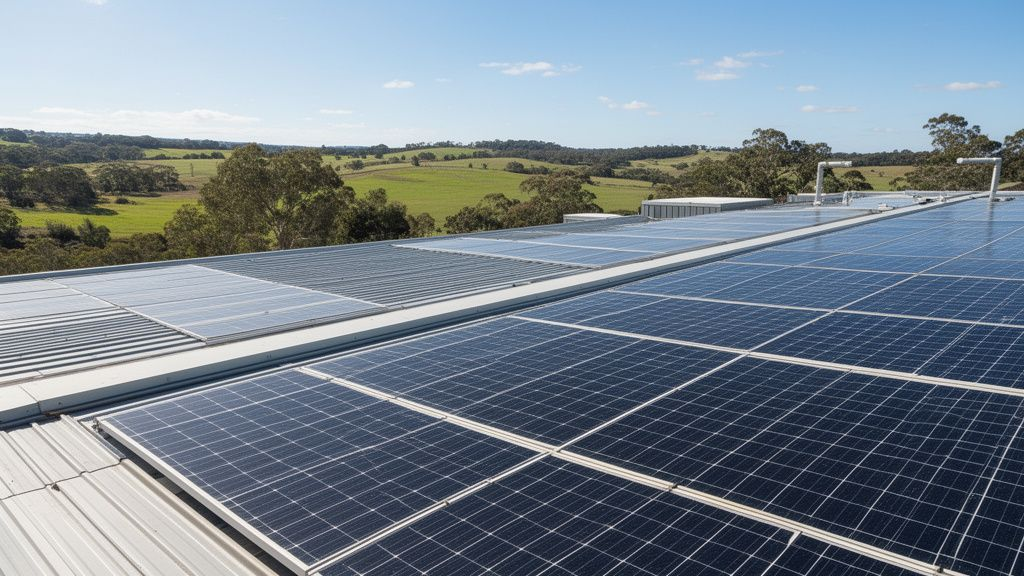
While large-scale projects dictate the pace of the national transition, individual consumers and businesses are participating through localized technology installations. Companies like PSW Energy are providing variable-sized solar packages to match specific consumer profiles, helping households and regional commercial operations manage their energy footprints. These packages feature advanced panel technologies from brands such as Jinko, Risen, and Aiko, and can be integrated with energy storage solutions from Sigenergy and Tesla.
By deploying systems ranging from 6.6 kW to 10 kW, 13 kW, and 19 kW capacities, consumers can actively mitigate their reliance on the volatile wholesale electricity grid. The inclusion of residential EV charging infrastructure further bridges the gap between household energy production and daily transportation needs, highlighting that the transition operates at every tier of Australian society.
Key Takeaways
- Policy Stability Restored: The extension of the CGT concession to June 30, 2040, provides the 10-year buffer needed to keep foreign capital—which supplies 70% of Australia's clean energy investment—actively flowing into the country.
- Community and Cultural Standards: The Clean Energy Council's Best Practice Charter guides developers to respect local landholders, protect biodiversity, and actively share financial benefits.
- Agricultural Independence: High international fuel and doubled fertiliser prices have driven farmers to utilize wind and solar for green hydrogen and ammonia production, transforming farms into self-sufficient energy hubs.
- Consumer-Level Scale: Advanced home and commercial solar packages ranging from 6.6 kW to 19 kW, paired with battery storage and EV charging, allow local communities to insulate themselves from grid volatility.
Related Guides
- The 2040 CGT Reprieve: How Australia Saved Its Foreign Clean Energy Capital Pipeline
- Green Hydrogen on the Farm: How Australian Agriculture is Transforming Renewables into Local Assets
- Assessing the New Wave of Solar Packages: Technologies, Capacities, and Brand Solutions
- Standardising Integrity: A Guide to the Clean Energy Council’s Best Practice Charter