TL;DR: Scientists have achieved a major breakthrough by developing new methods to prevent Förster Resonance Energy Transfer (FRET), a significant source of energy loss in advanced solar cells like those using quantum dots and perovskites. This innovation involves precisely engineering materials at the nanoscale to stop unwanted energy transfer, promising to unlock substantially higher efficiencies and more cost-effective solar power for homes and businesses across Australia.
What is FRET and why does it reduce solar panel efficiency?
FRET, or Förster Resonance Energy Transfer, is a quantum-mechanical phenomenon where energy from an excited molecule (the donor) is non-radiatively transferred to an adjacent molecule (the acceptor) without emitting a useful photon. In the context of solar cells, this means that light energy absorbed by one part of the material, instead of being converted into electricity, simply jumps to another part where it's often lost as heat or light of a lower energy, effectively squandering valuable potential. This parasitic energy transfer is particularly problematic in next-generation solar materials such as quantum dots and perovskites, which rely on precise energy pathways to maximise conversion efficiency. When FRET occurs, it diverts a significant portion of the absorbed sunlight away from the electrical circuit, directly lowering the overall power output of the solar panel and increasing the cost per kilowatt-hour produced. For the average Aussie battler looking to cut their power bills, these seemingly small energy losses add up, making solar systems less efficient and extending their payback period.
How does FRET specifically hinder advanced solar materials?
FRET specifically hinders advanced solar materials because their unique properties, often involving nanoscale structures and complex blends of organic or inorganic components, create ample opportunities for this non-radiative energy transfer. Materials like quantum dots, for example, are prized for their ability to absorb a wide spectrum of sunlight and emit it at specific wavelengths, but if not carefully controlled, their close proximity can lead to FRET, where the energy is 'stolen' by a neighbouring quantum dot before it can be effectively collected as electricity. Similarly, in multi-layered or composite perovskite cells, FRET can occur between different active layers or within the same layer, causing excitons (light-generated electron-hole pairs) to decay before they can be separated and contribute to the current. This challenge has been a major roadblock in pushing these promising materials to their full theoretical efficiency limits.
How have traditional solar designs managed energy loss before this breakthrough?
Traditionally, solar designs have managed energy loss primarily through optimising silicon purity, refining cell architecture, and layering different semiconductor materials to capture broader light spectra, but these methods don't directly tackle the specific energy dissipation mechanism of FRET. For decades, the solar industry has relied on highly purified crystalline silicon, which minimises defects that can trap electrons and holes, thereby reducing recombination losses. Innovations like anti-reflective coatings on the panel surface have also helped by allowing more sunlight to enter the cell rather than bouncing off. Furthermore, advanced silicon cell designs, such as PERC (Passivated Emitter and Rear Cell) technology, reduce electron recombination at the back of the cell, squeezing a few more percentage points out of conversion efficiency. These improvements have gradually pushed standard commercial silicon panels into the 20-22% efficiency range, meaning a typical 6.6kW system might set you back around $5,000-$8,000 installed in Australia, depending on quality and location.
Why weren't conventional methods enough for next-gen solar?
Conventional methods, while effective for silicon-based photovoltaics, weren't sufficient to address FRET because FRET is an inherent molecular interaction problem, particularly pronounced in the complex, often organic or hybrid, nanostructures of emerging solar materials. Silicon's bulk crystalline structure is less susceptible to FRET compared to the tightly packed, heterogenous nature of materials like quantum dots or organic solar cells, where different chromophores or light-absorbing units are intentionally placed in close proximity. These newer materials operate on different photophysical principles, often involving excitons that need to travel specific pathways. Traditional approaches focused on improving charge carrier collection or reducing bulk recombination don't prevent the initial non-radiative energy hopping that FRET represents, leaving a significant efficiency gap that required entirely new strategies.
What innovative strategies are scientists using to eliminate FRET in new solar materials?
Scientists are overcoming FRET by meticulously designing advanced solar materials at the nanoscale, often creating physical or energy barriers that prevent the non-radiative transfer of excited state energy between donor and acceptor molecules, thereby ensuring energy is channelled towards electrical current. One key strategy involves precisely controlling the distance and orientation between light-absorbing components. By ensuring that donor and acceptor molecules are either too far apart or misaligned, the FRET mechanism, which is highly sensitive to distance and dipole orientation, can be effectively switched off. This involves sophisticated synthesis techniques that allow for atomic-level placement of materials. Another innovative approach is to engineer energy cascades, where absorbed energy is funnelled in a specific, desired direction through a series of steps that preclude unwanted FRET pathways. This might involve creating intermediate energy states or 'stepping stones' that guide energy towards the charge collection electrodes.
How do engineered interfaces stop energy loss?
Engineered interfaces play a crucial role in stopping energy loss from FRET by creating targeted pathways for energy flow while suppressing undesirable ones. Researchers are developing ultra-thin insulating layers or precisely tuned energy barriers at the interfaces between different solar cell components. For instance, in hybrid perovskite-quantum dot systems, a thin interlayer might be introduced to prevent FRET between the perovskite and quantum dot, ensuring each material contributes optimally to charge generation rather than becoming an energy sink for the other. These interfaces can also be designed to promote the rapid extraction of charge carriers once light is absorbed, effectively "outrunning" the FRET process. By isolating donor and acceptor units within a controlled environment or by guiding energy along a one-way street, these meticulously constructed interfaces ensure that nearly every joule of absorbed sunlight is directed towards useful electricity, rather than being lost as wasted heat.
What is the potential impact of FRET elimination on Australia's solar future?
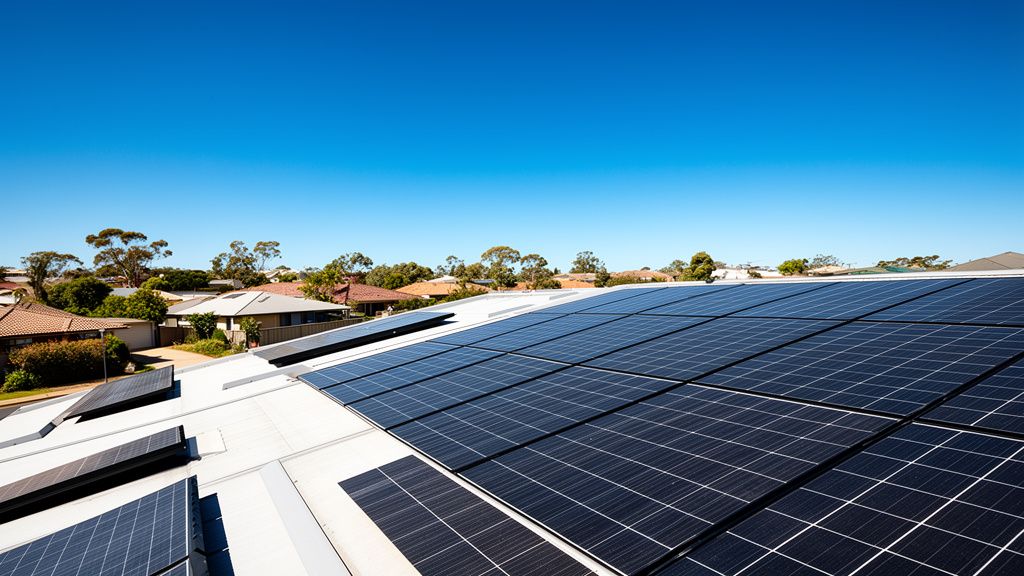
Eliminating FRET in advanced solar designs promises to significantly boost the efficiency of next-generation solar cells, making solar power even more competitive, reducing payback periods for Aussie homeowners and businesses, and accelerating Australia's transition to a renewable energy grid. Imagine solar panels that could convert 25% or even 30% of sunlight into electricity, up from the current best commercial panels hovering around 22-23%. This boost means more power generated from the same footprint, allowing for smaller systems to meet energy needs, or significantly increasing the output of existing roof space. For an average Australian home currently paying, say, $500 a quarter for electricity, a more efficient system could potentially shave an extra $100-$200 off that bill annually, shortening the payback period of a new solar installation from 3-5 years down to 2-4 years, even without generous government rebates. This improved efficiency also translates to lower manufacturing costs per watt, making solar energy cheaper to produce and install across the board, truly becoming the most affordable energy source.
How will this lead to more accessible and diverse solar applications?
This breakthrough will lead to more accessible and diverse solar applications by enabling the development of thinner, lighter, and more flexible solar cells that can be integrated into a far wider range of products and surfaces. Higher efficiency means less material is needed to generate the same amount of power, making these advanced cells cheaper and less resource-intensive. For Australia, this could mean solar films integrated directly into building materials like roofing tiles or windows, turning every surface into an energy generator – perfect for urban environments where roof space is limited. We could see flexible solar panels powering remote agricultural equipment in the outback, or even personal electronics like phones and laptops with vastly extended battery life. By overcoming a fundamental energy loss mechanism, scientists are not just making existing solar panels better; they're unlocking a whole new realm of possibilities for how and where solar energy can be harvested, making clean power ubiquitous and accessible to every Aussie, from the city to the bush.
Key Takeaways
- FRET (Förster Resonance Energy Transfer) is a major cause of energy loss in advanced solar cells, diverting absorbed sunlight away from electricity generation.
- Traditional silicon solar panel improvements do not directly address FRET, requiring new strategies for next-generation materials like quantum dots and perovskites.
- Scientists are overcoming FRET by meticulously engineering solar materials at the nanoscale, controlling molecular distances and orientations to prevent unwanted energy transfer.
- Innovative strategies include creating physical or energy barriers at interfaces and engineering specific energy cascades within the solar cell structures.
- Eliminating FRET promises significantly higher solar panel efficiencies (e.g., 25-30%+) for Australia, leading to lower energy bills, faster payback periods, and more diverse solar applications.
Read More
For a comprehensive overview, check out our master guide: Read the Full Guide Here.