TL;DR: South Australia boasts the second-highest residential PV penetration in Australia primarily due to a convergence of historically high electricity prices, generous feed-in tariffs, and proactive government incentives like battery schemes. These factors have spurred widespread homeowner adoption, solidifying the state's position as a leader in rooftop solar despite the increasing complexity of grid integration.
What Factors Drove South Australia's Early and Sustained Solar Adoption?
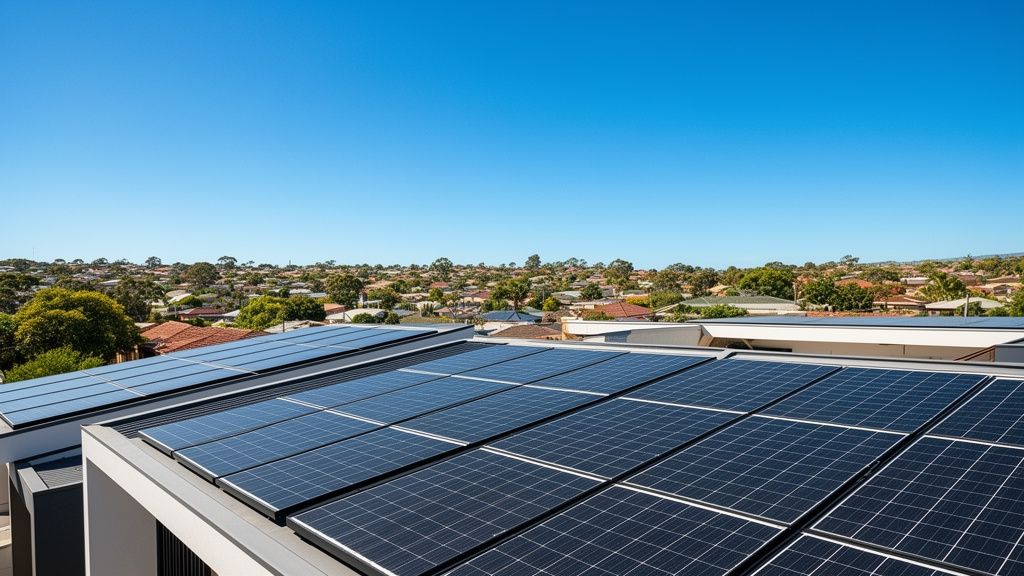
South Australia's early and sustained lead in residential solar adoption was primarily driven by a perfect storm of soaring electricity costs and attractive financial incentives for homeowners. Unlike some other states, SA faced some of the nation's highest retail power prices, making the prospect of generating one's own electricity extremely appealing. This economic pressure, combined with state-specific support programs, created an irresistible case for residents to "chuck solar on the roof." The early adopters not only locked in significant savings but also paved the way for mass adoption, demonstrating the technology's reliability and financial benefits to their neighbours. This grassroots momentum, coupled with consistent policy backing, has kept the state at the forefront of the solar revolution.
The Impact of High Electricity Prices
For years, South Australians have grappled with some of the steepest electricity bills in the country, often paying over 40 cents per kilowatt-hour (kWh) for peak usage. This financial burden made the payback period for a residential solar system incredibly short, sometimes as little as three to five years for an average 6.6kW system, even before considering government rebates. A typical 6.6kW system, costing between $5,000 and $9,000 after the federal STC rebate, offered a direct and tangible way for households to slash their energy expenses, making the investment a no-brainer for many looking to save a quid.
Historical Feed-in Tariffs and Rebates
Early government schemes, particularly the generous premium feed-in tariffs (FiTs) that offered up to 44 cents per kWh for exported power, were a massive catalyst for solar uptake. While these premium FiTs have since closed to new applicants, their legacy significantly boosted initial adoption rates. These tariffs, combined with various state-based rebates and the federal Small-scale Technology Certificates (STCs), made solar installation financially accessible and highly rewarding. Even as FiTs have decreased to more modest rates (currently around 5-10 cents per kWh), the fundamental economics of reducing import bills remain strong, especially with rising grid power costs.
How Have Proactive Policies Supported Residential Solar Growth?
Proactive state government policies, including specific Solar Battery incentives and virtual power plant (VPP) programs, have significantly bolstered residential solar growth beyond initial installation figures. South Australia has consistently looked beyond just installing panels, focusing on smart energy management and grid stability through distributed energy resources. These initiatives empower homeowners to not only generate power but also store and share it, transforming individual solar systems into dynamic components of a modern, resilient energy grid. This forward-thinking approach has been critical in maintaining the state's solar leadership position.
South Australia's Home Battery Scheme
The South Australian Home Battery Scheme, launched in 2018, offers subsidies to residents installing home battery systems alongside their solar panels or retrofitting them to existing solar setups. These subsidies, which can amount to thousands of dollars depending on battery size and household income, have dramatically reduced the upfront cost of energy storage. By making batteries more affordable, the scheme encourages homeowners to maximise their self-consumption, reduce reliance on the grid, and prepare for future energy independence. It's a key reason why SA has one of the highest battery installation rates in Australia.
Virtual Power Plant (VPP) Initiatives
South Australia has been a pioneer in developing Virtual Power Plants, most notably through programs like the SA Virtual Power Plant powered by Tesla. These initiatives aggregate thousands of home solar and battery systems into a collective network that can operate like a single large power plant. Participants receive financial benefits for allowing their batteries to be dispatched to support the grid during peak demand or supply shortages. This not only enhances grid stability but also provides an additional revenue stream for homeowners, further sweetening the deal for those investing in solar and storage.
What Grid Challenges Come with Such High Solar Saturation?
The immense success of residential solar in South Australia has brought about unique challenges for grid stability and management, particularly related to voltage control and reverse power flow. With an astonishing amount of generation happening on rooftops, rather than centralised power stations, the traditional one-way grid infrastructure is under significant stress. Managing this two-way flow of electricity and ensuring system reliability requires sophisticated technology and proactive regulation from entities like SA Power Networks (SAPN), to maintain a stable power supply for all residents.
Managing Voltage and Reverse Power Flow
When thousands of homes are simultaneously exporting excess solar power into the local grid, it can lead to voltage increases, known as "voltage rise," which can affect power quality and even trip inverters offline. SA Power Networks has had to implement strict guidelines and invest in significant infrastructure upgrades to manage this. The challenge lies in absorbing all this clean energy without compromising the stability of the entire network. This sometimes results in export limits being placed on solar systems in areas of high saturation, meaning not all generated power can be sent back to the grid.

The Role of Smart Inverters and Export Limits
To address these challenges, South Australia has mandated the use of "smart inverters" for all new solar installations. These inverters can be remotely controlled by the network operator to manage power export during periods of grid congestion or high voltage. Additionally, export limits – often capping systems at 5kW or 10kW of export, regardless of system size – have been introduced in some areas. While these measures are essential for grid stability, they highlight the trade-offs involved in integrating such high levels of distributed generation and encourage homeowners to consider battery storage to utilise more of their generated power on-site.
What Does the Future Hold for Solar in South Australia?
South Australia is positioned to continue its renewable energy leadership, focusing on integrating more storage, improving grid infrastructure, and developing sophisticated demand-side management to maximise solar benefits. The state has already committed to ambitious targets, aiming for a net 100% renewable energy generation by 2030. Achieving this will require not only more solar and wind but also smarter ways to manage and distribute that power. This vision will see residential solar evolve from a simple cost-saving measure to an integral part of a complex, interconnected, and clean energy ecosystem.
Towards a 100% Renewable Grid
The journey towards 100% net renewables by 2030 means South Australia will further lean into its solar advantage. This includes large-scale projects, but also relies heavily on continued residential PV growth, coupled with increased storage capacity. The state is exploring new transmission lines, pumped hydro projects, and further incentivising household batteries to create a robust and flexible grid. The goal is to ensure that even on cloudy days or calm nights, the state has reliable access to clean energy, primarily generated within its own borders.
The Evolving Role of Home Energy Management Systems
As solar saturation increases, the focus shifts from just generation to smart energy use. Home Energy Management Systems (HEMS) will become crucial, allowing homeowners to intelligently manage when they use, store, or export their solar power. Integrating smart appliances, electric vehicles, and dynamic tariffs will enable households to optimise their energy consumption, potentially even charging their EVs when solar production is highest and grid demand is low. This intelligent approach ensures that South Australia’s abundant solar resource is used as efficiently and effectively as possible, benefiting both residents and the grid.
Key Takeaways
- South Australia's high residential solar penetration is driven by historical high electricity prices and early, generous government incentives.
- Proactive state policies, including battery subsidies and Virtual Power Plant (VPP) initiatives, have been crucial for sustained growth and grid integration.
- High solar saturation presents grid challenges like voltage management and reverse power flow, necessitating smart inverters and export limits.
- The future for SA solar involves further integrating storage, upgrading grid infrastructure, and utilising advanced home energy management systems to achieve 100% renewable targets.
- Homeowners in SA should consider battery storage and participating in VPPs to maximise their solar investment and contribute to grid stability.
Read More
For a comprehensive overview, check out our master guide: Read the Full Guide Here.