G'day, Grid! Smart Meters vs. Legacy Meters: The Australian Solar Edge You Need to Know
For years, the trusty old electricity meter, often tucked away in a dusty corner, simply clocked your power consumption. It was a silent, uncommunicative workhorse, waiting for a human to read its spinning dials. But just like dial-up internet gave way to fibre, Australia's energy landscape is rapidly modernising. The era of the "smart meter" is here, and for solar-powered homes across the country, it's not just an upgrade – it's a game-changer.
If you've recently had solar installed, or moved into a new build, chances are you’ve encountered one. But what exactly sets these new digital devices apart from their older counterparts? And why should an Aussie homeowner, especially one generating their own clean energy, care? Let's dive in.
What is a Legacy Meter? The Old School Way
Imagine a mechanical clock – that's essentially your legacy, or 'accumulation', meter. It's an electromechanical device with spinning discs and dials that physically total your electricity consumption over time.
- One-Way & Manual: These meters are passive. They record data but can’t send it anywhere automatically. To get your bill, someone from your electricity distributor needs to physically visit your property, usually quarterly or bimonthly.
- Limited Data: They only show total consumption. They can't tell you when you used power, only how much. This makes it hard to understand peak usage or optimise your solar self-consumption.
- Flat Tariffs: Without time-of-use data, most legacy meters are associated with flat rate tariffs, meaning you pay the same price per kilowatt-hour (kWh) regardless of the time of day. This is less than ideal for solar owners wanting to maximise daytime usage.
Meet the Smart Meter: The Future of Energy Management
Also known as an Advanced Metering Infrastructure (AMI) meter, a smart meter is a digital device that precisely measures your electricity usage (and generation for solar homes) and communicates that data directly and securely back to your electricity retailer and distributor.
- Two-Way & Remote: This is the biggest difference. Smart meters can send data and receive commands wirelessly, often through mobile phone networks. This means no more estimated bills or waiting for a meter reader – your data is sent automatically, leading to more accurate billing.
- Granular Data: Smart meters record consumption and generation in short intervals, often every 30 minutes. This detailed, time-stamped data is invaluable for understanding your energy patterns.
- Flexible Tariffs: With detailed time-stamped data, smart meters enable time-of-use (TOU) tariffs, where electricity prices vary depending on the time of day (e.g., cheaper overnight, more expensive during evening peak). This is where solar owners can really shine!
- Enhanced Grid Interaction: Features like remote connection/disconnection and faster fault detection help distributors manage the grid more efficiently and respond quicker to outages.
Why the Upgrade? Key Differences Explained
The shift from legacy to smart meters isn't just about going digital; it's about transforming how we interact with our energy.
Data Granularity & Access
Legacy meters offer a total sum, read infrequently. Smart meters provide detailed, interval data (like a minute-by-minute energy diary) accessible via online portals or apps. This empowers you to truly understand and manage your usage.
Billing Accuracy
Manual reads mean estimates are common. Smart meters provide actual, up-to-date readings, eliminating bill shock and ensuring you pay only for what you’ve used.
Tariff Optimisation
Legacy meters often lock you into flat rates. Smart meters unlock various tariff structures, especially TOU, which are crucial for solar homes looking to take advantage of cheaper off-peak rates or maximise self-consumption.
Grid Participation
Smart meters connect your home to the broader energy network, paving the way for future innovations like Virtual Power Plants and demand response programs that benefit both consumers and the grid.
Benefits for Every Aussie Home
Even without solar panels, smart meters offer significant advantages:
- Accurate Bills: Consistently pay for exactly what you use, avoiding surprises.
- Greater Control: Detailed data helps you pinpoint energy-hungry habits and adjust consumption to cheaper off-peak periods, saving you money.
- Faster Problem Solving: Power outage? Your smart meter can often signal an issue to the network, potentially speeding up repairs.
- Easier Switching: No final manual read needed, making it smoother to shop around for better electricity deals.
The Solar Advantage: Supercharging Your Savings
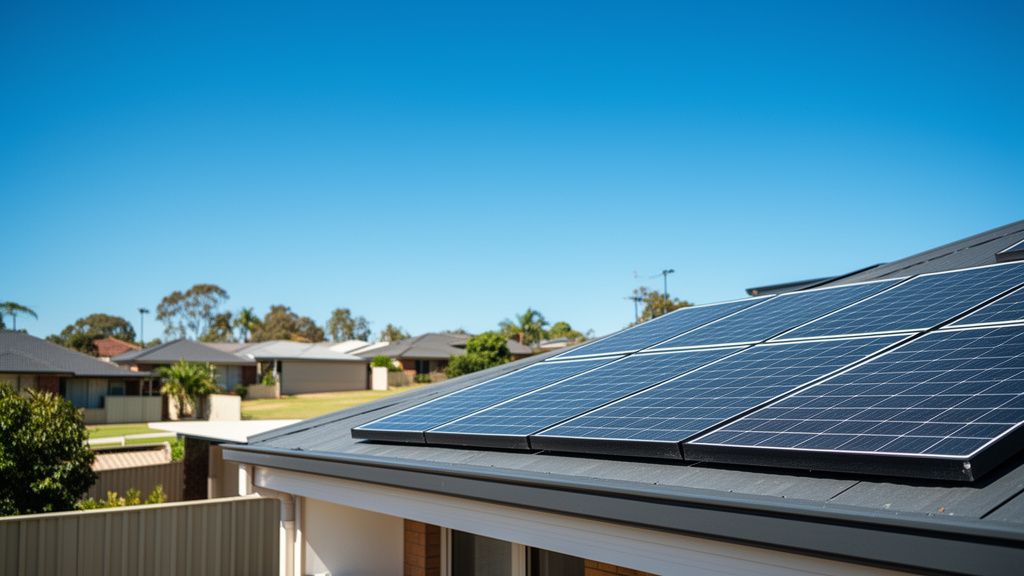
For those with panels soaking up the Aussie sun, smart meters are absolutely indispensable for maximising your investment.
Optimising Self-Consumption
With 30-minute data, you can see precisely how much solar power you’re generating versus consuming. This empowers you to run appliances during the day when your solar is abundant, reducing reliance on expensive grid power. Imagine running your dishwasher or pool pump when your solar is pumping out free electricity, rather than drawing from the grid at a hefty 30-35 cents/kWh in the evening.
Maximising Feed-in Tariffs
Accurate measurement ensures you're correctly credited for every kWh you export back to the grid, even if current feed-in tariffs are often 5-10 cents/kWh.
Battery Storage Integration
Planning a home battery? A smart meter is essential for seamless integration, allowing you to charge your battery when solar is plentiful or grid prices are low, and discharge when prices are high.
Virtual Power Plants (VPPs)
Smart meters are the backbone of VPPs, enabling a network of home batteries and solar systems to collectively support the grid during peak demand. This allows you to earn incentives while contributing to grid stability.
Future-Proofing Your Home
As Australia moves towards a more decentralised, renewable energy grid, smart meters are the foundational technology enabling demand response, smarter grid management, and new energy services that will continue to evolve.
Addressing Common Worries
It’s fair dinkum to have questions about new technology.
- Privacy: Smart meters record usage data, not what appliances are running. The data is aggregated, secured, and accessible to you and your authorised retailer/distributor.
- Cost: While there's an installation cost, in many states, this is factored into network charges or covered when a meter replacement is required (e.g., due to solar installation or a faulty legacy meter). The benefits often outweigh the costs through better energy management.
The Smart Future is Now
In many parts of Australia, particularly in the National Electricity Market (NEM) states, smart meter installation is now standard. For all new connections, or when an existing meter needs replacing (like when you install solar), a smart meter is often mandated. This transition isn't just about convenience; it's about building a more efficient, resilient, and renewable-powered grid for everyone.
Conclusion
From the humble, manually-read legacy meter to the sophisticated, data-rich smart meter, the evolution is clear. For Aussie solar homeowners, this isn't just an upgrade; it’s an empowerment tool. By providing granular data and enabling flexible tariffs, smart meters are key to unlocking deeper savings, optimising your solar investment, and actively participating in Australia's exciting energy future.
So, take a moment to understand your meter. It might just be the smartest move you make for your energy bills and the planet!
Read More
For a comprehensive overview, check out our master guide: Read the Full Guide Here.