Harnessing the Sun Smarter: Understanding Australia's Accelerated Smart Meter Rollout
Australia is a sun-drenched continent, and our love affair with solar panels is undeniable. From urban rooftops to rural properties, solar power is transforming how we generate and consume electricity. But as our energy grid evolves, so too does the technology that manages it. Enter the smart meter – a crucial piece of the puzzle that's rapidly being rolled out across the nation, promising to revolutionise how solar owners interact with their energy.
What Exactly are Smart Meters?
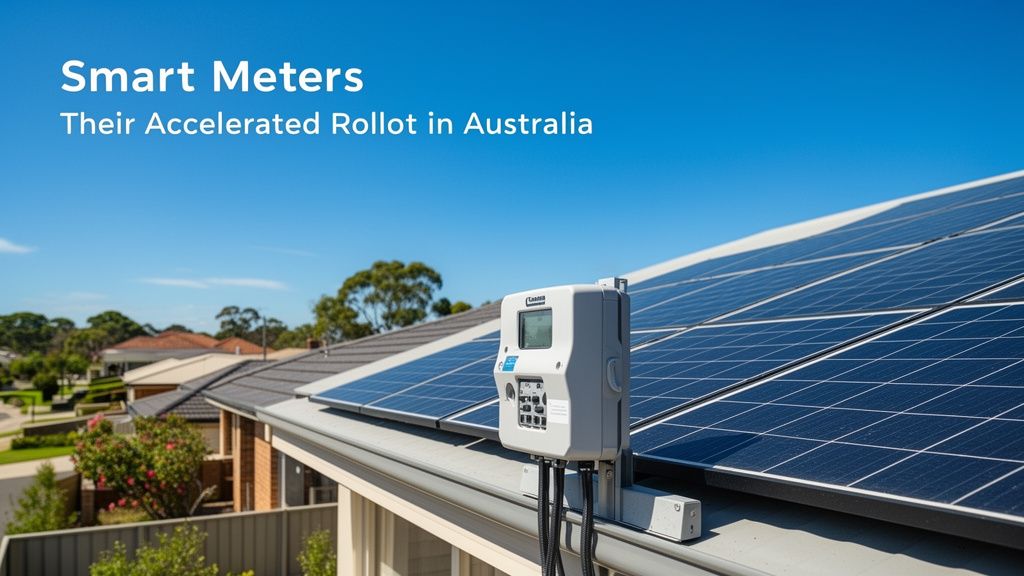
Forget your old spinning disc meter. A smart meter is a next-generation digital electricity meter that does more than just measure your total power consumption. It’s a two-way communication device, capable of recording your energy usage in granular detail, typically every 30 minutes, and sending that data directly to your energy retailer. This eliminates the need for manual meter reads and provides a wealth of information that was previously unavailable.
For solar households, this means it records both the electricity you draw from the grid and the electricity your solar panels export back into it, offering a far more accurate and dynamic picture of your energy flows.
The Accelerated Rollout Down Under
While Victoria pioneered smart meter adoption over a decade ago, the rest of the National Electricity Market (NEM) – encompassing Queensland, New South Wales, the ACT, South Australia, and Tasmania – has seen a significant acceleration in rollout since 2017. This shift was largely driven by changes to the Australian Energy Market Commission (AEMC) rules, which made the installation of smart meters the default for new connections, meter replacements, or when a customer requests one.
The rationale behind this national push is multifaceted: to modernise an ageing grid, better integrate renewable energy sources like solar and wind, and empower consumers with more data. Energy retailers are now responsible for installing these meters, and while you might not have explicitly requested one, if you’re building a new home, upgrading your solar system, or your existing meter simply needs replacing, you’re very likely to get a smart meter.
Benefits for Australian Solar Owners
For those with solar panels on their roof, smart meters unlock a range of advantages:
Maximising Self-Consumption: Understanding exactly when you use power and when your solar system generates it is key to optimising self-consumption. Smart meter data allows you to identify patterns and adjust your energy habits – perhaps running the dishwasher during peak solar production – to minimise drawing from the grid.
Unlocking Time-of-Use (TOU) Tariffs: Smart meters are essential for TOU tariffs, which charge different rates for electricity depending on the time of day. For example, a typical off-peak rate might be around $0.20/kWh, while peak could be $0.45/kWh. Solar owners can strategically shift consumption to maximise savings, drawing power from their panels during expensive peak times and using the grid only when rates are low, or better yet, exporting during peak to earn higher feed-in tariffs if available.
Optimising Battery Storage: If you have a Solar Battery, smart meter data is invaluable. It helps you understand your household’s energy profile, allowing you to program your battery to charge efficiently from your solar panels and discharge during peak demand periods or when grid electricity is most expensive. This can significantly improve your return on investment for battery storage.
Accurate Export Tracking: No more estimated bills for your solar exports! Smart meters precisely measure every kilowatt-hour your system sends back to the grid, ensuring you're fairly credited for your contribution, whether through a feed-in tariff of $0.05-$0.15/kWh or a more dynamic arrangement.
Remote Management and Fault Detection: Smart meters can detect outages or faults more quickly, meaning less downtime and faster resolutions. They also allow for remote connection and disconnection of power, simplifying things when you move or switch retailers.
Future Grid Integration: As Australia moves towards a more decentralised, renewable energy grid, smart meters are foundational. They enable participation in future initiatives like Virtual Power Plants (VPPs), where aggregated rooftop solar and battery systems can act as a single power plant, selling excess energy back to the grid for collective benefit.
Potential Challenges and Considerations
While the benefits are substantial, some considerations exist:
Cost: While the meters themselves are typically installed by your energy retailer, the cost is ultimately recovered through network charges on your bill, often over several years. This might amount to an extra few dollars per month. Data Privacy: The detailed energy consumption data collected by smart meters can raise privacy concerns for some households. Regulations are in place to govern how this data is used and shared. Complexity: Understanding new tariffs and analysing your energy data can be a learning curve for some consumers. Installation Disruptions: While usually straightforward, installations can sometimes involve a brief power outage.
Making the Most of Your Smart Meter
So, what can you do to harness the full potential of your new smart meter?
Monitor Your Data: Most retailers offer online portals or apps where you can view your energy consumption and generation data. Get familiar with it! Understand Your Tariffs: Talk to your energy retailer about the tariff options available. A time-of-use tariff might be more beneficial for your solar household. Adjust Energy Habits: Use your data insights to shift high-energy consumption tasks (like charging an EV or running the washing machine) to periods of high solar generation or low grid prices. Consider Battery Storage: With detailed data, you can make a more informed decision about whether a battery system is right for your home.
The accelerated rollout of smart meters in Australia is not just about upgrading technology; it’s about empowering consumers, especially those with solar. By providing unprecedented insight into energy usage and generation, smart meters are a critical tool for optimising your solar investment, reducing your carbon footprint, and actively participating in Australia's exciting journey towards a cleaner, smarter energy future. Embrace the data, understand your energy, and let your smart meter help you make the most of the sun.