Australia's Unsung Hero: Solar Powers Through Heatwaves, Meeting 77% of Peak Demand!
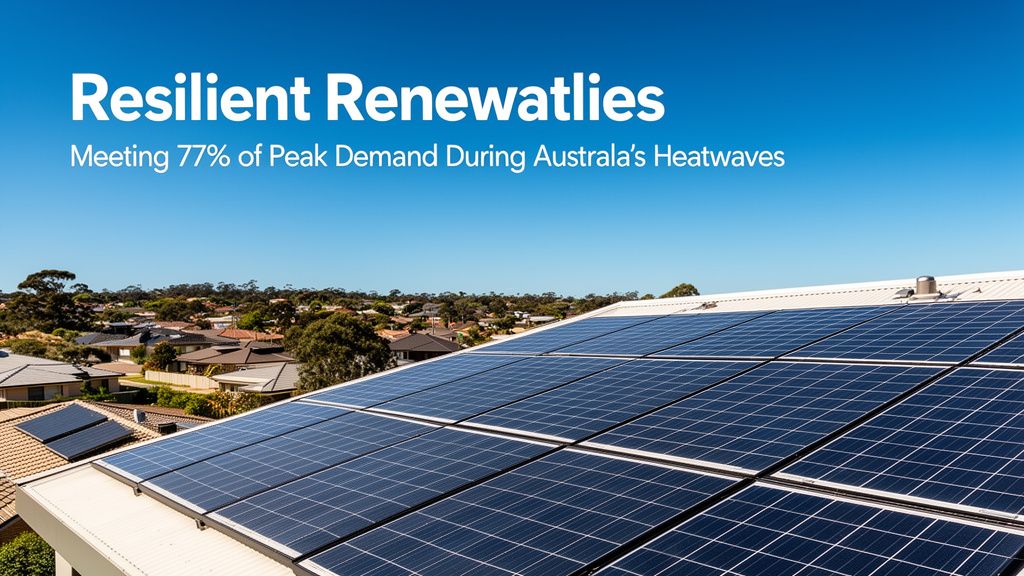
When the mercury skyrockets across our sunburnt country, it’s not just Aussies reaching for the air conditioner; it’s our electricity grid feeling the immense pressure. Heatwaves are notorious for pushing power infrastructure to its limits, sparking fears of blackouts and calls for more reliable energy sources. But here’s a headline that might surprise many: during recent intense heatwaves, Australia's resilient renewables, primarily solar, met an astounding 77% of our peak electricity demand. That's nearly three-quarters of the power needed when the country was sweltering, proving once again that our transition to a cleaner energy future isn't just about environmental responsibility – it's about rock-solid reliability.
The Great Aussie Bake-Off and Grid Stress
Imagine a typical scorching summer's day in Australia. The sun beats down mercilessly, asphalt shimmers, and the air conditioning units across homes and businesses crank up to full blast. This widespread, simultaneous demand creates a 'peak' on the electricity grid. Traditionally, this peak has been met by fossil fuel-powered generators, often the most expensive and polluting ones, specifically brought online for these high-demand periods. The fear of the grid buckling under this pressure has long been a talking point, with critics often pointing to renewables as unreliable when needed most. However, recent evidence paints a starkly different picture.
The Renewable Response: Meeting the Peak
During the intense heatwaves that swept across various states, our renewable energy sources stepped up in a truly monumental way. The figure of 77% of peak demand met by renewables is not just a statistic; it's a testament to the robustness and growing capacity of Australia's green energy sector. While wind farms and hydro power contributed significantly, it was solar, both from massive utility-scale farms and the millions of rooftop panels on homes, that truly shone during the sunniest, hottest parts of the day.
Think about it: as the sun blazed, generating the very conditions that drove demand for cooling, it was simultaneously generating the power to meet that demand. Rooftop solar alone played an enormous role, often described as a "virtual power plant" distributed across the nation, quietly feeding electricity back into the grid and offsetting demand from the network. This decentralised generation helps to alleviate strain on transmission lines and reduces the need for large, centralised power stations to ramp up. The collective contribution from residential solar, coupled with commercial and utility-scale installations, ensured that homes and businesses stayed cool without compromising grid stability.
More Than Just a Number: The Benefits
This incredible performance during heatwaves highlights several critical benefits of Australia's growing renewable energy fleet:


Grid Resilience and Stability: The ability of renewables to meet such a significant portion of peak demand directly contributes to grid stability. It reduces reliance on older, sometimes less reliable thermal generators and helps prevent demand from outstripping supply. Cost Savings for Everyone: By reducing the need for expensive 'peaker' plants, renewable energy helps to lower wholesale electricity prices. This ultimately benefits all consumers by contributing to more stable and potentially lower power bills. Environmental Impact: Meeting demand with clean energy sources during critical periods means less reliance on fossil fuels, leading to a significant reduction in greenhouse gas emissions when they might otherwise be at their highest. Energy Security: A diversified energy mix, with a strong emphasis on homegrown solar and wind, enhances Australia's energy security, making us less vulnerable to international fuel price volatility or supply chain disruptions. Technological Innovation: This success spurs further innovation in battery storage, smart grids, and virtual power plants (VPPs) that can better manage and distribute renewable energy.
The Bright Future of Australian Energy
The 77% figure isn't just a win for renewables; it's a blueprint for Australia's energy future. While solar performs brilliantly during daylight hours, the ongoing integration of large-scale battery storage solutions is crucial to extend this renewable contribution into the evening peak, when demand often shifts but the sun has set. Projects like the massive Waratah Super Battery in NSW, along with countless smaller home batteries, are rapidly bridging this gap.
Australia is blessed with some of the best solar and wind resources on the planet. This natural advantage, combined with a committed push towards more renewable energy, positions us not just to meet our own energy needs reliably and cleanly, but also to become a global renewable energy superpower.
So, the next time a heatwave hits, spare a thought for the silent heroes – our solar panels and wind turbines – working tirelessly to keep our lights on and our air conditioners humming. Their resilience is undeniable, and their contribution to a stable, affordable, and sustainable energy future for Australia is proving to be nothing short of extraordinary. If you’re considering adding solar to your home, there’s never been a more compelling time to join the renewable revolution and be part of Australia’s resilient energy solution.
Read More
For a comprehensive overview, check out our master guide: Read the Full Guide Here.