Australia's Solar Revolution: Powering a Brighter, Greener Future
G'day, fellow Aussies! If you’ve been paying any attention to your power bills or the news lately, you’ll know that Australia is in the midst of an energy transformation. Blessed with some of the best sunshine in the world and an abundance of wide-open spaces, it’s no surprise that solar energy is at the forefront of our charge towards a sustainable future. Our journey from a fossil-fuel reliant nation to a renewable energy powerhouse is not just a dream; it’s a brilliant reality unfolding before our very eyes.
The Sunshine Nation's Solar Ascent
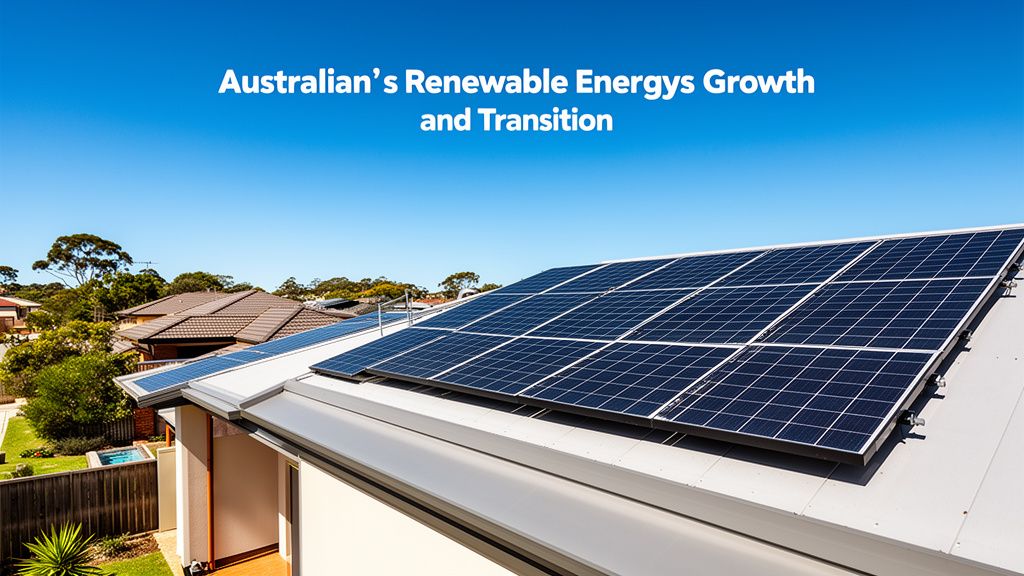
Australia has truly embraced solar power with a passion. We boast the highest per capita rooftop solar installation rate in the world, with over 3.6 million homes and businesses now powered by the sun. That's more than one in three Australian households! From suburban rooftops to sprawling regional properties, solar panels are becoming as iconic as the Hills Hoist. But it's not just residential uptake; large-scale solar farms, like the massive Sunraysia Solar Farm in NSW or the Western Downs Green Power Hub in Queensland, are popping up across the landscape, feeding gigawatts of clean energy directly into our national grid. These developments are not just impressive feats of engineering; they represent a fundamental shift in how we generate and consume electricity. The sheer scale of this growth is astounding, making Australia a global leader in solar adoption.
Driving Forces Behind the Shift
What's fuelling this incredible growth? A mix of powerful drivers. Economically, solar simply makes sense. The cost of installing solar panels has plummeted over the past decade, making it an incredibly attractive investment for homeowners and businesses alike. For many, a typical 6.6kW system might cost between $5,000 and $8,000 after rebates, offering significant savings on electricity bills, often cutting them by 50% or more. Environmentally, the growing awareness of climate change and the desire for cleaner air and a healthier planet are strong motivators. Australians are increasingly committed to reducing their carbon footprint. Technologically, solar panels are more efficient and durable than ever, while battery storage solutions are becoming more affordable and accessible. Furthermore, government policies, both past and present, including feed-in tariffs and installation rebates, have played a crucial role in kick-starting and sustaining this transition.
Navigating the Transition: Challenges and Innovation


Of course, a transformation of this magnitude isn't without its challenges. Integrating vast amounts of intermittent renewable energy into an aging grid designed for centralised, constant power sources requires significant upgrades and smart management. Issues like grid stability, voltage fluctuations, and the need for better transmission infrastructure are all critical areas of focus. However, Australian innovation is rising to the occasion. We're seeing exciting developments in battery storage, both at the household level (think Tesla Powerwall or Enphase batteries) and grid-scale (like the Hornsdale Power Reserve in South Australia, a trailblazer for big batteries). Virtual Power Plants (VPPs) are emerging, allowing aggregated rooftop solar systems and batteries to act as a collective power station, stabilising the grid and providing backup power. Furthermore, investments in new "poles and wires" are underway to strengthen the network and connect new renewable energy zones, ensuring the power generated in sunny regional areas can reach our major cities efficiently.
The Broader Renewable Landscape and Economic Dividends
While solar often steals the spotlight, Australia's renewable energy growth is a multi-faceted story. Wind farms, particularly in states like South Australia and Victoria, contribute significantly to our clean energy mix, harnessing our strong coastal winds. Hydroelectric power continues to play a vital role, and emerging technologies like green hydrogen hold immense promise for the future, potentially positioning Australia as a major exporter of clean energy. This transition is not just about clean power; it’s a massive economic opportunity. It's creating thousands of new jobs in installation, manufacturing, research, and maintenance. It’s attracting billions of dollars in investment, stimulating regional economies, and strengthening our energy independence. By building a robust renewable energy sector, we're diversifying our economy and creating a more resilient future.
Australia's Future as a Renewable Energy Superpower
Looking ahead, the future is incredibly bright. Australia has set ambitious targets, with many states aiming for 100% renewable energy or higher. The federal government's commitment to significantly reducing emissions by 2030 and achieving net-zero by 2050 underscores the national resolve. With our unparalleled solar and wind resources, our technical expertise, and a growing pipeline of innovative projects, Australia is uniquely positioned to become a global renewable energy superpower. We have the potential not only to power our own nation entirely with clean energy but also to export it, in various forms, to the world. Imagine powering our industries, transport, and homes with homegrown, pollution-free energy, while also contributing to global decarbonisation efforts. That's a future worth working towards.
Conclusion
Australia’s renewable energy growth and transition is a testament to our ingenuity, our natural advantages, and our collective commitment to a better future. From the smallest rooftop solar system to the largest solar farm, every panel, every battery, and every innovation is propelling us forward. It's an exciting time to be an Aussie, witnessing our nation embrace its potential and build a cleaner, more affordable, and sustainable energy system for generations to come. The sun is well and truly shining on Australia's renewable energy journey, and the future has never looked brighter.


