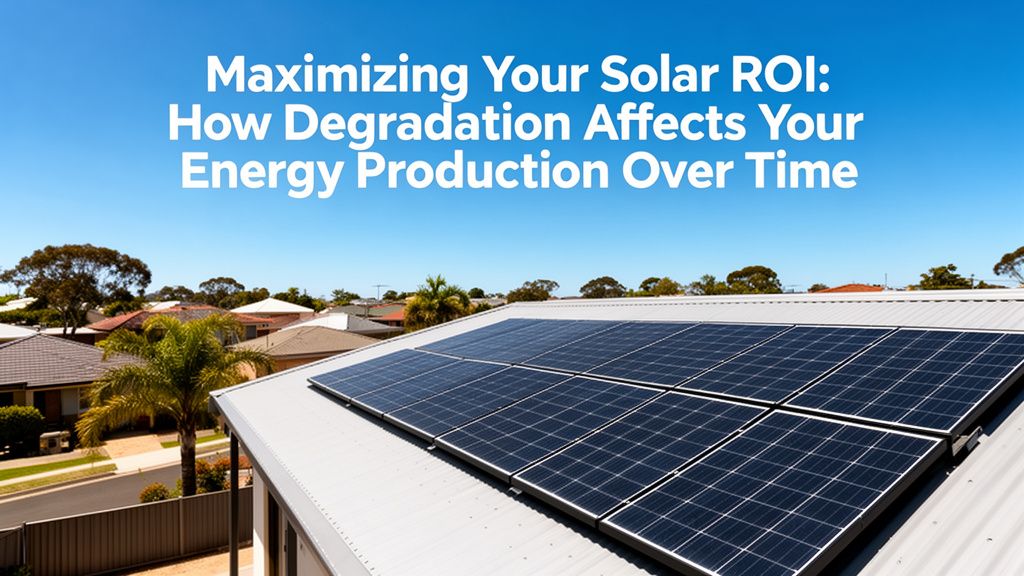
Maximizing Your Solar ROI: How Degradation Affects Your Energy Production Over Time
Australia's sunshine makes it a global leader in solar adoption, and for good reason. Investing in solar panels means harnessing that abundant energy, slashing your electricity bills, and contributing to a greener future. But like any long-term investment, understanding the nuances of your solar system's performance over its lifetime is crucial for truly maximising your Return on Investment (ROI). One such nuance, often overlooked by many savvy Aussie homeowners, is solar panel degradation. It's a natural phenomenon that slowly but surely impacts your system's energy output. Let's delve into what degradation means for your panels and, more importantly, for your wallet.
What is Solar Panel Degradation?
In simple terms, solar panel degradation refers to the gradual, natural decrease in a solar panel's electricity-producing efficiency over time. It's not a sudden failure, but rather a slow, predictable decline, much like how the battery in your phone or laptop holds less charge after years of use. This isn't a flaw in the technology but an inherent characteristic of semiconductor materials exposed to the elements.
Most quality solar panels are designed to degrade at a very low rate, typically between 0.5% and 1% per year after an initial, often slightly higher, first-year drop. This means a panel rated at 400 watts might produce 398 watts in its second year, 396 watts in its third, and so on. While these percentages seem small individually, their cumulative effect over two decades can be significant.
The Science Behind the Slide
Why does this happen? Solar panels are intricate devices made of photovoltaic (PV) cells, usually silicon-based, that convert sunlight into electricity. Over years of constant exposure, various factors contribute to their gradual decline:
- UV Radiation: Australia's intense UV rays, while essential for solar power, can slowly break down the encapsulating materials and adhesives within the panel, affecting cell performance.
- Temperature Fluctuations: Extreme heat and cold, and the constant expansion and contraction they cause, can stress materials and connections.
- Environmental Factors: Humidity, dust, salt spray (especially in coastal areas), and even micro-cracks from hail or debris can contribute to wear and tear.
- Light-Induced Degradation (LID) & Potential-Induced Degradation (PID): These are specific types of degradation that can occur, especially in the first year of operation. LID is a temporary drop in performance when panels are first exposed to sunlight, which then stabilises. PID is a more serious issue that can occur in high-voltage systems and refers to power loss due to unwanted electrical potential differences between the solar cells and the module frame. Reputable manufacturers use technologies to mitigate both.
Impact on Your Energy Production and ROI
The direct consequence of degradation is a reduction in your system's annual energy production. Less kWh generated means higher electricity bills, as you'll be drawing more power from the grid, and potentially lower feed-in tariff credits if you export excess energy.
Let's consider a common 6.6kW solar system in an Australian home. In its first year, it might generate, for example, 9,000 kWh annually. With an average degradation rate of 0.7% per year, by year 10, that same system would be producing approximately 8,400 kWh. By year 25, it could be closer to 7,400 kWh – a noticeable difference of over 15% from its initial output.

This reduction directly impacts your financial savings. If you're saving, say, 30 cents per kWh by consuming your own solar power, a drop of 600 kWh per year (from year 1 to year 10) means you're missing out on $180 in annual savings. Over the system's lifespan, these cumulative losses add up, potentially extending your payback period and diminishing your overall ROI. Understanding this allows you to factor it into your financial projections and make more informed decisions.
Mitigating Degradation: Smart Choices for Long-Term Performance
While degradation is inevitable, there are proactive steps you can take to minimise its impact and ensure your solar system delivers maximum value for decades:
- Invest in Quality Panels: This is paramount. Reputable manufacturers use higher-grade materials, employ advanced manufacturing processes, and perform rigorous testing to produce panels with lower degradation rates and better resilience. Look for panels from Tier-1 manufacturers known for their longevity.
- Check Performance Warranties: A good performance warranty is your best defence. Most quality panels come with a 25-year performance warranty, guaranteeing a minimum output level (e.g., 80-85%) by the end of the warranty period. This warranty is a manufacturer's commitment to the panel's long-term efficiency.
- Professional Installation: A properly installed system is less prone to stress and damage. Ensure your installer is Clean Energy Council (CEC) accredited and has a strong track record.
- Regular Monitoring: Modern inverter technology often includes monitoring apps. Keep an eye on your system's daily and monthly output. A sudden or accelerated drop in production could signal an issue beyond normal degradation.
- Maintenance and Cleaning: While solar panels require minimal maintenance, occasional cleaning (especially in dusty or coastal areas) can prevent efficiency losses due to dirt build-up. Regular inspections can also spot potential issues early.
Calculating Your Long-Term ROI: An Australian Perspective
When evaluating solar quotes, savvy Aussies don't just look at the upfront cost and first-year savings. Factor in the long-term performance, considering the projected degradation. A slightly higher upfront investment in premium panels with a better degradation rate can often lead to significantly higher overall savings and a better ROI over 20-25 years.
Speak to your solar installer about their chosen panel's degradation rates and how this has been factored into their savings estimates. A transparent quote should give you a realistic picture of your energy production years down the track. With rising electricity prices across Australia, every kilowatt-hour your panels produce consistently translates directly into tangible savings on your bill.
Conclusion
Solar panel degradation is a reality, but it's a manageable one. By understanding its causes, impacts, and mitigation strategies, you empower yourself to make smarter choices for your solar investment. Opting for quality components, robust warranties, and professional installation are your best tools for ensuring your Aussie solar system continues to deliver exceptional performance and maximise your ROI for decades to come. Don't let a small percentage erode your significant investment; choose wisely and enjoy the sun's bounty.
Read More
For a comprehensive overview, check out our master guide: Read the Full Guide Here.