SolarInsights: Maximizing Solar Panel Efficiency - How Many Fit on Your Roof?
Thinking about joining the solar revolution and slashing those electricity bills? One of the first questions most Aussie homeowners ask is: "How many solar panels can I actually fit on my roof?". It's a crucial consideration, as the number of panels directly impacts the amount of clean energy you can generate and, ultimately, the savings you'll see. Getting this right involves understanding your roof's potential and navigating a few key factors. For a Complete Guide, keep reading!
Assessing Your Rooftop Real Estate
Before you start dreaming of a roof covered in gleaming solar panels, it’s essential to take stock of your available space. This isn't just about square meters; several elements influence how many panels you can practically install.
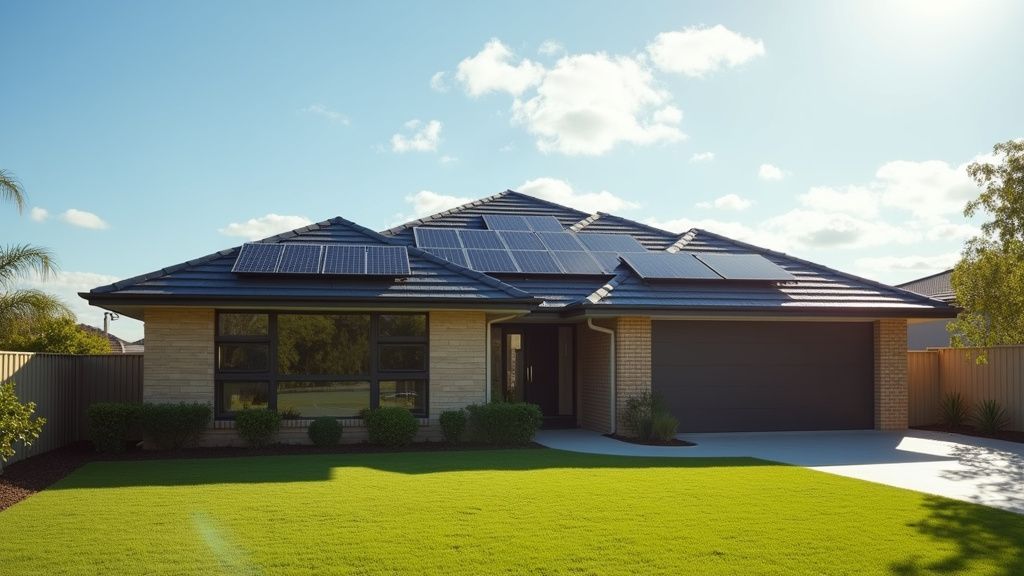
- Roof Type and Condition: Metal or asphalt shingle roofs are generally ideal for solar panel installation due to their durability. The average solar panel weighs around 18kg, and a complete system, including frames and fixings, can easily exceed 300kg. An older or less robust roof might require reinforcement, adding to the overall cost. While flat roofs don’t have a natural angle, they can be excellent for solar panels due to the straightforward installation process. Panels can be easily positioned and angled for optimal sun exposure using mounting structures. Sloped roofs may necessitate careful planning to maximize space, especially if they have steep pitches that create shadows, reducing solar panel efficiency.
- Orientation Matters: In Australia, the northern side of your roof receives the most sunlight throughout the day. Therefore, prioritizing this aspect when determining your roof’s capacity is vital. East and west-facing panels can also be viable options if a north-facing orientation isn't possible.
- Angle Optimisation: While roof angles vary, most panels will benefit from slight adjustments to capture maximum sunlight, particularly when the sun is at its highest point.
- Obstructions and Shading: Chimneys, skylights, vents, and antennas can all cast shadows and reduce the usable space on your roof. Trees and nearby buildings can also cause shading, especially during peak sunlight hours. Consider trimming or removing trees to maximize energy production and strategically positioning panels to avoid these obstructions.
- Exclusion Zones: Solar panels can't be installed right to the very edge of your roof. Building regulations typically require a minimum clearance, often around 20cm, between the panels and the roof's edge. This is mainly to prevent wind damage, as the strongest winds tend to occur around the edges of the roof.
- Mounting Hardware: Remember to factor in space for the mounting hardware, which secures the panels to your roof. This usually adds about 5cm to the overall footprint of each panel.
Navigating Regulations and Guidelines


It's crucial to be aware of local regulations and guidelines regarding solar panel installations. These rules dictate what's permissible in your area. These are designed to ensure safety and compliance with building standards.
For residential buildings, adding solar panels falls under low-risk work, so no building permit or council approval is required if a max of 38 m² isn't surpassed. Moving beyond these limits on a single roof structure is called Notifiable Building Work (NFW). Although they won’t require a full building permit from the council, they must be overseen by a building surveyor. However, it’s always best to check with your local council if unsure. For commercial buildings, local regulations dictate that you are a medium-risk regardless of the size of your installation, with requirements to engage with a building surveyor to ensure you comply with government standards.
How Many Panels Do You REALLY Need?
Beyond the physical limitations of your roof, the number of panels you need depends on your energy consumption and desired savings. A typical Australian household consumes around 15-20 kWh of electricity per day. Your solar system size should be tailored to offset this consumption. The average solar panel produces around 330-400 watts of power.
To calculate the required system size, consider this simplified example:
- Daily Consumption: 15 kWh
- Convert to Watt-hours: 15 kWh x 1000 = 15,000 Wh
- Peak Sun Hours: Assume 5 hours of peak sunlight per day (this varies by location)
- Required System Size: 15,000 Wh / 5 hours = 3000 Watts (3 kW)
- Number of Panels (assuming 350W panels): 3000 W / 350 W = ~8.5 panels. You'd likely round up to 9 panels.
Professional Assessment is Key
While this guide offers valuable insights, it's essential to consult with a qualified solar installer. They can conduct a thorough site assessment, taking into account all the factors mentioned above, and provide a tailored recommendation for your specific needs and roof. They can also navigate the regulatory landscape and ensure a safe and compliant installation. A professional can also provide accurate pricing and information on available government rebates and incentives.
Investing in solar power is a smart move for your wallet and the environment. By understanding your roof's potential and working with experienced professionals, you can maximize your solar panel efficiency and enjoy the benefits of clean, affordable energy for years to come.