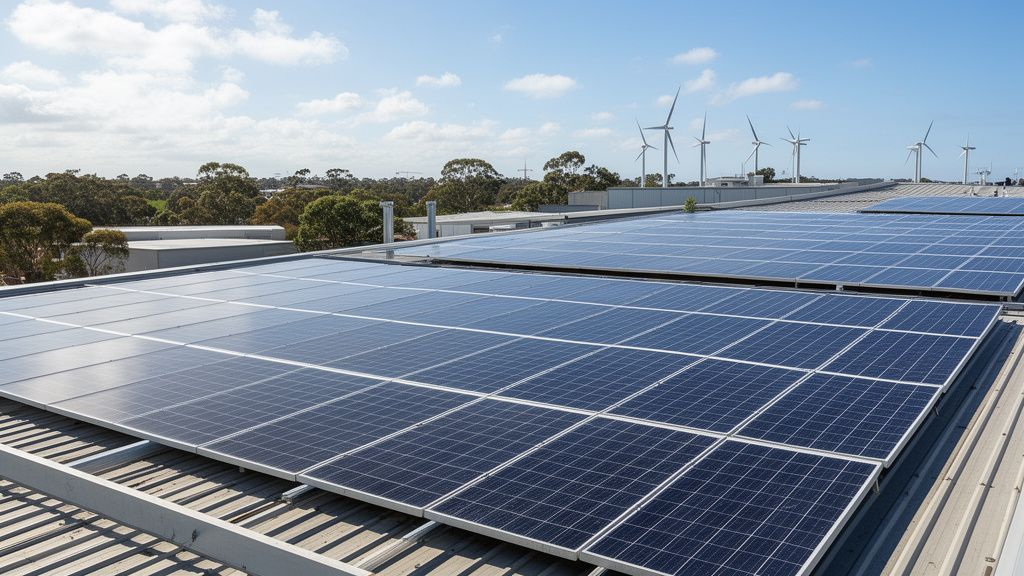
TL;DR: Commercial and industrial enterprises can significantly lower operational costs and achieve corporate sustainability goals through customized solar system designs, proactive professional maintenance, and lucrative Large-scale Generation Certificate (LGC) incentives.
Custom Solar Solutions for the Commercial and Industrial Sectors
For modern businesses and industrial facilities, electricity is one of the largest and most volatile ongoing operational expenses. As the Australian energy market transitions, commercial enterprises are turning to customized solar energy systems to hedge against fluctuating grid prices, boost overall energy efficiency, and meet increasingly strict corporate social responsibility and sustainability targets.
Every commercial property is unique, featuring different roof structures, energy consumption schedules, local network constraints, and financial targets. Because of this complexity, off-the-shelf solar packages are entirely unsuitable for commercial use. A successful commercial solar deployment requires a comprehensive partner, such as SAE Group, to manage the entire journey from the initial professional consultation to customized engineering and system design. This tailored approach ensures that the physical solar array is perfectly sized to match the hourly load profile of the facility, maximizing self-consumption of solar energy and delivering the highest possible return on investment (ROI).
The Financial Power of Large-scale Generation Certificates (LGCs)
While residential solar installations benefit from Small-Scale Technology Certificates (STCs), larger commercial and industrial installations can tap into highly lucrative Large-scale Generation Certificate (LGC) incentives. Under the Renewable Energy Target (RET) framework, these certificates provide ongoing economic and environmental gains for businesses:
- LGC Creation: Systems that exceed specific capacity thresholds are entitled to create LGCs for the clean electricity they generate.
- Financial Monetisation: These certificates can be sold to entities that have legal liabilities to acquire them, creating a valuable, ongoing revenue stream that offsets the initial system purchase and installation costs.
- Corporate Accountability: Accumulating and managing LGCs directly supports a company’s public corporate responsibility goals, providing verified, auditable data regarding their transition to green operations.
When combined with flexible corporate financing packages, the financial profile of a custom commercial system is highly compelling, often yielding a rapid payback period followed by decades of free, localized power generation.
Seamless Adoption and Safety Standards
Deploying a large-scale solar array across a working commercial or industrial site requires meticulous logistical planning. Businesses cannot afford extended operational downtime or safety hazards during installation.


Professional solar integrators ensure that the installation process is highly streamlined for maximum efficiency and minimal disruption to daily business activities. Crucially, all engineering works must strictly adhere to the highest national safety, environmental, and regulatory standards. From securing structural roof certifications to coordinating grid connection approvals with local distribution network service providers, a professional, end-to-end installation ensures the asset is fully compliant and optimized for long-term grid integration.
Safeguarding Commercial Assets with Proactive Maintenance
Once a commercial solar asset is commissioned, its financial performance depends entirely on its operational uptime. Unlike residential systems, a minor drop in performance on a multi-hundred-kilowatt commercial roof can equate to thousands of dollars in lost savings every single month. This makes professional, post-installation solar maintenance an essential business practice.
To ensure long-term performance and durability, businesses must implement a proactive maintenance schedule that includes:
- Regular Performance Monitoring: Continuous, software-enabled monitoring to track energy output and immediately identify any drops in generation.
- Scheduled Physical Check-ups: On-site inspections of panels, mounting structures, and high-voltage inverters to detect wear, tear, or thermal anomalies.
- Swift Troubleshooting and Repairs: Access to rapid-response technical teams to resolve equipment faults before they impact the business's bottom line.
- Warranty Support: Dedicated administrative and technical support to manage manufacturer warranties and ensure zero out-of-pocket expenses for premature equipment failures.
By treating commercial solar as a core financial asset that requires regular, professional maintenance, enterprises can protect their capital investment and ensure consistent utility savings for decades.
Key Takeaways
- Operational Cost Reduction: Custom-engineered commercial solar systems are designed to match a business's specific load profile, significantly driving down daily utility expenses.
- LGC Financial Incentives: Large-scale commercial installations can leverage Large-scale Generation Certificates (LGCs) to secure long-term economic gains.
- Streamlined Commercial Deployment: Professional installations from consultation to design ensure zero business disruption and total compliance with strict Australian safety standards.
- Active Asset Protection: Proactive maintenance, check-ups, and real-time performance monitoring are mandatory to safeguard commercial solar ROI and guarantee system longevity.


