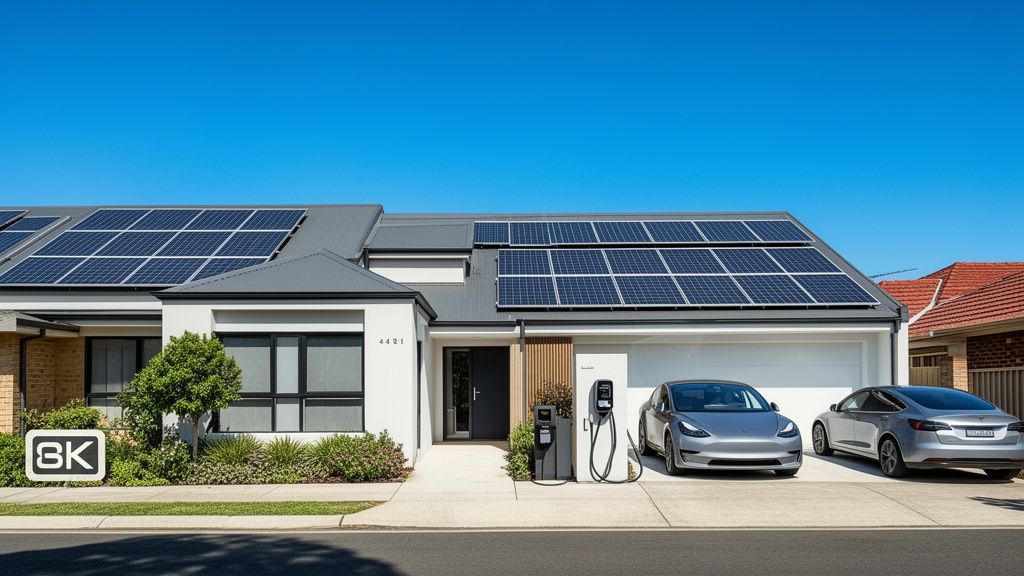
TL;DR: Preparing an apartment building for electric vehicles (EVs) requires significant electrical infrastructure upgrades, from main switchboards to charging points, alongside smart load management. Proactive planning by body corporates and residents is crucial to accommodate the growing demand for EV charging and future-proof the property.
Why Should Apartment Buildings Prioritise EV Charging Infrastructure Now?
Apartment buildings should prioritise EV charging infrastructure now to meet growing demand, future-proof their properties, and enhance their appeal in a rapidly electrifying world. The transition to electric vehicles is accelerating across Australia, driven by environmental concerns, rising fuel costs, and government incentives. For multi-dwelling units (MDUs), this presents a unique challenge and opportunity. Residents increasingly expect convenient home charging solutions, making EV-ready infrastructure a key amenity that can significantly boost property values and desirability. Ignoring this trend risks leaving a building outdated and less attractive to prospective buyers and tenants. Forward-thinking body corporates are already planning or implementing solutions to ensure their communal living spaces are prepared for the influx of EVs.
The Growing Demand for EVs in Australia
The demand for EVs in Australia is skyrocketing, with sales more than doubling in 2023 compared to the previous year. As more Australians embrace electric transport, the need for accessible charging infrastructure will become paramount, especially in urban apartment complexes where off-street parking is common. Without adequate charging points, residents may face significant inconvenience, relying on public charging networks which can be expensive and less convenient. Providing on-site charging helps to alleviate range anxiety and integrates seamlessly into residents' daily routines, making the transition to EV ownership much smoother for those in apartments.
Future-Proofing Your Building's Value
Investing in EV charging infrastructure is a strategic move to future-proof your building's value and appeal. As the market shifts, properties without EV charging capabilities will likely be seen as less desirable. Modern buyers and renters are environmentally conscious and seek amenities that support their sustainable lifestyles. A building equipped with robust EV charging solutions signals a commitment to sustainability and modern living, potentially commanding higher rental yields and sale prices. It transforms a potential liability (lack of charging) into a distinct competitive advantage, ensuring the building remains relevant and attractive for decades to come.
What Are the Primary Electrical Challenges for Apartment EV Charging?
The primary electrical challenges for apartment EV charging involve limited grid capacity, insufficient existing switchboard capacity, and the complexities of individual metering and billing. Unlike detached homes, apartment buildings often have shared electrical infrastructure that wasn't designed for the sustained, high-power draw of multiple EV chargers simultaneously. Many older buildings, in particular, may have main switchboards or sub-boards that simply cannot handle the additional load without significant and costly upgrades. This necessitates careful assessment of the current electrical supply and potential bottlenecks, often requiring a professional electrical audit to determine feasibility and identify necessary improvements.
Understanding Your Building's Existing Electrical Capacity
Before any EV chargers can be installed, it's crucial to understand your building's existing electrical capacity. Most apartment buildings are metered from a central point, with power then distributed to individual units and common areas. Adding numerous high-power EV chargers (e.g., 7kW to 22kW per car) can quickly exceed the building's main supply fuse or the capacity of individual distribution boards. An expert electrical engineer can assess the current maximum demand, available headroom, and identify where upgrades to cabling, circuit breakers, and potentially the entire main switchboard are required. Without this assessment, there's a risk of overloading the system, leading to outages or safety hazards.
The Need for Load Management Systems
Given the inherent electrical limitations in many apartment buildings, load management systems are not just beneficial but often essential. These smart systems monitor the building's overall electricity consumption and intelligently distribute available power to EV chargers, ensuring the total load never exceeds the building's capacity. For instance, if many cars plug in at once, the system might reduce the charging speed for each vehicle rather than allowing an overload. This optimises charging efficiency within the existing infrastructure, avoids expensive upfront electrical network upgrades, and ensures fair power distribution among all users, preventing individual circuit overloads.
What Essential Upgrades Are Required to Make a Building EV-Ready?
Essential upgrades to make an apartment building EV-ready include upgrading the main switchboard and distribution boards, installing dedicated charging circuits, and implementing smart charging solutions. These aren't simple plug-and-play installations; they involve significant infrastructure modifications to safely and efficiently deliver power to multiple vehicles. The goal is to create a robust, scalable system that can accommodate current EV owners while also having the capacity to expand as more residents adopt electric vehicles in the future. Investing in quality infrastructure from the outset can prevent more costly retrofits down the line.
Main Switchboard and Distribution Board Enhancements
Upgrading the main switchboard and individual distribution boards (DBs) is often the most critical and expensive part of making a building EV-ready. The main switchboard controls the entire building's power supply from the grid. If it lacks sufficient capacity, it will need to be replaced or significantly augmented. Similarly, feeder cables from the main board to parking areas and within individual parking bay sub-circuits may need to be upgraded to handle higher currents. This work must be carried out by licensed electricians and typically involves significant planning and coordination with the local network distributor, potentially costing tens of thousands of dollars, or even hundreds of thousands for larger, older buildings.


Installing Smart Charging Stations and Software
Beyond the core electrical upgrades, installing smart charging stations and integrated software is crucial for managing the system effectively. Smart chargers offer features like remote monitoring, scheduling, and power management, allowing the body corporate or a third-party operator to control access, set tariffs, and track energy consumption. A basic 7kW AC charger might cost $1,000-$2,500 for the unit, plus installation ranging from $1,500-$5,000 per bay depending on the distance from the power source and required electrical work. Integrating these chargers with a central management platform enables features like load balancing, billing for usage, and prioritising charging based on user needs, ensuring an equitable and efficient system for all residents.
How Can Apartment Buildings Fund and Manage EV Charging Installations?
Apartment buildings can fund EV charging installations through a combination of body corporate levies, grants, user-pays models, and financing arrangements, requiring clear management plans. Given the substantial investment required, a multi-faceted approach to funding is often necessary. Transparent communication and agreement among lot owners are key to a successful project. Exploring all available options, from government support to private partnerships, can help mitigate the financial burden on individual residents while ensuring the building remains competitive and future-proof.
Funding Models and Potential Government Grants
Several funding models exist for EV charging infrastructure in strata buildings. A common approach is for the body corporate to fund a portion of the core infrastructure (like switchboard upgrades) through special levies or sinking funds, viewing it as a common asset improvement. Individual residents might then pay for the final connection and charger at their bay. User-pays models, where an operator installs and manages the chargers, charging residents per kWh, are also gaining traction. Furthermore, various state and federal government grants, like those offered by the NSW Office of Energy and Climate Change or Victorian Government EV grants, occasionally become available to support EV charging in MDUs, which can significantly offset costs.
Body Corporate Policies and Resident Agreements
Successful EV charging integration hinges on clear body corporate policies and resident agreements. These documents should outline the installation process, who is responsible for costs (installation, maintenance, electricity), how charging access will be managed, and dispute resolution procedures. It's vital to establish a transparent framework for booking charging times, setting tariffs (if applicable), and ensuring fair usage. A well-defined policy ensures that all residents understand their rights and responsibilities, preventing conflicts and fostering a harmonious transition to an EV-ready building.
Key Takeaways
- Apartment buildings need to proactively upgrade electrical infrastructure to support EV charging and future-proof property value.
- Key challenges include insufficient main switchboard capacity, the need for load management systems, and complex metering.
- Essential upgrades involve significant electrical work on main and distribution boards, plus the installation of smart charging stations.
- Funding can come from body corporate levies, grants, user-pays models, and financing, requiring robust management policies.
- Consulting with electrical engineers and engaging the body corporate early is crucial for successful implementation.
Read More
For a comprehensive overview, check out our master guide: Read the Full Guide Here.