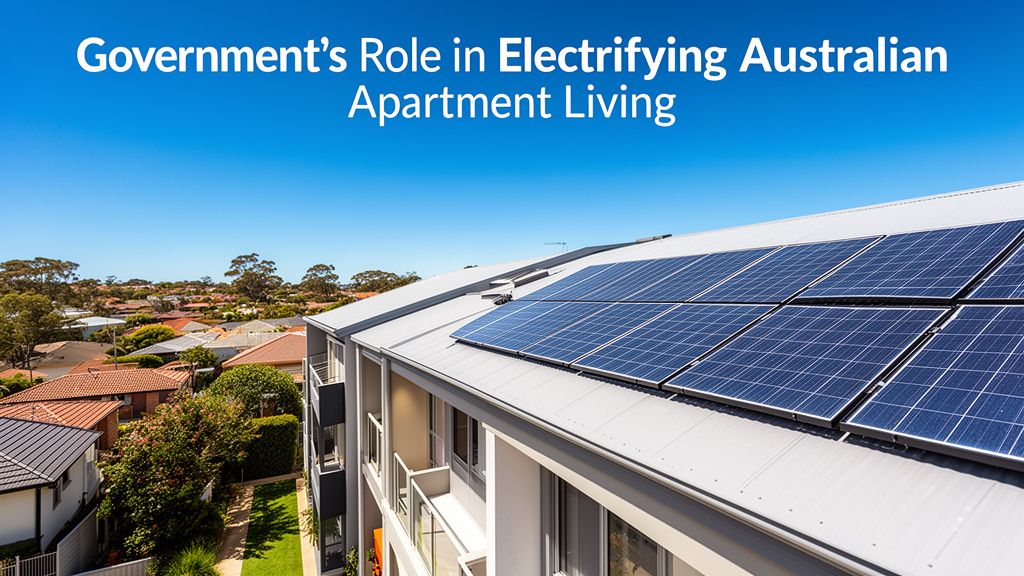
TL;DR: Governments can significantly accelerate solar uptake in Australian apartments by implementing a strategic mix of financial incentives ("carrots") such as targeted grants and streamlined approvals, alongside regulatory pressures ("sticks") including minimum energy efficiency standards and mandatory disclosure. This dual approach is essential for overcoming the unique challenges of strata living and shared infrastructure, paving the way for a greener energy future in multi-unit dwellings.
What are the unique challenges for solar installation in Australian apartment buildings?
Installing solar on Australian apartment buildings faces unique hurdles, primarily stemming from complex strata ownership structures and the difficulty in securing collective decision-making. Unlike single-owner homes, major common property upgrades like solar require significant consensus among multiple lot owners, demanding a special resolution (typically 75% lot owner agreement), which is often slow, bureaucratic, and contentious. This high bar for collective decision-making, combined with the significant upfront costs, means many strata corporations delay or abandon solar projects.
How does strata complexity impede solar projects?
Strata title legislation often demands a special resolution (75% lot owner agreement) for major common property upgrades like solar. Achieving such high consensus is difficult, especially in larger complexes or those with mixed owner-occupiers and investors, who may have differing priorities. This high bar frequently stalls well-intentioned proposals, coupled with administrative burdens from meetings and legal advice, contributing significantly to inertia.
Why is cost allocation a major hurdle for shared solar?
The upfront cost for a commercial-scale solar system (e.g., $20,000 for 10kW) complicates fair cost allocation and benefit distribution. Systems might only power common areas, offering minimal direct unit owner benefit, leading to disputes over funding. Varying energy needs and occupancy patterns among residents further challenge equitable sharing and individual return on investment.
How can financial incentives ('carrots') encourage solar adoption in strata properties?
Financial incentives from all government levels are crucial for overcoming the initial cost barrier and simplifying the investment decision for strata corporations. These 'carrots' make solar more financially appealing and feasible by reducing the immediate outlay and shortening the payback period, thereby encouraging strata committees to actively pursue projects. Such programs de-risk the investment, fostering adoption beyond what market forces alone might achieve.
What direct financial support can governments offer?
Governments can provide targeted grants and rebates, significantly reducing out-of-pocket expenses for strata corporations. A grant covering 30-50% of installation costs, up to $15,000-$20,000, lowers the entry barrier. Low-interest green loans, often paired with energy audits, also provide necessary capital without high borrowing costs, making projects achievable. These financial pushes act as powerful motivators.
How can governments streamline approvals and processes?
Beyond financial aid, governments can ease administrative burdens through streamlined planning approvals and clear information. Dedicated "strata solar navigators" or advisory services can guide committees through technical and financial aspects. Pre-approved solar designs or standard legal templates for strata by-laws could also reduce time and legal costs, making the process less daunting and more predictable.
Regulatory measures ('sticks') are essential to mandate minimum solar and energy efficiency standards in apartments.
While incentives effectively encourage voluntary adoption, regulatory measures, or 'sticks', provide the necessary impetus to ensure a baseline level of energy efficiency and solar readiness across the apartment sector. These mandates set clear minimum standards for new builds and major renovations, ensuring Australia's housing stock actively contributes to decarbonisation goals rather than locking in inefficiency for decades.
How can minimum energy performance standards apply to apartments?
Governments can implement stringent Minimum Energy Performance Standards (MEPS) for all new apartment constructions, requiring higher BASIX scores in NSW or equivalent state frameworks. This could mandate specific solar PV system sizes (e.g., 5kW per 10 units) or energy-efficient common area lighting. For existing buildings, gradual mandates linked to capital works or council approvals could require energy audits and upgrades over time.


What role do mandatory disclosure requirements play?
Mandatory disclosure would compel apartment sellers/landlords to provide a building's energy efficiency rating, including common property solar details. Similar to NABERS for commercial, a residential version would empower buyers and create market pressure. This transparency acts as a 'soft stick', as poorly rated buildings might fetch lower prices, incentivising strata to invest in upgrades.
What is the potential impact of government 'carrots and sticks' on Australia's energy transition?
The strategic application of government 'carrots and sticks' can profoundly accelerate Australia's energy transition by unlocking the vast, untapped potential of apartment buildings for solar generation and energy efficiency improvements. With a significant portion of Australians living in multi-unit dwellings, integrating these properties into the renewable energy landscape is a critical component for meeting national emissions reduction targets and achieving a more resilient, decentralised grid.
Accelerating grid decarbonisation and energy independence.
Widespread apartment solar adoption significantly increases distributed renewable energy, reducing fossil fuel reliance. This decentralisation enhances grid stability and reduces transmission losses, offering residents greater energy independence and protection against rising electricity prices. If 20% of Australia's 2.5 million apartments installed a 5kW common property system, it could add 2.5 gigawatts of clean capacity to the national grid.
Boosting economic benefits and community resilience.
Electrifying apartment living creates new jobs in solar installation, auditing, and sustainable building, stimulating local economies. It also reduces high electricity bill burdens, improving living standards. By making apartment buildings more energy self-sufficient, these policies enhance community resilience, especially during extreme weather events or grid outages, ensuring essential services can remain operational for residents.
Key Takeaways
- Government "carrots" like grants (e.g., 30-50% off system costs) and low-interest loans directly reduce the upfront financial barriers for strata solar projects.
- "Sticks" such as mandatory energy performance standards for new builds and disclosure requirements for existing apartments drive baseline solar readiness and energy efficiency.
- Streamlined approval processes and dedicated support services for strata can overcome the bureaucratic complexities of collective decision-making.
- Widespread apartment electrification through government initiatives is crucial for Australia to meet its decarbonisation goals and enhance grid resilience.
- Empowering apartment owners with transparent energy information can create market pressure for sustainable living choices.
Read More
For a comprehensive overview, check out our master guide: Read the Full Guide Here.


