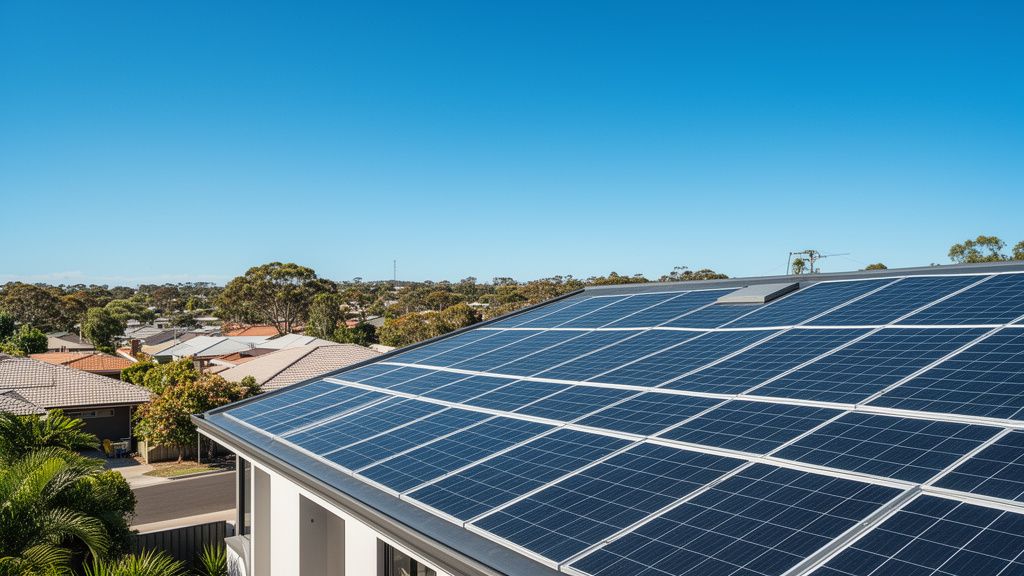
TL;DR: Installing solar on apartment buildings managed by strata requires navigating complex ownership, consent, and financing hurdles. Successful projects often involve engaging specialised consultants, exploring innovative funding models like Power Purchase Agreements (PPAs), and clearly demonstrating significant financial benefits to all residents to gain approval.
Why is apartment solar more complex than single-home installations?
Apartment solar installations present greater complexity than single-home systems primarily due to shared ownership structures, common property regulations, and the diverse energy needs of multiple residents within a single building. Unlike a standalone house where one owner makes all decisions and reaps all benefits, strata properties involve multiple stakeholders, each with their own financial interests and varying levels of enthusiasm for communal projects. The roof space, for instance, is typically common property, meaning any alteration requires formal agreement from the Owners Corporation, often involving specific voting thresholds. This fundamental difference in ownership and decision-making processes introduces layers of bureaucracy and negotiation that are absent in individual residential solar projects.
Navigating ownership and common property
Ownership of the roof, and by extension, the solar system, is a key point of contention and complexity. In strata schemes, the roof is almost always common property, managed by the Owners Corporation. This means that individual residents cannot simply install solar panels on their portion of the roof. Instead, the entire Owners Corporation must approve the project, impacting not just the installation but also ongoing maintenance, insurance, and the distribution of generated electricity. Establishing clear agreements on who owns the panels, who is responsible for their upkeep, and how the energy savings are allocated is crucial before any installation can proceed, adding significant legal and administrative steps.
Funding models for multi-unit dwellings
Financing apartment solar also differs significantly from single-home systems. A typical 6.6kW system for a house might cost around $5,000-$8,000 after rebates, easily financed by one owner. For an apartment block, a system might be 30kW, costing upwards of $30,000-$50,000. This larger capital outlay requires a collective funding approach. Options include special levies on owners, which can be contentious; utilising existing sinking funds; or exploring third-party financing models like Power Purchase Agreements (PPAs) where an external company owns and maintains the system, selling the power back to the strata at a reduced rate. Each model has its own complexities regarding shared financial responsibility and long-term commitment.
What common strata hurdles prevent apartment solar projects?
Several common hurdles frequently stall or prevent apartment solar projects within strata schemes, predominantly revolving around unanimous consent requirements, perceived high upfront costs, and the technical complexities of system design for shared electricity. These challenges often lead to lengthy delays, increased project costs, or outright abandonment, frustrating environmentally conscious residents and potential investors. Misunderstandings about the benefits and the process itself can also create significant resistance, making education and clear communication vital for overcoming these initial barriers.
The challenge of obtaining unanimous consent
One of the most significant hurdles is securing the necessary level of consent from the Owners Corporation. While some states have introduced provisions for ordinary resolutions (50% vote) for minor common property improvements, major alterations or significant capital expenditures often require a special resolution (75% vote) or even a unanimous resolution (100% vote) depending on the specific strata by-laws and the nature of the project. A single dissenting owner, particularly if they believe they won't benefit directly or are concerned about visual impact or cost, can effectively block a project, highlighting the difficulty in achieving consensus among a diverse group of residents.
Technical and infrastructure considerations
Beyond the administrative challenges, the technicalities of installing solar on an apartment block can present substantial hurdles. Many older buildings might require roof strengthening, electrical switchboard upgrades, or complex wiring to integrate a shared solar system. Distributing generated electricity efficiently to multiple units, or even just to common areas, demands careful planning and often custom solutions. For instance, designing a system that accurately meters and credits individual apartments for their solar consumption, or integrates with existing embedded networks, adds layers of engineering complexity and cost that are not present in a typical single-dwelling installation.
How can strata communities successfully implement shared solar systems?
Strata communities can successfully implement shared solar systems by adopting a proactive, collaborative approach that leverages expert advice, explores flexible financing, and clearly communicates the tangible benefits to all residents. Success hinges on a well-researched proposal that addresses common concerns upfront and offers clear solutions, building trust and consensus among diverse owners. Starting with a smaller, less contentious project, such as powering common areas, can also be a strategic way to build momentum and demonstrate value before scaling up.
Engaging expert strata solar consultants
Engaging a specialised strata solar consultant is often the most critical step for success. These experts understand the unique regulatory landscape of strata, possess the technical knowledge to design appropriate systems, and are adept at navigating the complex stakeholder management required. They can assist with feasibility studies, cost-benefit analyses, navigating council approvals, and presenting clear proposals to the Owners Corporation. A good consultant can articulate the financial benefits – perhaps savings of 20-30% on common area power bills, or specific per-unit savings – and provide tailored solutions, such as battery storage integration, addressing potential objections before they arise.


Exploring innovative financing and ownership structures
To circumvent high upfront capital costs and contentious special levies, strata communities should explore innovative financing and ownership structures. Power Purchase Agreements (PPAs) are increasingly popular, where a third-party provider installs, owns, and maintains the solar system, selling the generated electricity to the strata at a lower rate than grid power (e.g., 20c/kWh instead of 30c/kWh). This 'no upfront cost' model significantly reduces financial risk for the Owners Corporation. Another option is a solar loan specifically designed for strata, allowing the cost to be spread over several years, making the project more financially palatable to individual owners who might otherwise object to a large lump sum payment.
Are there significant financial benefits for apartment residents with shared solar?
Yes, there are significant financial benefits for apartment residents who participate in shared solar initiatives, primarily through substantial reductions in common area electricity bills and, in some cases, direct savings on individual apartment energy consumption. These savings contribute to lower strata levies, enhanced property value, and a reduced carbon footprint, making solar an attractive investment for the entire community. The long-term financial stability offered by predictable, lower energy costs is a major drawcard, particularly with volatile grid prices.
Reducing common area electricity costs
One of the most immediate and tangible benefits of apartment solar is the significant reduction in common area electricity costs. This includes power for lifts, stairwell lighting, car park lighting, security systems, and common laundries. For many strata schemes, these costs can run into thousands of dollars annually. A well-sized solar system can offset a large portion, if not all, of this consumption, directly translating to lower strata levies for all residents. For example, reducing a $5,000 annual common area bill by 80% frees up $4,000, which can either reduce annual levies by that amount or be reinvested into other building improvements.
Potential for individual apartment savings and feed-in tariffs
While common area savings are straightforward, direct individual apartment savings depend on the system design. Advanced embedded network systems allow solar power to be directly supplied to individual units, significantly lowering their electricity bills. Residents might pay, for example, 15-20c/kWh for solar power compared to 25-35c/kWh from the grid. Additionally, any excess solar energy generated that isn't consumed by the building can be exported to the grid, earning a feed-in tariff (FiT) for the Owners Corporation, typically ranging from 5-10c/kWh. This revenue further offsets communal costs or can be distributed back to residents, enhancing the financial return for everyone involved.
Key Takeaways
- Engage specialised strata solar consultants early to navigate complexities and provide tailored solutions.
- Clearly articulate the financial savings, both for common areas and potentially individual units, to gain owner approval.
- Explore innovative financing models like Power Purchase Agreements (PPAs) to reduce upfront costs for residents.
- Consider starting with a solar system dedicated to common areas to demonstrate value and build consensus before expanding.
- Understand and prepare for your state's specific strata regulations and voting thresholds for property alterations.
Read More
For a comprehensive overview, check out our master guide: Read the Full Guide Here.


