Decoding the CEC Report: Key Insights into Australia's Clean Energy Momentum
Australia, the sunburnt country, continues to lead the world in rooftop solar adoption, and for good reason. Our abundant sunshine, combined with a growing desire for energy independence and lower power bills, has propelled us to the forefront of the global clean energy transition. Each year, the Clean Energy Council (CEC) releases its highly anticipated Clean Energy Australia report, a comprehensive deep dive into the nation's renewable energy performance. This report isn't just a collection of statistics; it's a vital scorecard, offering key insights into where we're excelling, where we need to improve, and the sheer momentum driving Australia's clean energy revolution.
What is the CEC Report and Why Does It Matter?
The Clean Energy Council is the peak body for Australia's clean energy industry. Their annual report is a goldmine of information, drawing on data from across the sector, including grid-scale projects, rooftop solar installations, battery storage deployments, and policy developments. For anyone invested in the future of energy – from homeowners considering solar to industry professionals and policymakers – the CEC report provides an indispensable, authoritative snapshot of Australia's progress towards a cleaner, more sustainable energy future. It helps us understand the trends, challenges, and opportunities that define our journey.
Solar's Unstoppable Rise: Key Highlights
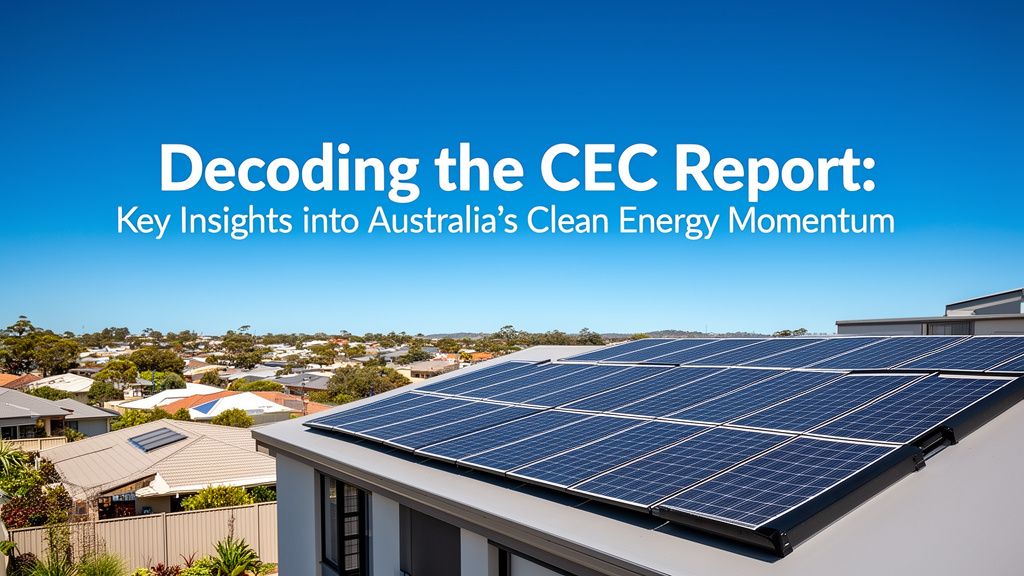
The latest CEC report reaffirms what many Aussies already know: rooftop solar is absolutely booming. Last year saw another record-breaking performance, with hundreds of thousands of new installations adding gigawatts of capacity to our national grid. It's a testament to the fact that going solar isn't just an environmentally conscious choice; it's a savvy financial one.
We're now well past three and a half million rooftop solar installations across Australia, equating to an incredible penetration rate that outpaces almost every other nation. This isn't just about small systems anymore; the average size of new installations continues to climb, reflecting a maturing market where consumers are looking for maximum output and long-term savings. Our cumulative solar capacity is now comfortably into the tens of gigawatts, a monumental achievement that has fundamentally reshaped our energy landscape and dramatically reduced our reliance on traditional fossil fuel generation during daylight hours.
The Shift Towards Bigger Systems
A significant trend highlighted in the CEC report is the ongoing shift towards larger rooftop solar systems. Where 5kW systems were once considered substantial, many households are now opting for 6.6kW, 10kW, or even larger setups. There are several compelling reasons behind this move:
- Growing Energy Needs: As more households embrace electric vehicles (EVs), induction cooktops, and smart home technologies, their overall electricity consumption increases, necessitating more powerful solar systems to offset these demands.
- Battery Readiness: Many homeowners are future-proofing their homes by installing larger solar arrays, knowing that excess generation can eventually charge a home battery, maximising self-consumption and energy independence.
- Improved Return on Investment (ROI): With solar panel efficiencies improving and costs remaining competitive, larger systems often offer a more attractive long-term ROI, especially considering the declining feed-in tariffs in some states. An investment of around $8,000 to $12,000 for a quality 6.6kW system, for example, can still pay itself back surprisingly quickly through reduced bills.
This trend is a clear indicator that Australians aren't just dipping their toes in the water; they're committing to substantial solar investments that deliver significant benefits.


Battery Storage: The Next Frontier
While rooftop solar adoption has been meteoric, battery storage uptake, though growing steadily, is still in its earlier stages. The CEC report provides valuable data on the accelerating deployment of home batteries, illustrating a clear path towards greater energy self-sufficiency and grid stability.
For many, a home battery completes the solar puzzle, allowing them to store surplus daytime solar energy for use at night or during peak demand periods. This not only further reduces reliance on the grid but also offers a crucial layer of energy security during outages. Prices for home batteries are gradually coming down, though a typical 10-14kWh system still represents an investment often upwards of $10,000 to $15,000 installed, varying by brand and capacity.
Government incentives, such as those seen in South Australia, Victoria, and New South Wales, are playing a vital role in making batteries more accessible. As technology advances and economies of scale kick in, we can expect battery storage to follow a similar trajectory to solar panels, becoming an increasingly mainstream component of the Australian clean energy home.
Behind the Numbers: Drivers of Momentum
The sustained momentum in Australia's clean energy transition isn't accidental. Several key factors continue to drive this progress:
- Decreasing Technology Costs: Solar panels, inverters, and even battery technologies have become significantly more affordable over the past decade, making clean energy solutions accessible to a broader segment of the population.
- Rising Electricity Bills: For many households and businesses, high and volatile electricity bills are a primary motivator to invest in solar and storage, offering a tangible path to reduce ongoing costs.
- Government Incentives: Schemes like the Small-scale Renewable Energy Scheme (SRES), which provides Small-scale Technology Certificates (STCs), continue to offer upfront financial support, making the initial investment more manageable.
- Environmental Consciousness: A growing awareness of climate change and the desire to reduce one's carbon footprint remains a powerful driver for many Australians.
- Technological Innovation: Ongoing advancements in panel efficiency, inverter technology, and smart energy management systems are continuously improving the performance and attractiveness of solar solutions.
Challenges and The Path Forward
While the CEC report paints a largely optimistic picture, it also highlights ongoing challenges. Integrating vast amounts of intermittent rooftop solar into an aging grid requires sophisticated management and substantial infrastructure upgrades. Skilled labour shortages in certain areas of the clean energy sector also pose a hurdle. Furthermore, maintaining consistent, long-term policy certainty is crucial to encourage continued investment from both individuals and large-scale projects. Addressing these issues will be vital to ensure Australia's clean energy momentum continues unabated.
Conclusion
The Clean Energy Council's latest report is more than just a summary of achievements; it's a powerful narrative of Australia's unwavering commitment to a clean energy future. From record-breaking rooftop solar installations to the steady rise of battery storage, the insights underscore a dynamic industry powered by innovation, consumer demand, and smart policy. As the sun continues to shine brightly on our continent, Australia remains firmly on track to not only meet but exceed its clean energy ambitions, paving the way for a more sustainable and prosperous future for all.
Read More
For a comprehensive overview, check out our master guide: Read the Full Guide Here.