TL;DR: Many Australian homes can save $2,500 or more each year with a solar and battery system. These systems cut your electricity bill by maximising self-consumption, reducing grid reliance, and avoiding high peak-time electricity charges. Combining solar generation with battery storage creates significant financial advantages over solar-only setups.
How Can a Solar + Battery System Deliver Annual Savings of $2,500?
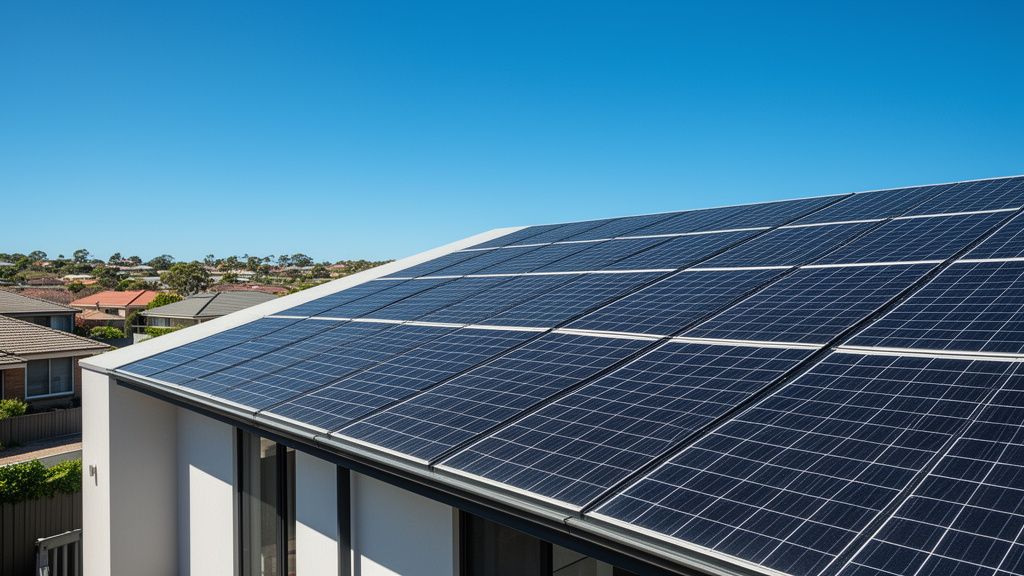
A solar and battery system can indeed deliver $2,500 or more in annual savings for many Australian households by significantly reducing their reliance on grid electricity. For example, a typical Sydney family using 20kWh per day, paying 35c/kWh, faces an annual bill of around $2,555 before solar. A 6.6kW solar system with a 10kWh battery allows them to generate most of their daytime electricity and store excess for evening use. This setup drastically cuts the power bought from the grid, especially during expensive peak periods. Instead of exporting cheap solar power for 5-7c/kWh, the battery stores it for self-consumption when grid power costs 35c/kWh or more. This internalised saving, multiplied over 365 days, quickly adds up to thousands of dollars. The $2,500 saving figure depends on household consumption patterns, electricity tariffs, and system size, but it is a realistic target for many medium to large Australian homes.
Maximising Self-Consumption and Avoiding Peak Rates
Maximising self-consumption is the primary way a solar battery system saves you money. Without a battery, any solar power not used instantly goes back to the grid for a low feed-in tariff. With a battery, you store that surplus energy for when the sun sets or when demand is high. Most households use the majority of their electricity in the mornings and evenings when solar panels produce little or no power. During these times, grid electricity often costs more, especially with time-of-use tariffs common in states like NSW and Victoria. A battery lets you power your home with your own stored, free solar energy during these expensive periods, directly cutting the highest-priced portions of your bill. This strategy eliminates the penalty of buying expensive peak power while selling cheap off-peak power.
Understanding the Financial Benefit of Stored Energy
The financial benefit of storing your own solar energy is clear when you compare the cost of buying electricity versus the value of exporting it. If you pay 35c/kWh for grid power and receive 7c/kWh for exported solar, every kWh you use from your battery saves you 35c. If you export that kWh, you only gain 7c. Therefore, using your own stored power is five times more valuable than exporting it. A 10kWh battery used daily to avoid peak purchases translates to significant savings. Over a year, if you avoid buying 10kWh of 35c/kWh power each evening, you save $3.50 per day, totalling $1,277.50 annually from that single benefit alone, on top of the savings from daytime solar use.
How Do Solar Panels and Batteries Work Together?
Solar panels and batteries work together as a cohesive unit to power your home and minimise grid electricity purchases. During the day, solar panels convert sunlight into DC electricity. An inverter then changes this to AC electricity, which powers your home's appliances. If the panels generate more power than the house needs, the excess charges the battery. Once the battery is full and the house's immediate demand is met, any remaining surplus solar power exports to the grid, earning a feed-in tariff. In the evenings, or when solar production is low (e.g., on cloudy days), the battery discharges its stored energy to power your home. This cycle ensures you primarily use your own clean energy, making your home more energy-independent.
Components of a Hybrid Solar System
A hybrid solar system combines several key components to achieve this energy independence. You need solar panels, which generate the electricity. A hybrid inverter is crucial; it manages the power flow between the solar panels, your home, the battery, and the grid. Unlike a standard solar inverter, a hybrid inverter can direct power to charge the battery and manage discharge. The battery bank, typically lithium-ion for residential use, stores the excess solar energy. An energy meter tracks consumption and generation, often providing data through an app so you can monitor your energy usage. Most systems also include safety isolators and circuit breakers. All these components integrate to form a smart energy management system for your home.
The Role of Smart Energy Management
Smart energy management is a key aspect of optimising solar battery systems. Modern inverters and battery systems use sophisticated software to learn your energy consumption patterns and predict solar generation based on weather forecasts. This allows the system to make intelligent decisions about when to charge the battery, when to discharge it, and when to export to or import from the grid. Some systems even participate in virtual power plants (VPPs), where your battery can be remotely controlled to support the grid during peak demand events. In return, you receive payments or credits. This advanced management ensures your system operates at peak efficiency, maximising your savings and often extending the battery's lifespan.

What Are the Costs and Payback Period for a Typical System?
The upfront cost of a combined solar and battery system in Australia varies, but a typical 6.6kW solar system with a 10kWh battery often costs between $12,000 and $20,000 after the Small-scale Technology Certificates (STCs) rebate. The specific price depends on the brands of panels, inverter, and battery chosen, along with installation complexity. For instance, a quality 6.6kW solar system might cost $5,000 to $8,000, and a 10kWh battery like a Tesla Powerwall 2 or BYD Battery-Box Premium could add another $7,000 to $12,000. While the initial investment is higher than solar-only, the increased savings significantly improve the long-term financial outcome. The payback period for these systems typically ranges from 5 to 9 years, depending heavily on your electricity consumption, tariffs, and any available state-specific incentives.
Calculating Your Payback Period
Calculating your payback period involves comparing the system's total cost against your annual savings. First, determine the net cost of the system after any rebates. Then, estimate your annual savings. If your system costs $15,000 and you save $2,500 annually on your electricity bill, your simple payback period is 6 years ($15,000 / $2,500). This calculation assumes consistent savings, but actual savings can fluctuate with changes in electricity prices, feed-in tariffs, and your household's energy usage. It is important to get a detailed quote that outlines expected generation and savings tailored to your specific location and consumption profile for an accurate estimate. Many reputable solar installers can provide a detailed financial analysis.
Government Rebates and State Incentives
Australian homeowners can access various government rebates and incentives to reduce the cost of solar and battery systems. The federal Small-scale Technology Certificates (STCs) program provides an upfront discount on solar panel installations based on system size and location. For batteries, some states offer additional support. For example, the Victorian Solar Homes Program provides a rebate for eligible households installing solar PV and a separate battery rebate of up to $2,900. In New South Wales, the Empowering Homes Program offers interest-free loans for solar battery systems. These incentives can significantly lower the initial investment, making the systems more accessible and shortening the payback period. Check your state or territory's energy department website for the latest available programs.
Key Takeaways
- A solar and battery system can achieve $2,500+ in annual savings for many Australian households by reducing grid electricity purchases.
- Batteries store excess solar power for evening use, avoiding high peak tariffs and making self-consumption far more valuable than exporting.
- A typical 6.6kW solar and 10kWh battery system costs between $12,000-$20,000 after STC rebates, with a payback period often in the 5-9 year range.
- Smart energy management and state-specific incentives, such as the Victorian Solar Homes battery rebate, further enhance the financial benefits and shorten payback times.
Read More
For a comprehensive overview, check out our master guide: Read the Full Guide Here.