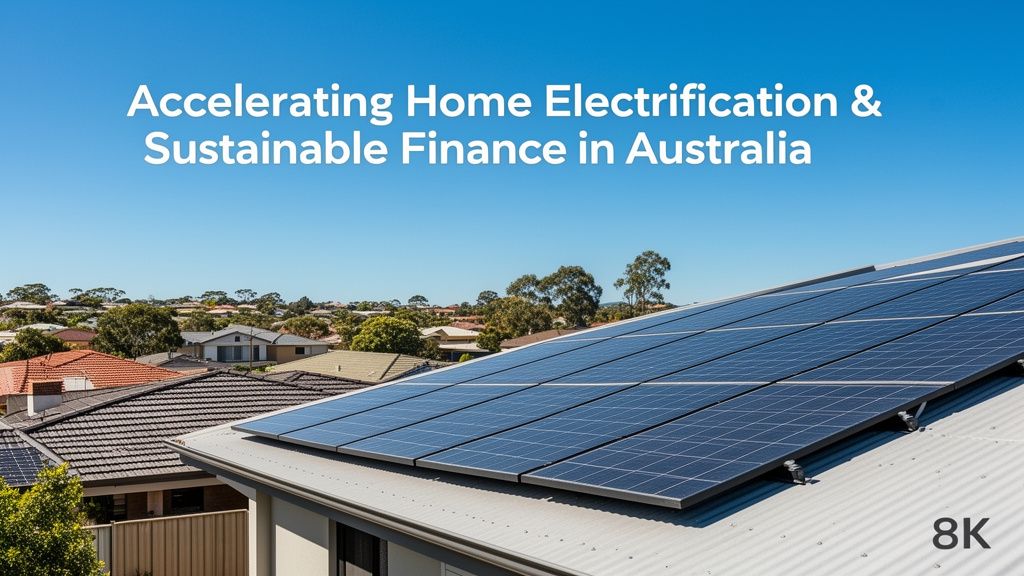
TL;DR: Australian homes are rapidly electrifying to cut energy bills and emissions. Sustainable finance products, like green loans and government rebates, make these upgrades affordable, driving a cleaner, more stable energy future.
Why Is Home Electrification Becoming Essential for Australians?
Electrifying homes means replacing gas appliances and petrol cars with electric alternatives, powered by solar. This shift offers significant bill savings and environmental benefits. A typical Sydney household, for example, might spend $2,500 annually on electricity and another $1,000 on gas. Shifting to an all-electric setup with a 6.6kW solar system could halve those combined costs. Queensland and South Australia are leading with high solar penetration, demonstrating the potential for widespread adoption. This transformation reduces reliance on fossil fuels and helps stabilise the grid by distributing generation points. Households gain energy independence and protection from volatile energy market prices.
Reducing Running Costs and Emissions
Switching from gas heating to an efficient electric reverse-cycle air conditioner cuts energy use and removes a major carbon source. A household moving from a gas hot water system to a heat pump can save $500-$800 per year on hot water alone, depending on usage and local climate. With average electricity prices pushing above 30 cents per kilowatt-hour in most states, generating your own power with solar makes economic sense. Every kilowatt-hour used directly from your solar panels costs effectively nothing after installation, compared to buying it from the grid. This also directly lowers a household's carbon footprint, aligning with Australia's 2050 net-zero targets and improving local air quality by removing gas combustion from homes.
How Does Sustainable Finance Make Electrification Affordable?
The upfront cost of solar panels, batteries, and appliance upgrades can deter many homeowners. Sustainable finance options bridge this gap, allowing more Australians to invest in their energy future without huge immediate outlays. Major banks now offer specific green loan products designed for these upgrades. For instance, the Commonwealth Bank's Green Loan offers rates as low as 1.99% for eligible energy-efficient home improvements, compared to standard personal loan rates often exceeding 7%. These loans specifically target installations like solar, batteries, heat pumps, and electric vehicle chargers, making the investment accessible and accelerating payback periods.
Government Incentives and Low-Interest Loans
Beyond bank products, various government schemes further reduce the financial barrier. The Small-scale Renewable Energy Scheme (SRES) provides Small-scale Technology Certificates (STCs) for solar PV systems up to 100kW. These certificates can reduce the upfront cost of a typical 6.6kW system by $3,000-$4,000, depending on your location and current STC market price. State-level programs also exist; Victoria offers a rebate up to $1,400 for solar PV and an interest-free loan for an equal amount. Similarly, the ACT Government's Sustainable Household Scheme offers interest-free loans up to $15,000 for eligible improvements. These combined financial tools turn a significant capital expense into a manageable repayment plan with immediate bill savings.
What Are the Key Steps for Homeowners Considering Electrification?
For homeowners looking to electrify, planning is crucial. Start with a home energy assessment to identify the biggest energy drains and the most impactful upgrades. Prioritise major consumers first, such as hot water systems and heating/cooling. Next, consider your solar PV system size based on your current and projected future electricity usage, including potential electric vehicle charging. An average family home often benefits from a 6.6kW to 10kW system. Then, research accredited installers and reputable brands. Always get at least three quotes to compare not just price, but also component quality, warranties, and after-sales service, ensuring you get a robust solution.


Navigating Product Choices and Installation Quality
The market has many solar panels, inverters, and battery options. Choose products with good Australian support and decent warranties – typically 10-12 years for panels and 5-10 years for inverters. For batteries, look for cycle life warranties over 10 years. Clean Energy Council (CEC) accredited installers guarantee adherence to Australian standards and safety guidelines. Poor installation can lead to performance issues or safety hazards, so vetting your installer thoroughly is non-negotiable. Many sustainable finance providers require installations by accredited professionals, adding another layer of assurance for homeowners making these long-term investments. This due diligence protects your investment and maximises the long-term benefits of home electrification.
Key Takeaways
- Electrify homes to cut energy bills and carbon emissions by switching to solar, batteries, and electric appliances.
- Utilise green loans from major banks and government rebates like STCs to make upfront costs manageable.
- Start with an energy assessment to prioritise upgrades and correctly size your solar system for current and future needs.
- Always choose Clean Energy Council (CEC) accredited installers and reputable brands for reliability and safety.


