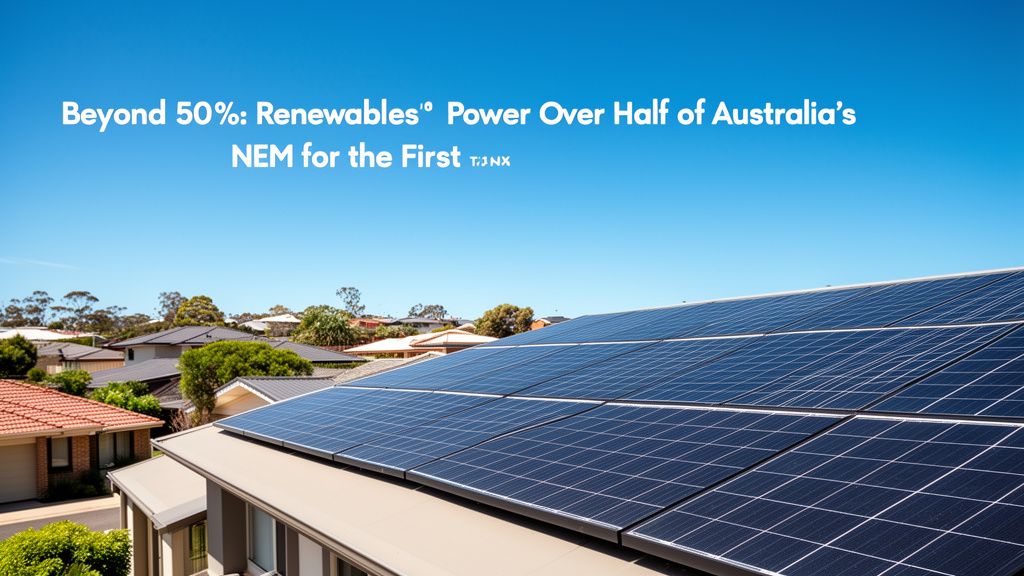
Crikey, what a milestone! For the first time ever, renewable energy has powered over half of Australia's National Electricity Market (NEM) during significant periods. This isn't just a fleeting moment; it's a monumental shift in our energy landscape, signalling a new era for Australia. It’s a testament to the incredible progress we've made in embracing clean energy, and a clear sign of the sunny, windy future that awaits us.
This achievement isn't just a number; it represents a profound transformation. It means cleaner air, more stable energy prices, and a more sustainable future for generations of Aussies to come. Let's dive into what this historic moment means for our nation and how we got here.
Understanding the NEM
Before we celebrate too much, a quick refresher: the National Electricity Market (NEM) is one of the world's largest interconnected electricity grids, stretching over 5,000 kilometres from Queensland to Tasmania, serving around 80% of Australia's population. It's the engine room of our eastern and southern states' economies, ensuring the lights stay on for millions of homes and businesses. For renewables to dominate this colossal system, even for specific periods, is nothing short of revolutionary.
The Historic Milestone Explained
While the average quarterly contribution of renewables is steadily climbing towards 50%, recent data has shown that during certain times – particularly during periods of high solar generation and strong winds – renewable sources have supplied over half, and sometimes up to 70%, of the NEM's total electricity demand. These record-breaking moments, driven by a surge in both rooftop solar and large-scale wind and solar farms, are the "first time" events that truly capture the momentum of our energy transition.
This isn't an isolated incident; it’s happening with increasing frequency. This shift reflects years of investment, innovation, and a genuine commitment from everyday Australians and industry alike to move towards a cleaner energy future. It demonstrates that a grid largely powered by renewables isn't just a pipe dream; it's becoming our reality.
The Driving Forces Behind the Shift
So, what's powering this incredible transition? It’s a powerful combination of factors:
Rooftop Solar Dominance
Australia leads the world in per capita rooftop solar installations. From Cairns to Perth, millions of Australian homes have embraced solar panels, turning ordinary roofs into personal power stations. This decentralised generation has been a game-changer, providing a massive surge of clean energy directly into our communities. Homeowners are not only reducing their own power bills, potentially saving hundreds or even thousands of dollars annually (e.g., a typical 6.6kW system can save a household over $1,500 a year), but they’re also collectively contributing to the national grid in a big way. The desire for energy independence and lower costs has turned everyday Aussies into renewable energy pioneers.
Large-Scale Wind and Solar Farms
Beyond individual rooftops, massive utility-scale wind and solar farms are springing up across the country. These multi-million-dollar projects, often spanning vast outback landscapes, are efficiently harnessing Australia's abundant natural resources. Giant wind turbines gracefully spin, generating clean power, while vast arrays of solar panels track the sun, feeding gigawatts of electricity into the NEM. Investment in these projects continues to boom, driven by state and federal renewable energy targets and the falling costs of technology.


Benefits of a Renewable Future
The benefits of reaching this "beyond 50%" milestone are multifaceted and profoundly positive for Australia:
Environmental Impact
The most immediate and obvious benefit is the significant reduction in greenhouse gas emissions. By replacing fossil fuel generation with clean renewables, we're taking concrete steps to combat climate change, reduce air pollution, and protect Australia's unique natural environment for future generations.
Economic Stability and Growth
Renewable energy offers long-term economic advantages. It lessens our reliance on volatile international fossil fuel markets, helping to stabilise energy prices. The renewable sector is also a massive job creator, from engineers and installers to maintenance crews and manufacturing. Investing in renewables means investing in Australian jobs and local economies. Plus, with the sun and wind being free resources, the operational costs of these power sources are minimal once built, leading to cheaper power over time.
Energy Security
A diversified energy mix, heavily weighted towards renewables, enhances Australia's energy security. Relying on indigenous, abundant resources like sun and wind makes us less vulnerable to geopolitical shocks or supply chain disruptions affecting traditional fuels. It empowers Australia to be a net energy exporter of green energy and products in the future.
Challenges and The Road Ahead
While we celebrate this incredible achievement, we also acknowledge that the journey isn't over. The challenge now is to consistently exceed 50% and move towards 100% renewable energy, 24/7. This requires:
Grid Modernisation
Our existing grid infrastructure, built for a centralised fossil-fuel model, needs significant upgrades to handle the intermittent nature of renewables and distribute power efficiently across vast distances. This means more transmission lines, smart grid technologies, and enhanced forecasting capabilities.
Energy Storage Solutions
As we increase our reliance on solar and wind, energy storage – from large-scale batteries like the mighty Hornsdale Power Reserve to pumped hydro projects – becomes crucial. These technologies ensure we have reliable power even when the sun isn't shining or the wind isn't blowing.
Continued Investment and Policy
Sustained government policy and private sector investment are vital to maintain momentum. Clear targets, supportive regulations, and incentives will accelerate the deployment of new renewable projects and essential grid infrastructure.
What This Means for You
This historic shift isn't just about big power plants; it's about every Australian's contribution. If you're considering solar for your home or business, now is an even better time. By joining the renewable energy movement, you're not just saving money; you're actively participating in Australia's energy revolution.
A Bright Future for Australia
This achievement of renewables powering over half of Australia's NEM for the first time is a moment to savour. It’s a clear indication that Australia is on a path to a cleaner, more sustainable, and economically robust energy future. The transition is not just underway; it's accelerating. Let's continue to harness our abundant natural resources and power our great nation with fair dinkum Aussie sunshine and wind!
Read More
For a comprehensive overview, check out our master guide: Read the Full Guide Here.


