TL;DR: While Australia leads the world in rooftop solar adoption, renters and apartment residents are frequently left behind. Recent research by RMIT University and UNSW highlights "balcony solar" or plug-in systems as a low-cost, portable alternative. Comprising one or two solar panels, a micro-inverter, and a standard power plug, these systems bypass the need for professional electricians. However, regulatory hurdles, landlord reluctance, and property rules must change before these plug-in mini power plants can be widely deployed across the country.
The Solar Transition Gap: Why Multi-Unit Residents Are Left Behind
Australia has earned a reputation as a global leader in household solar energy adoption, but this clean energy transition is not experienced equally. According to the latest census data, nearly one-third of Australians rent their homes, live in apartments, or are connected to private energy networks. These households face significant barriers that prevent them from accessing free solar power.
Traditional rooftop solar installations present several structural and financial challenges for these residents, including:
- Limited Roof Space: Multi-unit residential buildings typically do not have enough roof area to allocate dedicated solar arrays to individual apartments.
- High Upfront Infrastructure Costs: Upgrading electrical switchboards and routing complex wiring through multi-story buildings is often prohibitively expensive.
- Long Approval Processes: Navigating body corporate, council, or utility approval processes often results in extensive wait times.
- Split Incentives for Landlords: Landlords may be reluctant to install solar because any energy bill savings go directly to renters, while the landlord bears the capital cost.
These combined obstacles mean that millions of flat-dwelling Australians are currently missing out on the financial and environmental benefits of clean solar energy.
What Are Plug-In Balcony Solar Systems?
To bridge this gap, researchers have identified plug-in solar systems—commonly referred to as "balcony solar" because they can be safely hung from balcony balustrades—as a convenient, low-cost solution.
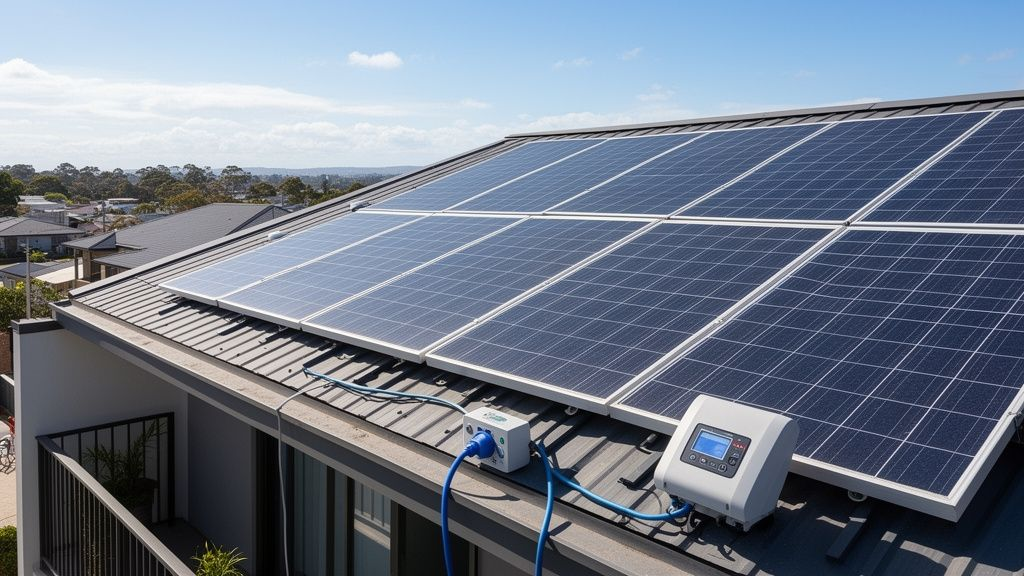
Unlike traditional rooftop solar systems, balcony systems are designed to operate as "mini power plants" that require no permanent installation. A standard plug-in balcony solar system consists of:

- Solar PV Panels: Typically one or two photovoltaic panels that capture sunlight and convert it into direct current (DC) electricity.
- A Micro-Inverter: A small inverter attached directly to the panels that converts the solar-generated DC electricity into alternating current (AC) electricity—the specific type of power required to run standard household appliances.
- Standard Power Plug: The system connects directly to an existing outdoor or indoor electrical socket. When plugged in, the system feeds solar power directly into the home's electrical circuit.
- Optional Battery Storage: Many balcony solar packages also include a small, integrated battery. This battery stores excess electricity generated during peak daylight hours, allowing residents to use their solar energy during the evening.
Because these systems use a standard household plug, they can be easily installed and removed by the resident without requiring a licensed electrician. This makes balcony solar fully portable, allowing renters to take their solar investment with them when they move to a new property.
Research on Opportunities and Barriers in Australia
The viability and challenges of this technology in the Australian market were explored in-depth in a research paper titled "Opportunities and barriers for photovoltaics on multi-unit residential buildings: Reviewing the Australian experience."
Published by researchers Nicola Willand (Associate Professor in Housing at RMIT University), Alan Pears (Senior Industry Fellow at RMIT University), Mike Roberts (Senior Research Fellow at UNSW Sydney), and Xiufang (Leah) Li (Senior Lecturer at RMIT University), the study highlights balcony solar as an empowering tool for households to take direct control of their energy bills.
However, the researchers note that while balcony solar is highly popular in other parts of the world, several regulatory, safety, and administrative barriers currently prevent a widespread rollout in Australia. Under current electrical and connection guidelines, plugging a solar generation system directly into a standard wall socket is restricted or not fully approved by electricity distributors. For balcony solar to become a viable option for Australian renters, utility standards and connection regulations must be adapted to recognize and safely accommodate these low-capacity, plug-in systems.
Key Takeaways
- The Rental Barrier: Almost one-third of Australians rent, live in apartments, or use private energy networks, shut out of traditional solar due to landlord issues, limited roof space, and high wiring costs.
- Plug-and-Play Design: Balcony solar systems use 1-2 panels and a micro-inverter to feed electricity straight into standard household wall sockets.
- No Electrician Needed: Because balcony systems do not require complex wiring, they can be installed and uninstalled without an electrician, making them completely portable for renters.
- Regulatory Action Needed: Despite their potential, balcony solar systems cannot be broadly rolled out in Australia until current grid connection rules and utility standards are updated.