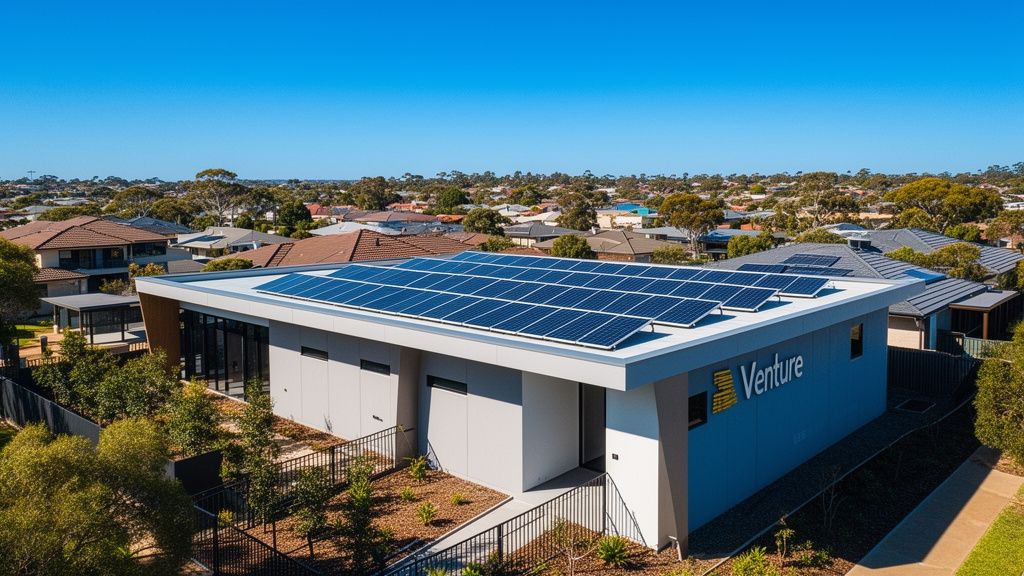
Andrew Sjoquist Pioneers Sustainable Data Centres in Australia
TL;DR: Andrew Sjoquist's new venture focuses on establishing eco-friendly data infrastructure in Australia, powered primarily by renewable energy like solar. This initiative aims to drastically reduce the high energy consumption and carbon footprint traditionally associated with data centres, offering a greener, more sustainable solution for Australia's growing digital needs.
What is Andrew Sjoquist's new venture aiming to achieve with eco-friendly data infrastructure?
Andrew Sjoquist's new venture is aiming to revolutionise Australia's data centre landscape by building infrastructure that is fundamentally eco-friendly and sustainable from the ground up. Traditionally, data centres are notorious energy guzzlers, accounting for a significant chunk of global electricity consumption, often powered by fossil fuels. Sjoquist’s vision is to reverse this trend locally, by designing facilities that minimise environmental impact through renewable energy integration, efficient cooling systems, and responsible resource management. This bold move isn't just about 'greening' existing operations; it's about establishing a new benchmark for how digital infrastructure can operate in harmony with environmental goals, right here on Aussie soil. The focus is on creating a robust, reliable, and secure data storage solution that also happens to be a beacon of sustainability.
Addressing the Energy Consumption Challenge of Data Centres
The current energy footprint of data centres in Australia is substantial, with many relying heavily on grid electricity that often comes from coal-fired power plants. Sjoquist's venture tackles this head-on by prioritising on-site renewable energy generation, predominantly solar, complemented by advanced battery storage. This significantly reduces reliance on the traditional grid and, by extension, the carbon emissions associated with data processing and storage. Imagine a data centre operating almost entirely off the sun's power – that's the ambitious, yet achievable, goal. This shift not only benefits the environment but also mitigates the risks of volatile energy prices, offering a more predictable operational cost structure in the long run.
Innovating Beyond Power Sources for Sustainability
Sustainability in Sjoquist's model extends beyond just power generation. The venture will also incorporate innovative cooling technologies that reduce water consumption and energy use, moving away from conventional, energy-intensive HVAC systems. For example, exploring adiabatic cooling or even direct liquid cooling where feasible. Furthermore, the design will consider the entire lifecycle of equipment, aiming for higher efficiency hardware, extended operational lifespans, and responsible recycling programs for components. This holistic approach ensures that the eco-friendly claim is comprehensive, addressing waste, water, and energy use across the facility's operations.
How will this eco-friendly data infrastructure leverage solar power in Australia?
This eco-friendly data infrastructure will primarily leverage Australia's abundant solar resources through large-scale photovoltaic (PV) installations directly integrated with each data centre facility. Australia boasts some of the highest solar irradiance levels globally, making it an ideal location for solar-powered enterprises. The plan involves installing extensive arrays of solar panels on-site, capable of generating a substantial portion, if not all, of the data centre's operational power requirements during daylight hours. This direct energy sourcing minimifies transmission losses and maximises the efficiency of renewable energy utilisation. The goal is to move beyond simply offsetting carbon emissions to actively powering operations with clean, locally generated energy.
Integrating Advanced Battery Storage Solutions
To ensure continuous operation and overcome the intermittency of solar power, the venture will incorporate advanced, large-scale battery energy storage systems (BESS). These batteries will store excess solar energy generated during peak sunshine hours, making it available for use during evenings, cloudy periods, or times of high demand. This strategic integration of solar PV with robust battery storage is crucial for achieving true energy independence and resilience. For instance, a 10 MW solar farm might be paired with a 20 MWh battery system, providing several hours of backup power, ensuring uninterrupted service for critical data operations, which is paramount for data centre reliability.
Optimising Site Selection for Solar Efficiency
The choice of location for these data centres is intrinsically linked to optimising solar power generation. Sites will be strategically selected in regions with high solar exposure and suitable land availability, often away from densely populated urban areas where land costs are prohibitive and solar real estate is scarce. While rural locations can present connectivity challenges, advancements in fibre optic networks and satellite communication can mitigate these. Furthermore, these locations often benefit from cooler ambient temperatures, which can reduce the energy required for cooling the data centre, creating a synergistic benefit for overall energy efficiency. This thoughtful site selection ensures maximum energy harvest and operational cost savings.


What are the economic and environmental benefits of sustainable data centres?
Sustainable data centres, like those envisioned by Andrew Sjoquist, offer a dual advantage of significant economic benefits alongside profound environmental improvements, creating a win-win scenario for businesses and the planet. Economically, they lead to substantial operational cost reductions, primarily through lower energy bills and increased energy independence, shielding operators from volatile grid electricity prices. Environmentally, the most critical benefit is the drastic reduction in carbon emissions, directly combating climate change and aligning businesses with global sustainability goals. This approach demonstrates that profitability and ecological responsibility are not mutually exclusive but can be powerfully integrated.
Long-Term Cost Savings and Energy Resilience
By generating their own power through solar arrays and utilising battery storage, these data centres can dramatically cut down on electricity expenses, which are typically one of the largest operating costs for traditional facilities. Over a 20-30 year lifespan of a solar system, the savings can run into the tens of millions of dollars, especially considering Australia's rising electricity prices, which can range from $0.25 to $0.40 per kWh for commercial users. Furthermore, having an independent power source enhances energy resilience, providing protection against grid outages and ensuring business continuity, which is invaluable for data-dependent operations. This stability in energy supply and cost provides a competitive edge in the market.
Mitigating Environmental Impact and Boosting Corporate Image
The environmental benefits are clear: a significant reduction in greenhouse gas emissions. By replacing grid power (often fossil-fuel derived) with clean solar energy, these data centres will contribute positively to Australia's climate targets. A typical data centre might consume energy equivalent to thousands of homes; switching this to renewables offers a massive carbon footprint reduction. Beyond emissions, responsible water usage for cooling and efficient waste management further minimises ecological impact. For businesses, operating from such a facility enhances their Corporate Social Responsibility (CSR) profile, appeals to environmentally conscious clients, and can open doors to new markets and investment opportunities that prioritise green credentials.
Read More
For a comprehensive overview, check out our master guide: Read the Full Guide Here.


