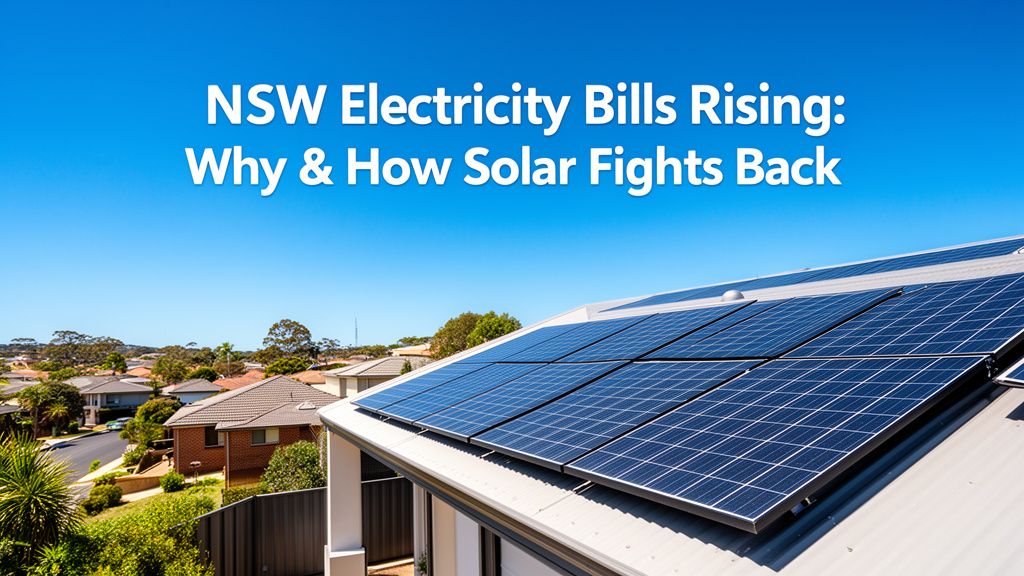
TL;DR: NSW electricity bills are forecast to rise significantly next year due to a combination of higher wholesale energy prices, increasing network charges for infrastructure upgrades, and the conclusion of some government support. Proactively installing a solar PV system and adopting energy-efficient practices offer the most effective long-term strategies to mitigate these rising costs and regain control over your household budget.
Why Are Electricity Prices Predicted to Rise in NSW in the Coming Year?
Electricity prices in NSW are projected to increase substantially next year, driven primarily by upward movements in wholesale energy costs, higher network charges, and the gradual phase-out of certain government subsidies that previously helped cushion the blow for consumers. The Australian Energy Regulator (AER) has indicated that typical residential bills could see rises of between 20-25% in the Default Market Offer (DMO) starting July 2024 for NSW households, reflecting the underlying pressures in the National Electricity Market (NEM). This increase directly impacts customers on standing offers and sets a benchmark for competitive market offers. Factors such as a tight supply of coal-fired generation, higher international gas prices influencing domestic markets, and the ongoing investment required for grid modernization all contribute to this unwelcome forecast. As such, households that haven't yet explored alternative energy solutions or optimised their usage patterns will likely feel the pinch more acutely.
Understanding the Default Market Offer (DMO)
The Default Market Offer (DMO) is a regulated price cap set by the AER for electricity retailers in NSW, and other states, to protect customers who don't actively shop for a better deal or are on a standing offer. It acts as a safety net, ensuring these customers aren't charged excessive rates. When the DMO rises, it signals a broader increase in the underlying costs of providing electricity, which then often pushes up prices for competitive market offers too, as retailers adjust their pricing to maintain margins in a more expensive wholesale environment. This means a higher DMO typically translates to higher bills across the board for most consumers.
Impact of Wholesale Energy Market Volatility
The wholesale electricity market is where electricity generators sell power to retailers, and prices can be highly volatile, fluctuating every five minutes based on supply and demand. Recent years have seen unprecedented wholesale price spikes due to a confluence of factors, including extreme weather events impacting generation capacity, global supply chain disruptions affecting fuel costs (like coal and gas), and a lack of firming capacity as Australia transitions to more renewable energy. These higher wholesale costs are inevitably passed on to consumers through their retail electricity bills, as retailers must recoup their expenses.
How Can Installing Solar PV Systems Directly Combat Rising Electricity Bills?
Installing a solar PV system is one of the most effective and proactive ways for NSW households to directly combat rising electricity bills by significantly reducing reliance on grid electricity. When sunlight hits your solar panels, it generates clean electricity that can be used directly in your home, offsetting the need to purchase power from your retailer at their increasingly high rates. A typical 6.6kW solar system, common for Australian homes, can generate around 25-30 kWh per day on average, substantially covering a household's daily consumption. This self-consumption strategy is key to maximising savings, as every kilowatt-hour (kWh) you generate and use yourself avoids a purchase from the grid, which currently costs around $0.30-$0.40/kWh in NSW. Over its lifespan, a solar system provides predictable, cheaper energy, insulating your household from future price hikes.
Maximising Self-Consumption for Greater Savings
The most significant financial benefit from solar comes from using the electricity you generate directly in your home. This is known as self-consumption. Instead of exporting surplus power to the grid for a modest feed-in tariff (FiT), which is typically around $0.05-$0.10/kWh in NSW, using that power yourself saves you the higher import cost. Strategies to maximise self-consumption include running high-energy appliances like dishwashers, washing machines, and pool pumps during the middle of the day when your solar system is producing its peak output. Smart energy management systems can help automate this process, ensuring you're getting the most bang for your buck from your solar investment.
The Role of Feed-in Tariffs (FiTs)
While self-consumption offers the best value, feed-in tariffs (FiTs) provide an additional layer of savings by crediting you for any excess electricity your solar system exports back to the grid. These credits appear on your electricity bill, further reducing the amount you owe. Although FiT rates have generally decreased as solar adoption has increased, they still contribute to the overall economic viability of a solar system, helping to shorten its payback period. It's important to compare FiT rates when choosing an energy retailer, as they can vary, even if the primary goal remains to maximise self-consumption.
What Role Do Network Charges Play in Increasing Your Electricity Costs?
Network charges constitute a substantial portion of your electricity bill, typically making up around 40-50% of the total cost for NSW households. These charges cover the cost of maintaining, upgrading, and operating the vast infrastructure that transmits electricity from power stations to your home – the poles, wires, substations, and all the associated equipment. As our energy grid ages and requires significant investment to become more resilient to extreme weather events and to accommodate the influx of renewable energy, these costs are inevitably passed on to consumers. Regulators approve these charges based on network service providers' investment proposals, and with a significant transition underway, network companies are investing heavily in modernising the grid, which translates to higher charges on your bill.
Modernising the Grid for Future Energy Needs
The NSW electricity grid, like much of Australia's, was designed for a centralised, one-way flow of power from large fossil fuel generators to consumers. The rapid increase in rooftop solar and the emergence of utility-scale renewable projects necessitate a smarter, more dynamic grid capable of handling two-way power flow and variable renewable generation. Investments are being made in smart grid technologies, energy storage solutions, and network upgrades to improve reliability and integrate renewables efficiently. While these upgrades are crucial for Australia's energy future, their significant cost is factored into the network charges that appear on your electricity bill, contributing to upward price pressure.
Impact of Severe Weather on Network Resilience
Australia's climate, particularly in NSW, is prone to severe weather events such as bushfires, floods, and storms, which can cause extensive damage to electricity infrastructure. Repairing and reinforcing these networks against future events is a continuous and costly undertaking. Network service providers must invest in more robust materials, undergrounding power lines in vulnerable areas, and deploying advanced monitoring systems to prevent outages and accelerate restoration. These proactive and reactive measures to enhance grid resilience are essential for reliable power supply but also contribute to the rising network charges passed on to consumers.


Are There Other Strategies Beyond Solar to Reduce Your Energy Expenses?
Beyond installing solar PV, NSW households have several other effective strategies to reduce their energy expenses and fight back against rising bills. Energy efficiency improvements within the home are paramount, as reducing overall consumption means less power needs to be purchased from the grid or generated by your solar system. This includes upgrading to more energy-efficient appliances, improving insulation, and adopting mindful energy habits. Another crucial step is regularly comparing electricity plans from different retailers. The market is competitive, and loyalty often doesn't pay; switching providers can often secure better rates, lower daily supply charges, or more generous feed-in tariffs. For those with solar, considering battery storage further enhances energy independence by allowing you to store surplus solar generation for use after sunset, minimising peak-rate grid imports.
Improving Home Energy Efficiency
Improving your home's energy efficiency is a foundational step in reducing electricity costs, regardless of whether you have solar. Simple measures can make a big difference: replacing old incandescent globes with LEDs, ensuring your home has adequate insulation in the ceiling and walls, sealing draughts around windows and doors, and choosing energy-efficient appliances with high star ratings. These improvements reduce the total amount of electricity your household demands, directly lowering your bills and making your home more comfortable year-round. An energy-efficient home complements solar PV by requiring less imported power when the sun isn't shining.
Regularly Compare Electricity Retailers and Plans
The NSW electricity market is deregulated, meaning consumers have the power to choose their electricity retailer and plan. Retailers frequently offer competitive deals, discounts, and varied feed-in tariffs to attract new customers. It's advisable to use government comparison websites like Energy Made Easy at least once a year to compare available offers based on your actual usage data. Switching retailers can often save hundreds of dollars annually by securing lower usage rates, cheaper daily supply charges, or better solar feed-in tariffs. Don't be afraid to negotiate with your current provider or switch to a better deal, as this is a powerful tool to manage your ongoing costs.
Key Takeaways
- Anticipate Higher Bills: NSW electricity bills are set to rise significantly next year due to increased wholesale prices and network charges, so prepare your budget.
- Invest in Solar PV: Installing a solar PV system offers the most robust defence, allowing you to generate your own power and significantly reduce grid reliance.
- Maximise Self-Consumption: Prioritise using your solar power directly during the day to avoid expensive grid imports, rather than exporting it for lower feed-in tariffs.
- Improve Energy Efficiency: Implement energy-saving measures in your home, such as LED lighting and insulation, to reduce your overall electricity demand.
- Shop Around for Retailers: Regularly compare electricity plans and switch retailers to ensure you're always on the most competitive offer for your household's usage patterns.
Read More
For a comprehensive overview, check out our master guide: Read the Full Guide Here.


