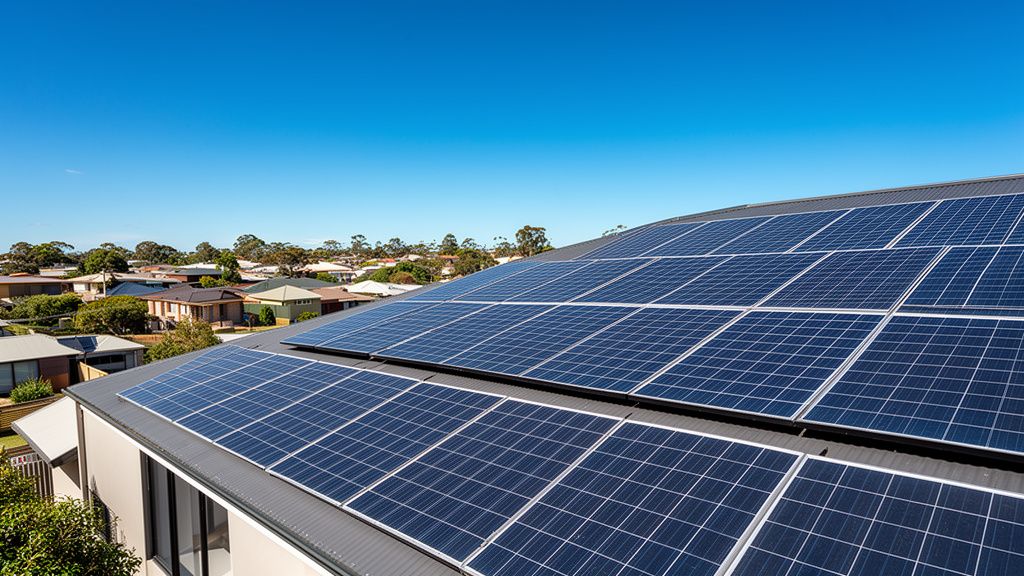
TL;DR: Parramatta homeowners are increasingly choosing N-Type solar panels in 2026 due to their superior efficiency on smaller urban roofs, better performance in shaded conditions, and slower degradation over time, leading to greater long-term savings and energy independence. These advanced panels are ideal for maximising generation in densely populated areas like Parramatta.
What Makes N-Type Solar Panels Superior for Parramatta's Urban Environment?
N-Type solar panels offer a distinct advantage for Parramatta's urban setting, where space is often at a premium and environmental factors like shading from neighbouring buildings or trees are common. Unlike traditional P-Type panels, N-Type technology utilises a different silicon doping process, typically n-type silicon wafers, which provides higher conversion efficiencies and better performance characteristics. This means that for the same physical footprint on a typical Parramatta home, an N-Type system can generate significantly more electricity, making it an excellent choice for maximising output on smaller roof spaces common in the 2150 postcode. Their enhanced capabilities mean residents can achieve a greater energy yield even when roof area is limited by urban density or council regulations.
Higher Efficiency on Compact Parramatta Roofs
With average residential block sizes in Parramatta often more compact than outer suburbs, every square metre of roof space counts. N-Type panels, boasting efficiencies that can reach over 23-24% in commercial modules, allow homeowners to install a powerful solar system within a smaller area. For instance, a standard 6.6kW system might require 18-20 P-Type panels, but with N-Type technology, fewer panels could achieve the same output, freeing up space or allowing for an even larger system within the same footprint. This higher energy density is particularly beneficial for homes near the CBD or along major transport corridors where roof real estate is precious.
Better Performance in Shaded Conditions and High Temperatures
Parramatta, like many metropolitan areas, can experience shading issues from multi-storey developments, established trees, or even adjacent terraces. N-Type panels exhibit superior low-light performance and a better temperature coefficient compared to their P-Type counterparts. This means they generate more power during cloudy mornings, late afternoons, and crucially, maintain higher output during NSW's scorching summer days when temperatures can soar. For a homeowner in Parramatta, this translates to more consistent energy generation throughout the year, less reliance on grid power, and ultimately, lower electricity bills, even when environmental conditions aren't ideal.
How Do N-Type Panels Offer a Better Return on Investment for Parramatta Homeowners?
N-Type panels provide a more compelling long-term return on investment (ROI) for Parramatta homeowners, primarily through extended lifespan, slower power degradation, and increased overall energy generation that maximises feed-in tariff benefits. While the initial upfront cost for N-Type might be slightly higher—perhaps an additional $500-$1,000 for a 6.6kW system compared to a P-Type equivalent—this premium is quickly recouped over the system's lifetime. The enhanced durability and efficiency mean a homeowner will harvest more electricity over decades, leading to greater savings on their power bills and a quicker payback period, making it a smarter financial decision for those planning to stay in their Parramatta home for the long haul.
Extended Lifespan and Slower Degradation
One of the standout features of N-Type panels is their significantly slower rate of power degradation. While P-Type panels typically degrade by about 0.5% annually after their first year, N-Type panels often degrade at a rate closer to 0.3-0.4% per year. This means that after 25-30 years, an N-Type panel will retain a much higher percentage of its original output capacity, often guaranteeing 87-90% efficiency, compared to 80-82% for P-Type. For a Parramatta resident, this translates directly to more clean energy generated over the system's lifetime, extending the period of maximum savings and reducing the likelihood of needing early panel replacements, all contributing to a more robust long-term investment.
Maximising Feed-in Tariffs with Higher Output
In NSW, feed-in tariffs (FiTs) typically range from 5c to 8c per kilowatt-hour (kWh) for electricity exported back to the grid. With their higher efficiency and superior performance in varied conditions, N-Type panels generate more surplus electricity that can be exported. This increased generation directly translates to higher FiT credits on a homeowner's electricity bill. For example, a system generating an extra 500 kWh per year due to N-Type technology could net an additional $25-$40 annually in FiT credits. Over the 25-30 year lifespan of a solar system, these incremental gains accumulate, significantly boosting the overall financial benefits for Parramatta households and helping offset energy costs even further.
What Are the Key Differences Between N-Type and Traditional P-Type Panels?
The core distinction between N-Type and traditional P-Type solar panels lies in the fundamental doping of their silicon wafers, which dictates their electrical properties and performance. P-Type wafers are doped with boron, giving them a positive charge, while N-Type wafers are doped with phosphorus, resulting in a negative charge. This seemingly minor difference has major implications for how the panels capture sunlight and convert it into electricity. N-Type technology is inherently less susceptible to light-induced degradation (LID) and has lower recombination losses, contributing to their superior efficiency, improved performance in sub-optimal conditions, and greater longevity, making them a more advanced and reliable choice for modern solar installations, especially in demanding urban environments like Parramatta.


Understanding the Underlying Technology
P-Type solar cells have historically dominated the market, largely due to their cost-effectiveness and mature manufacturing processes. They primarily use Boron to create p-n junctions. N-Type cells, however, use Phosphorus doping, which significantly reduces the presence of certain impurities that can trap electrons and hinder performance. This difference in doping not only leads to higher electron mobility but also makes N-Type cells less prone to impurities that cause issues like light-induced degradation (LID) and potential-induced degradation (PID). The result is a panel that maintains its high performance over a longer period, making it an increasingly attractive option as technology advances and costs become more competitive.
Practical Advantages for Residential Systems
For Parramatta residents, these technological nuances translate into tangible benefits. N-Type panels, often featuring TOPCon (Tunnel Oxide Passivated Contact) or HJT (Heterojunction Technology) architectures, offer higher power ratings, meaning more watts per panel. This is crucial for homes where roof space might be constrained by the City of Parramatta Council's planning considerations or by the physical limitations of the property itself. Furthermore, their enhanced resilience to temperature variations and shading ensures a more consistent energy harvest, especially during the sweltering NSW summers or overcast periods. When considering a solar investment, contacting a local installer experienced with City of Parramatta Council requirements and exploring N-Type options can lead to a more effective and enduring solar solution.
Key Takeaways
- N-Type solar panels offer superior efficiency and performance in shaded or high-temperature conditions, which are common in Parramatta's urban environment.
- Their slower degradation rate and longer lifespan provide a better long-term return on investment for homeowners compared to traditional P-Type panels.
- Higher energy generation from N-Type panels maximises feed-in tariff credits, leading to greater savings on electricity bills over decades.
- When planning your solar installation in Parramatta, consult the City of Parramatta Council's development guidelines at https://www.cityofparramatta.nsw.gov.au to ensure compliance.
- Despite a slightly higher upfront cost, the enhanced performance and durability of N-Type panels make them a financially smarter choice for Parramatta homeowners looking to invest in solar for 2026 and beyond.


