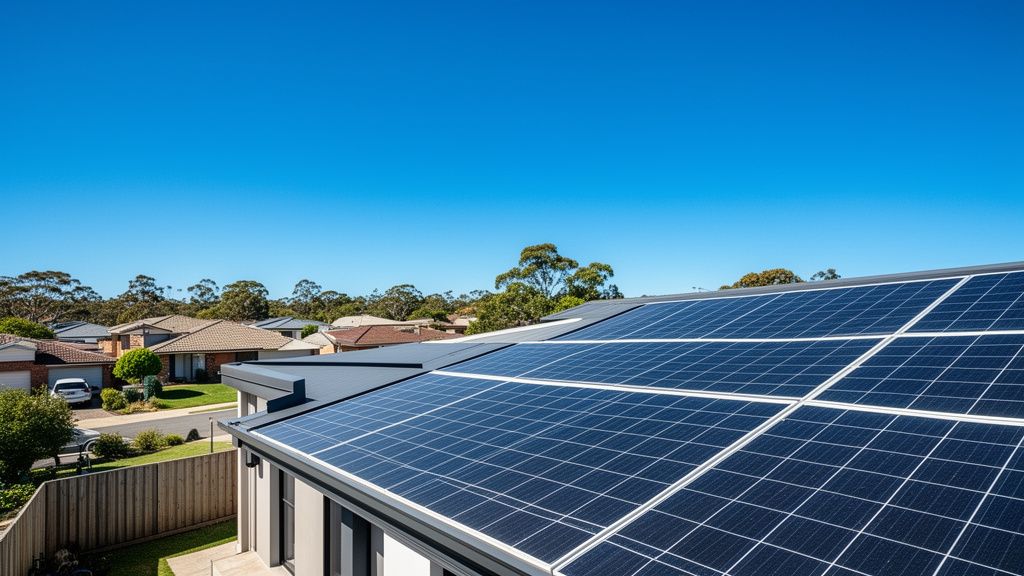
TL;DR: New South Wales aims to attract significant clean energy investment, but complex planning approvals, strong community opposition, and outdated grid infrastructure cause substantial delays. These roadblocks deter developers and slow down the state's transition to renewable power.
Why are planning approvals for large-scale solar and wind projects often delayed in NSW?
Planning approvals for major renewable energy projects in New South Wales frequently encounter significant delays due to the intricate regulatory framework and under-resourced assessment bodies. The state's planning system, while designed to ensure thorough environmental and social impact assessments, becomes a bottleneck for projects requiring multiple agency sign-offs. Developers often spend years navigating environmental impact statements (EIS), biodiversity offset strategies, and Aboriginal cultural heritage assessments, even for projects within designated Renewable Energy Zones (REZs). Each stage involves public exhibition periods, detailed responses to submissions, and often requires revisions based on feedback from local councils, state government departments like Environment and Heritage, and even federal agencies for matters of national environmental significance. This process can stretch a typical approval timeline from an expected 12-18 months out to three or four years, adding considerable holding costs and uncertainty for investors.
What makes the planning process so complex?
The complexity stems from the sheer number of studies and consultations required for a State Significant Development (SSD) application, which most large-scale solar farms and wind projects are classified as under NSW planning legislation. A typical application needs detailed reports on noise, visual impact, traffic, hydrology, ecology, and land use conflicts. The Department of Planning and Environment then coordinates input from numerous external government agencies. For instance, Transport for NSW will assess heavy vehicle movements during construction, while Local Land Services might comment on agricultural land impacts. Each agency has specific requirements and often works independently, leading to sequential rather than parallel assessments. This sequential nature means one agency’s feedback can trigger new requirements for another, creating a prolonged review loop before a determination can be made by the Independent Planning Commission (IPC) or the relevant Minister.
How does local community resistance affect renewable energy development in NSW?
Local community resistance significantly impedes the progress of new clean energy projects, particularly wind farms and large solar installations, despite the broader state-level support for renewables. Residents in proposed project areas often express concerns about visual amenity, noise from turbines, impacts on property values, and changes to rural landscapes. These concerns are amplified when developers do not engage early and transparently with affected communities. Public exhibition periods for development applications frequently attract hundreds or even thousands of submissions, many of which raise legitimate local issues that require detailed responses and sometimes project design modifications. The vocal opposition from localised groups can sway local councils and even influence the Independent Planning Commission's decisions, leading to refusals or approval conditions that significantly alter project economics.
What are common sources of community concern for renewable projects?
Common sources of community concern often centre on the immediate visual impact of large structures like 200-metre wind turbines or expansive solar panel arrays on agricultural land. Noise pollution, particularly from wind farms, is another frequent complaint, even if projects comply with regulatory limits. People also worry about potential electromagnetic interference, although scientific evidence does not support these claims for modern solar and wind technologies. Property devaluation is a major fear for landowners whose properties neighbour proposed sites. These issues are often compounded by perceived lack of direct benefit to the local community, especially when projects are developed by large corporations without a strong local presence or clear community benefit sharing schemes. A lack of trust in developers and government regulators to address these concerns thoroughly further fuels resistance.
What challenges do grid connection and infrastructure upgrades present for new projects?
Grid connection and the need for significant infrastructure upgrades create substantial challenges for new clean energy projects in NSW, often delaying their operational readiness and adding to overall costs. The existing transmission network, designed for a centralised coal-fired generation model, lacks the capacity to efficiently evacuate power from new, often remote, solar and wind farms. Connecting a new project to the grid requires extensive studies (e.g., System Strength Impact Assessments) by TransGrid and the Australian Energy Market Operator (AEMO) to ensure grid stability. These studies identify bottlenecks and stability issues, often leading to requirements for expensive network upgrades or generator performance standards that developers must fund or adhere to, sometimes costing tens of millions of dollars. The lead times for these upgrades, which include new substations or transmission lines, can stretch for years, pushing project completion dates far beyond original estimates.
Why is the current grid infrastructure a bottleneck?
The current grid infrastructure in NSW is largely a legacy system, not built to handle the high volume of intermittent renewable energy generation now coming online, especially from areas not historically associated with power generation. Many promising solar and wind sites are located hundreds of kilometres from major load centres or existing high-voltage transmission lines. This geographical mismatch means new projects need extensive new transmission infrastructure to export their power reliably. Furthermore, the grid requires "system strength" to maintain stability, traditionally provided by synchronous generators like coal plants. When these older plants retire, new renewable generators need to provide equivalent services or face limitations on their output, adding complexity and cost. TransGrid is working on major REZ infrastructure, but these multi-billion-dollar upgrades take time to plan and build.


Do environmental assessments add unnecessary delays to clean energy projects?
Environmental assessments for clean energy projects in NSW are essential for responsible development, but their execution can contribute to project delays due to their depth, complexity, and the iterative nature of the review process. Projects must thoroughly assess impacts on biodiversity, water resources, and Aboriginal cultural heritage, often requiring seasonal surveys that can only happen at specific times of the year. For instance, detailed flora and fauna surveys might need to occur over multiple seasons to capture all species and habitats present. These studies generate large volumes of data that regulators must scrutinise, leading to extensive information requests from agencies like the Department of Climate Change, Energy, the Environment and Water (DCCEEW). While critical for protecting valuable ecological and cultural assets, the need for exhaustive, site-specific investigations and the subsequent review cycles often extend project timelines significantly.
What specific environmental factors slow down approvals?
Specific environmental factors that frequently cause delays include the identification of threatened species or ecological communities within a project footprint, which then requires offsets or design changes. Water management plans, especially in drought-prone regions, are also subject to rigorous assessment to ensure minimal impact on local hydrology and agricultural users. Perhaps the most sensitive and time-consuming area is Aboriginal cultural heritage. Surveys must involve local Aboriginal land councils and traditional custodians, identifying and assessing potential impact on artefacts or sacred sites. If significant heritage is found, relocation or avoidance strategies are needed, sometimes resulting in substantial project redesigns or even abandonment. Each of these assessments adds months, if not years, to the overall approval timeline.
Key Takeaways
- NSW clean energy projects face lengthy planning approval times, often stretching to three or four years due to complex regulatory requirements and multiple agency reviews.
- Strong local community opposition, driven by concerns over visual impact, noise, and property values, frequently causes delays or necessitates project redesigns.
- Outdated grid infrastructure and the need for expensive, time-consuming network upgrades pose major bottlenecks for new projects connecting to the transmission network.
- Thorough environmental assessments for biodiversity, water, and cultural heritage, though crucial, add significant time due to required seasonal surveys and detailed regulatory scrutiny.
- Addressing these roadblocks requires streamlining planning processes, improving community engagement strategies, and accelerating grid infrastructure investment.
Read More
For a comprehensive overview, check out our master guide: Read the Full Guide Here.