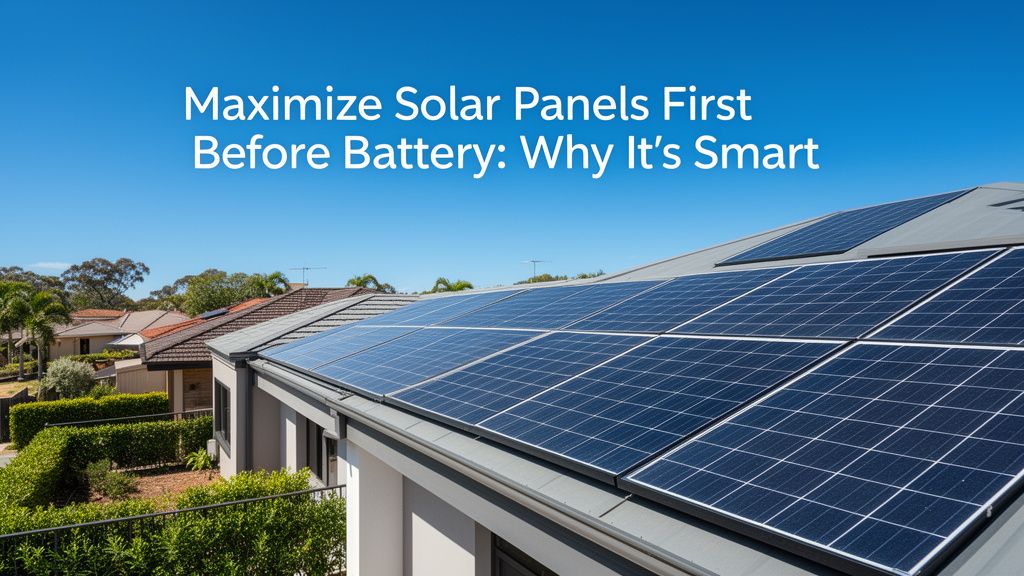
TL;DR: Prioritising a larger solar panel system over an immediate battery purchase maximises your return on investment by generating more cheap power, reducing grid reliance, and leveraging higher feed-in tariffs. This approach future-proofs your energy needs while making a future battery more cost-effective.
Why Does Maximising Your Solar PV Array Offer Superior Initial Value?
Maximising your solar PV array offers superior initial value because the cost per watt for solar panels dramatically decreases as system size increases, making it the most economical way to generate your own electricity from day one. While a standard 6.6kW solar system might cost between $5,000 and $8,000 fully installed in Australia, upgrading to a larger 10kW system might only add another $3,000 to $4,000, bringing the total to $8,000-$12,000. This non-linear pricing means the additional kilowatts come at a much lower unit cost, providing more energy output for a marginally higher investment. Generating more of your own power means less reliance on expensive grid electricity, which can range from 25c to 40c per kilowatt-hour (kWh), making the initial investment in panels yield substantial, immediate savings.
How System Oversizing Lowers Your Per-Kilowatt Installation Cost
System oversizing significantly lowers your per-kilowatt installation cost by spreading fixed expenses across a greater generation capacity. The labour for installation, the cost of the inverter (which often handles a larger capacity even with a smaller system), wiring, scaffolding, and design work are all relatively consistent whether you install a 6.6kW or a 10kW system. For example, a 6.6kW system might average $1.00-$1.20 per watt, whereas a 10kW system could drop to $0.80-$1.00 per watt. This efficiency means you get more 'bang for your buck' from the solar panels themselves, effectively reducing the entry price for generating more of your own renewable energy.
Is Exporting Excess Solar Power a Better Option Than Buying a Battery Immediately?
Exporting excess solar power is often a financially smarter initial option than immediately buying a battery, especially given the current cost of battery storage. While Australian feed-in tariffs (FiTs) have decreased from their peak, typically ranging from 5c to 10c per kWh, they still provide a valuable credit on your electricity bill. A typical home battery system can cost between $8,000 and $15,000 installed, requiring many years to recoup its investment through avoided grid purchases alone. By contrast, an oversized panel system generates more cheap electricity that you either consume directly or export for a credit. This immediate generation and income stream can effectively offset the future cost of a battery, allowing you to benefit from solar savings earlier while waiting for battery technology to become more affordable or efficient.
How Does a Larger Solar System Enhance Your Long-Term Energy Strategy?
A larger solar system significantly enhances your long-term energy strategy by creating a robust foundation for future energy demands and improving your ability to self-consume generated electricity effectively. As Australian homes increasingly electrify, from transitioning to electric vehicles (EVs) to installing heat pump hot water systems and more efficient air conditioning, energy consumption patterns are shifting. A generously sized solar array provides the necessary buffer, ensuring you can meet these growing demands with self-generated, cheap, clean power, thus reducing your reliance on grid electricity even during peak consumption periods. This proactive approach not only saves money but also provides greater energy independence.
Maximising Home Self-Consumption and Reducing Grid Reliance
Maximising home self-consumption and reducing grid reliance becomes significantly easier with an oversized solar system. On most days, a larger array is more likely to completely cover your household’s daytime energy needs, even accounting for variable weather conditions. Any surplus power that isn't immediately used is then available to be exported for a feed-in tariff. When you eventually integrate a battery, an oversized system guarantees you'll have ample excess power to store, making your battery investment much more effective from the moment it's installed. This strategy directly reduces the amount of expensive power you need to purchase from the grid, which often costs several times more than the rate you receive for exporting.
Preparing for Future Energy Demands like Electric Vehicles
The shift towards electrification in Australian homes, particularly with the rise of Electric Vehicles (EVs), underscores the importance of a larger solar system for future energy demands. Charging an EV at home can significantly increase your daily electricity consumption, drawing substantial power. A robust solar system ensures you have an abundant source of clean, cheap electricity to power your vehicle. Similarly, adopting electric heat pump hot water systems, induction cooktops, or upgrading to larger, more energy-intensive appliances means higher base consumption. An oversized solar array allows your home to gracefully absorb these increased loads, deferring or optimising the need for battery storage by meeting demands directly from the sun.

What Financial Advantages Does Oversizing Your Solar Offer for Future Battery Integration?
Oversizing your solar system offers significant financial advantages for future battery integration by ensuring you have ample excess generation to charge a battery effectively, thus optimising its payback period and reducing its effective cost. The true economic value of a battery system is intrinsically linked to its ability to store and discharge cheap, self-generated solar power to displace expensive grid electricity. If your initial solar array is too small, you won't consistently produce enough surplus energy to fully charge a battery, diminishing its economic benefit and extending its payback period. A larger system guarantees a consistent, abundant surplus, making any future battery investment far more impactful.
Optimising Battery Sizing and Accelerating Its Return on Investment
Optimising battery sizing and accelerating its return on investment are direct benefits of installing an oversized solar system first. With a generous amount of solar generation, you ensure that any stored energy is truly 'free' excess solar, not expensive grid power used to top up a small system. This maximises the value of every kWh stored and later used. You might also find that with your daytime consumption predominantly met by direct solar, you won't need as large a battery as initially estimated for evening peak use, further optimising your overall system cost. The ability to consistently fill your battery with inexpensive solar energy directly contributes to its quicker payback by avoiding higher grid electricity charges.
Real-World Australian Cost-Benefit: Panels vs. Battery Investment
When considering the real-world Australian cost-benefit, investing in more panels generally provides a quicker and more certain return than an immediate battery purchase. For instance, a well-sized 6.6kW solar system could save an Australian household $1,500 to $2,500 annually on electricity bills. Expanding this to a 10kW system might cost an additional $3,000-$4,000 but could yield an extra $500-$800 in annual savings from increased generation and exports. Contrast this with a 10kWh home battery, which typically costs $8,000-$15,000 and might save $800-$1,200 annually by shifting consumption. The upfront panel investment provides immediate and foundational bill reductions and feed-in tariff earnings, creating a solid financial base before the more complex and expensive battery integration becomes truly viable and cost-effective.
Key Takeaways
- Prioritise a larger solar panel system to leverage economies of scale and lower per-watt installation costs.
- Maximise your solar generation first to significantly reduce reliance on expensive grid power and earn feed-in tariffs.
- A robust solar array creates a surplus of cheap electricity, essential for making any future battery investment truly cost-effective.
- Future-proof your home by installing more panels now to handle increasing energy demands from EVs and electric appliances.
- Deferring a battery purchase allows technology to mature and prices to potentially drop, while you benefit from immediate solar savings.
Read More
For a comprehensive overview, check out our master guide: Read the Full Guide Here.