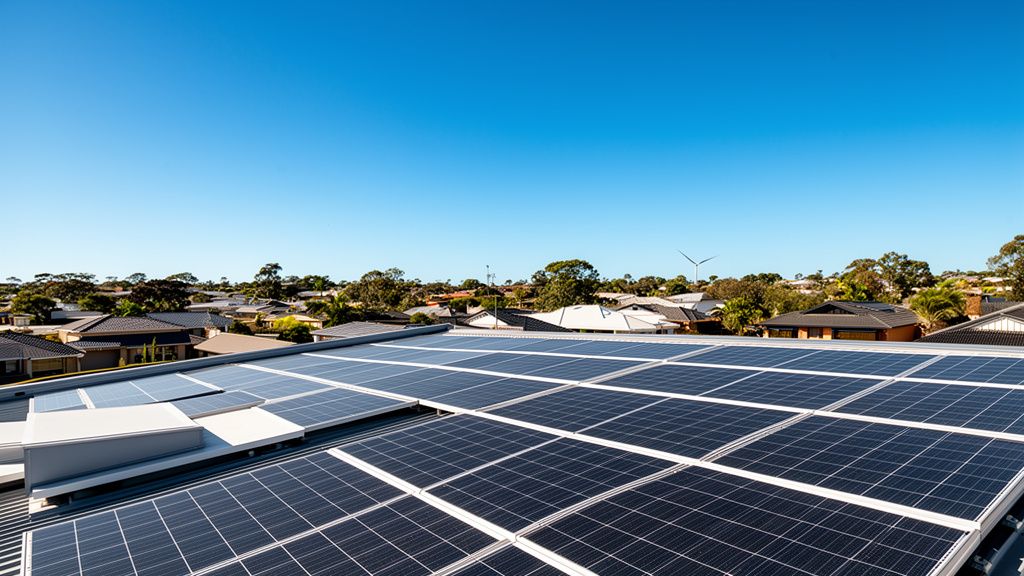
TL;DR: Australian data centres consume enormous amounts of electricity, creating significant demand for new renewable energy generation. Their large, predictable power needs allow them to sign long-term Power Purchase Agreements (PPAs) with developers, directly funding the construction of new solar and wind farms that otherwise might not proceed. This accelerates Australia's transition to a green grid.
Why Do Data Centres Need So Much Renewable Energy?
Data centres run 24 hours a day, every day of the year, consuming vast amounts of electricity to power servers, cooling systems, and networking equipment. A single hyperscale data centre in Western Sydney, for example, can draw over 100 megawatts (MW) of power, equivalent to a small city. This constant, heavy load means their energy consumption is predictable but also substantial. As global demand for cloud services, AI, and digital infrastructure grows, so does the energy footprint of these facilities. Companies operating these centres, like Amazon Web Services, Google, and Microsoft, face increasing pressure from investors, customers, and their own corporate sustainability goals to source 100% of this power from renewable sources. This demand is not just about being green; it also hedges against volatile fossil fuel prices and secures long-term power costs.
What is the Energy Load of an Australian Data Centre?
An average medium-sized data centre in Australia might consume between 10MW and 20MW continuously. Larger facilities, often termed hyperscale data centres, located in major hubs like Melbourne or Sydney, can easily exceed 50MW, with some planned facilities aiming for over 200MW. To put that in perspective, a 20MW load needs around 175,200 megawatt-hours (MWh) of electricity annually. Supplying this entirely from renewables requires a significant investment in new solar or wind generation. For instance, a 20MW solar farm in New South Wales might produce around 35,000 to 40,000 MWh per year, meaning multiple renewable projects are needed to match a single large data centre's consumption. This scale of demand pushes developers to build new generation assets rather than just tapping into existing clean energy supplies.
How Do Data Centres Fund New Renewable Projects?
Data centres typically fund new renewable projects through long-term Power Purchase Agreements (PPAs). These agreements are direct contracts between a data centre operator (the off-taker) and a renewable energy project developer. Under a PPA, the data centre commits to buying electricity from a specific solar or wind farm for a fixed period, often 10 to 15 years, at an agreed price per megawatt-hour. This guaranteed revenue stream de-risks the project for lenders and investors. Banks are more willing to provide financing for the construction of a new 150MW solar farm in Queensland, for example, if a large, creditworthy company like Amazon has already committed to buying its output for the next decade. Without this long-term commitment, many new utility-scale renewable projects would struggle to secure the necessary capital to get off the ground.
What Role Do Corporate PPAs Play?
Corporate PPAs are the engine driving much of this new renewable development. They provide the financial certainty that developers need for projects costing hundreds of millions of dollars. For instance, in 2022, Microsoft signed a PPA for 150MW of solar power from two new solar farms in Queensland and New South Wales. This commitment helped fund the construction of those new facilities, adding clean capacity to the grid. These PPAs are often 'sleeved' by an electricity retailer, meaning the power flows into the grid, and the data centre receives renewable energy certificates (RECs) and financial credits for its purchase. The system is less about direct wires from a solar farm to a data centre and more about the financial mechanism that guarantees new renewable energy is added to the grid specifically to meet that corporate demand.
What Does This Mean for Australia's Grid and Solar Industry?
The increasing demand from data centres acts as a powerful accelerator for Australia's clean energy transition. By providing a stable revenue base for large-scale projects, they directly stimulate the construction of new solar and wind farms. This adds much-needed generation capacity, reducing our reliance on older, emissions-intensive power plants. It also contributes to grid stability by diversifying the energy mix and spreading generation across different geographical areas. For the Australian solar industry, this means a consistent pipeline of large-scale projects, driving investment in local supply chains, creating jobs in construction, operation, and maintenance, and supporting innovation in energy management solutions. The outcome is positive: data centres achieve their sustainability targets, and Australia gets a greener, more resilient energy grid.
How Does This Impact Local Economies and Green Jobs?
The development of utility-scale solar and wind farms, driven by data centre PPAs, creates substantial economic benefits in regional Australia. Building a 100MW solar farm can involve hundreds of construction jobs over 12-18 months, followed by ongoing operational and maintenance roles for decades. These jobs range from electricians and engineers to site managers and environmental specialists. Furthermore, these projects often bring infrastructure improvements to regional areas and provide lease payments to landowners, injecting capital into local economies. This growth in green jobs and regional investment is a direct consequence of the strong demand for renewable energy from Australia's digital infrastructure.
Key Takeaways
- Data centres require enormous, constant electricity, making them ideal anchor customers for new renewable energy projects.
- Long-term Power Purchase Agreements (PPAs) from data centres provide the financial security needed to fund new solar and wind farm construction.
- This corporate demand directly adds new renewable generation capacity to Australia's electricity grid, accelerating decarbonisation.
- The shift drives significant investment into regional Australia, creating green jobs and supporting economic growth.
- Data centre commitments are a major catalyst for achieving Australia's clean energy targets.
