TL;DR: Ipswich homeowners are increasingly choosing N-Type solar panels in 2026 due to their superior efficiency, lower degradation rates, and enhanced performance in shaded or high-temperature conditions common in the region. This advanced technology offers a better long-term return on investment, making it ideal for the evolving energy needs and urban landscapes of Ipswich.
What Makes N-Type Solar Panels a Smarter Choice for Ipswich Homes?
N-Type solar panels represent the next generation of photovoltaic technology, offering significant advantages over the traditional P-Type panels that have dominated the market. Unlike P-Type cells, which use boron doping to create the positive layer and are susceptible to light-induced degradation (LID), N-Type cells use phosphorus doping, creating a negatively charged silicon base. This fundamental difference drastically reduces LID, meaning N-Type panels maintain their initial power output more effectively over their lifespan. For Ipswich homeowners, this translates directly into more kilowatt-hours (kWh) generated per square metre, leading to greater energy independence and lower power bills. Furthermore, N-Type panels typically boast higher efficiency ratings, often exceeding 22%, which is crucial for maximising output from smaller roof spaces often found in Ipswich’s increasingly dense urban and suburban areas. Their improved performance in hotter climates, such as Queensland’s humid summers, also makes them a particularly attractive option, as they suffer less power loss at elevated temperatures.
How N-Type Technology Outperforms P-Type in Efficiency and Longevity
N-Type solar panels are inherently more efficient and degrade at a slower rate than their P-Type counterparts, providing a more robust long-term investment. While a standard P-Type panel might degrade by 0.5% to 0.7% annually after an initial first-year degradation, N-Type panels often come with warranties guaranteeing annual degradation rates as low as 0.3% to 0.4%. Over a 25-year lifespan, this difference compounds significantly, ensuring Ipswich homes continue to generate a higher percentage of their original rated power for much longer. This extended lifespan and sustained performance mean homeowners get more energy production from their initial investment, reducing the overall cost of ownership and accelerating their payback period, which is a major draw for budget-conscious families in the Ipswich area.
How Do N-Type Panels Perform Better in Ipswich's Urban Environment?
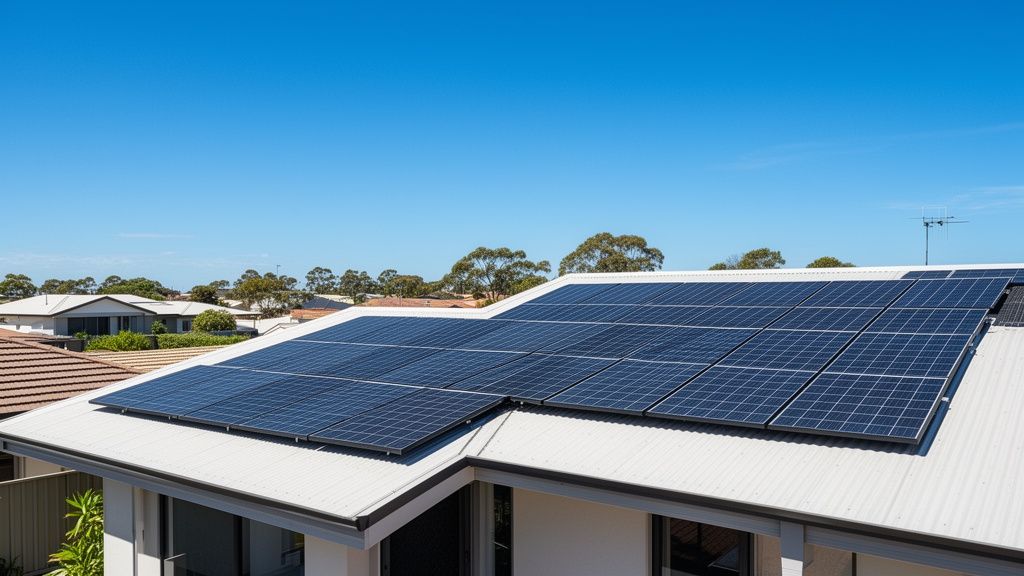
N-Type solar panels are particularly well-suited to the unique challenges presented by Ipswich's urban and peri-urban environments, where factors like shading and limited roof space are common. Their superior low-light performance means they can start generating electricity earlier in the morning, continue longer into the evening, and maintain better output on cloudy days compared to P-Type panels. This characteristic is invaluable in areas where neighbouring buildings, mature trees, or even the pitch of a roof might cause partial shading at different times of the day. For homes closer to the Ipswich CBD or in newer developments with smaller block sizes, maximizing every ray of sunlight is critical, and N-Type panels deliver on this promise by converting more diffused light into usable power. Ipswich City Council encourages sustainable development, and efficient solar solutions like N-Type panels align perfectly with these goals by optimising renewable energy generation within existing urban footprints.
Maximising Output on Smaller or Shaded Roof Spaces
In Ipswich’s growing population centres, many homes, especially those on smaller blocks or with complex roof lines, may not have expansive, unshaded roof areas. N-Type panels excel here because their higher efficiency means fewer panels are needed to achieve a desired system size, typically a 6.6kW or 10kW system. This allows homeowners to maximise energy production even with limited available space. Additionally, their improved shade tolerance, often combined with advanced inverter technology like optimisers or micro-inverters, helps mitigate power losses when one part of the system is shaded. This means that if a neighbour’s tree casts a shadow on a few panels, the entire system's output isn't drastically reduced, ensuring a consistent and higher energy yield for Ipswich households throughout the day.
Are N-Type Solar Panels a Cost-Effective Investment for Ipswich Homeowners in 2026?
Yes, N-Type solar panels represent a highly cost-effective investment for Ipswich homeowners in 2026, despite a slightly higher upfront cost compared to older P-Type technology. While a typical 6.6kW P-Type solar system in Ipswich might range from $5,500 to $7,500, a comparable N-Type system could be in the range of $6,500 to $8,500, depending on brand and installation complexity. However, this initial difference is quickly recouped through superior energy generation and a longer effective lifespan. With current Queensland feed-in tariffs averaging around 5-10c per kWh, and rising electricity prices from the grid, every extra kWh generated by a more efficient N-Type panel directly translates into greater savings and credits on your power bill. The accelerated return on investment, often achieving payback within 3-5 years, alongside significantly reduced degradation, makes N-Type panels a smarter financial decision over the 25+ year life of the system.
Long-Term Savings and Return on Investment in Queensland
The true value of N-Type panels for Ipswich homeowners lies in their long-term financial benefits. Over two decades, the sustained higher output and minimal degradation of N-Type panels mean they will generate thousands more kilowatt-hours of electricity compared to P-Type systems. This translates into substantially lower electricity bills over the system’s lifespan and potentially higher feed-in tariff credits if your home exports excess power. When considering the total cost of ownership, including the initial outlay, maintenance, and the value of generated electricity, N-Type systems offer a superior return on investment. This makes them an increasingly attractive option for Ipswich families looking to future-proof their homes against rising energy costs and maximise their solar savings for decades to come.
What Local Factors in Ipswich are Accelerating the Shift to N-Type Technology?
Several local factors specific to Ipswich are significantly accelerating the shift towards N-Type solar technology among homeowners. The region's consistent sunny weather, while excellent for solar, also brings high temperatures that N-Type panels handle more efficiently, losing less power to heat. Ipswich's rapid population growth and urbanisation mean more homes are being built on smaller blocks, increasing the demand for highly efficient panels to maximise energy generation from limited roof space. Furthermore, the rising cost of living and electricity prices across South East Queensland are pushing residents to seek the most effective long-term solutions for energy independence. Ipswich City Council’s commitment to sustainable communities also plays a role, with residents increasingly seeking out and investing in advanced, environmentally friendly technologies for their homes.

The Impact of Queensland's Climate and Urban Development on Solar Choices
Queensland's climate, characterised by abundant sunshine but also periods of high heat and humidity, directly influences solar panel performance. N-Type panels are known to perform better under high-temperature conditions, experiencing less efficiency drop-off than P-Type panels. This makes them particularly suitable for Ipswich’s long, hot summers, ensuring optimal energy production when air conditioning demand is highest. Alongside this, Ipswich’s ongoing urban development, with new housing estates and infill development, often results in denser living arrangements. This urban fabric means that roof space can be at a premium, and potential shading from neighbouring properties or established trees is a common consideration. The higher power density and superior shade performance of N-Type panels are therefore crucial advantages, allowing Ipswich homeowners to achieve significant solar savings even in these challenging urban conditions. For local building regulations and sustainable development guidelines, homeowners can always consult the Ipswich City Council website at https://www.ipswich.qld.gov.au.
Key Takeaways
- N-Type solar panels offer superior efficiency and significantly lower degradation rates compared to traditional P-Type panels.
- These advanced panels perform better in Ipswich's hot climate and shaded urban environments, maximising energy output from limited roof space.
- While slightly more expensive upfront, N-Type panels provide a quicker payback period and a higher long-term return on investment for Ipswich homeowners.
- Local factors like rising energy costs, urban density, and Ipswich City Council's sustainable development goals are driving the adoption of N-Type technology.
- Ipswich residents should consider N-Type panels for a future-proof solar solution that delivers consistent performance and greater savings over its extended lifespan.