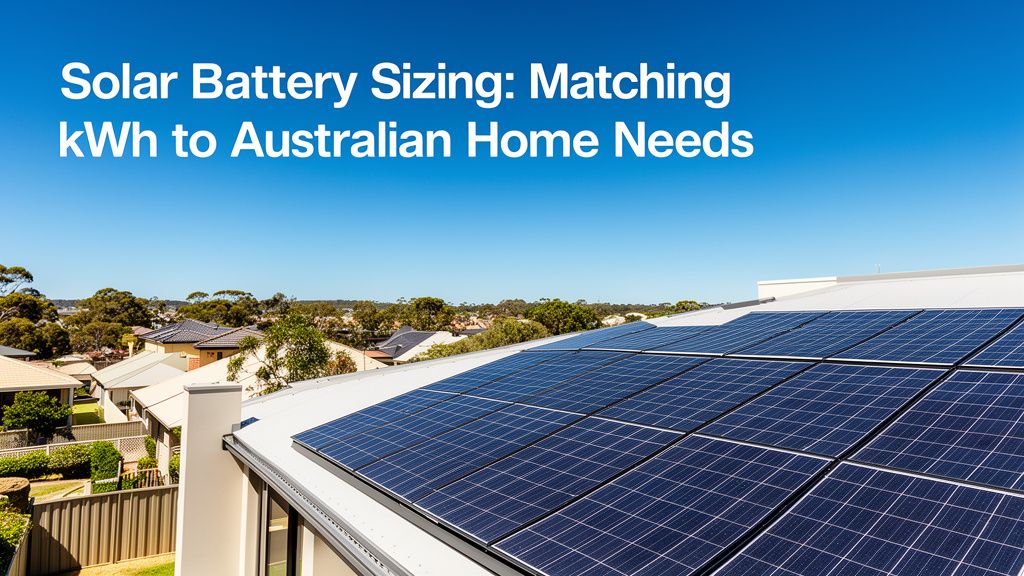
TL;DR: The right solar battery size depends on your daily electricity consumption after sunset and how much excess solar power your system generates. Most Australian homes find a battery between 5 kWh and 15 kWh meets their needs, prioritising self-consumption over exporting power.
Why is a Solar Battery a Smart Investment for Australian Homes?
A solar battery allows homeowners to store excess electricity generated by their solar panels during the day and use it later, typically in the evening. This setup significantly reduces reliance on grid electricity, especially when feed-in tariffs are low, making your solar system more financially effective. Instead of selling cheap power back to the grid and buying expensive power later, you use your own stored energy. This approach maximises the value you get from your solar installation, often leading to greater long-term savings on your electricity bills. It also provides energy independence.
How Solar Self-Consumption Saves You Money
Maximising self-consumption means you use more of your own generated solar electricity and buy less from the grid. In Australia, feed-in tariffs (FiTs) have dropped significantly in recent years, often sitting below 5-7 cents per kilowatt-hour (kWh) in most states, while peak grid electricity can cost 30-50 cents per kWh or more. Using a battery to store daytime solar power for evening use means you avoid buying expensive grid electricity. This difference in price directly translates to substantial savings and shortens the payback period for your entire solar investment. For example, a home in Adelaide paying 40c/kWh for grid power and receiving 5c/kWh FiT saves 35c for every kWh stored and consumed instead of exported.
Protecting Your Home from Blackouts
Many modern solar battery systems offer blackout protection, also known as an Uninterruptible Power Supply (UPS) function. When the grid goes down, a battery with backup capability disconnects your home from the grid and continues to power designated circuits or your entire home using stored energy. This feature offers peace of mind during power outages, keeping essential appliances like refrigerators, lights, and medical equipment running. For homes in areas prone to unreliable grid supply, this aspect of battery ownership can be as important as the financial savings.
How Do You Calculate Your Home's Daily Electricity Consumption?
You calculate your home's daily electricity consumption by reviewing your past electricity bills. These bills typically show your total kWh usage over a billing period, often 90 days. Divide the total kWh by the number of days in the billing cycle to get an average daily consumption figure. Pay particular attention to usage patterns during peak times (evenings) when solar panels are not generating power. This evening usage is the critical figure for battery sizing, as it represents the electricity you would otherwise pull from the grid.
Understanding Your Energy Usage Profile
Your energy usage profile details when and how you use electricity throughout the day. A standard household might use a lot of power in the mornings for showers and breakfast, minimal power during the day when people are at work or school, and then a significant spike in the evenings for cooking, heating/cooling, lighting, and entertainment. Understanding this profile is essential. If your family uses most of its electricity after 5 PM, a larger battery becomes more valuable to cover that evening demand. Some electricity providers offer detailed usage graphs online, which can help visualise your specific peaks and troughs.
Beyond the Bill: Real-Time Monitoring
Modern solar inverter and battery systems often come with monitoring apps that provide real-time data on your electricity generation, consumption, and battery state of charge. Using these tools gives you a much clearer picture than just looking at a bill. You can see exactly how much power your home draws in the evenings, how much solar energy your system generates, and how much excess is sent to the grid or stored in your battery. This granular data helps refine your battery size estimate, ensuring you choose a capacity that accurately matches your actual usage patterns rather than just an average.
What Battery Size Matches a Typical Australian Solar System?
The ideal battery size often matches your daily evening electricity demand, typically between 5 kWh and 15 kWh for most Australian homes. The goal is to store enough energy from your daytime solar generation to cover your usage from when the sun goes down until your panels start generating again the next morning. It is not always economical to aim for 100% energy independence, as the cost for oversized batteries can outweigh the additional savings. Balancing cost and coverage is key, aiming to offset your most expensive grid usage.
Common Battery Sizes and Their Applications
Residential solar batteries commonly come in sizes like 5 kWh, 10 kWh, and 13.5 kWh. A 5 kWh battery might suit a smaller household or one with low evening consumption, providing enough power for a few hours of essential evening use. A 10 kWh battery, such as the BYD Battery-Box Premium LVS 10.2 kWh, is a popular choice for average-sized families in Australia, often covering most or all evening consumption for homes with a 6.6 kW to 10 kW solar system. Larger options, like the Tesla Powerwall 2 at 13.5 kWh, can provide extensive coverage for homes with higher electricity demands, multiple air conditioners, or those aiming for greater grid independence.
Sizing for Solar System Output
Your solar system's generation capacity also plays a part in battery sizing. A large 10 kW solar array produces substantial excess energy on sunny days, making a larger battery more viable to capture this surplus. Conversely, if you have a smaller 3 kW system, you might not generate enough excess energy to fully charge a very large battery daily, meaning a smaller battery makes more sense. Match the battery's usable capacity with the amount of excess solar energy you typically generate and your evening consumption. A common mistake is buying a large battery that rarely gets fully charged or one that is too small to cover your actual evening load.

What Are the Costs and Payback for Solar Batteries in Australia?
Solar battery costs in Australia range from $8,000 to $18,000 fully installed for typical residential systems, with payback periods varying significantly based on electricity prices, daily usage patterns, and available government rebates. A basic 5 kWh battery might start at the lower end, while a 13.5 kWh premium battery system could reach the higher end. These prices include the battery unit, inverter upgrades if necessary, and professional installation. The investment pays off over time by reducing or eliminating your reliance on expensive grid electricity during peak hours.
Typical Battery Costs and Installation
For a popular 10 kWh battery, expect to pay approximately $10,000 to $15,000 fully installed. This price usually includes the battery, any required inverter upgrades or compatible hybrid inverters, and the labour for installation by licenced electricians. Factors affecting the final cost include the battery brand, its usable capacity, warranty length, and whether it offers blackout protection. Always get multiple quotes from Clean Energy Council (CEC) accredited installers to compare options and ensure you receive a comprehensive package. Cheaper batteries might offer less usable capacity or shorter warranties, so checking specifications is important.
Government Rebates and Financial Incentives
Several Australian states offer rebates and incentives for solar battery installations, which can significantly reduce the upfront cost and improve payback times. For example, Victoria's Solar Homes Program offers a rebate of up to $1,400 for battery installations, alongside no-interest loans. South Australia has the Home Battery Scheme, providing subsidies based on battery capacity. The Australian Capital Territory (ACT) offers rebates through its Sustainable Household Scheme. These programs aim to accelerate battery uptake, so research current state-specific incentives before making a purchase. These rebates often reduce the payback period by several years.
Key Takeaways
- Match your solar battery size to your specific evening electricity consumption (kWh) to maximise savings.
- Most Australian homes find 5 kWh to 15 kWh battery capacity suitable, with 10 kWh being a common choice.
- Review your electricity bills and use real-time monitoring to understand your actual energy usage profile.
- Solar batteries reduce reliance on expensive grid power during peak times and provide blackout protection.
- Research current state government rebates and incentives to lower the upfront cost of your battery system.
Read More
For a comprehensive overview, check out our master guide: Read the Full Guide Here.