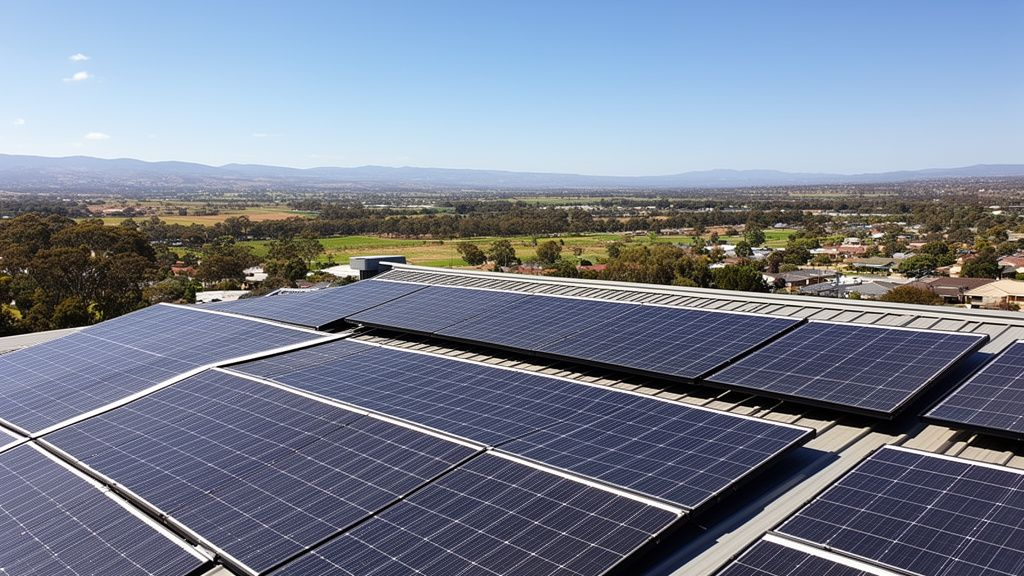
TL;DR: Western Australia’s South West Interconnected System (SWIS), the world's largest isolated grid, has reached a historic milestone with renewables supplying 46% of its demand in Q1 2026. This transformation is driven by a massive surge in rooftop solar and over 1GW of grid-scale battery storage, proving that modern battery systems can successfully maintain grid stability during extreme low-demand events.
The Unique Geography of the South West Interconnected System
Western Australia’s primary electricity network, known as the South West Interconnected System (SWIS), is undergoing a rapid and historic transformation. Covering 261,000 square kilometres but separated from Australia's eastern states and the main National Electricity Market (NEM) by 1,000 kilometres of desert, the SWIS has been formally recognized as the world's "largest isolated grid." Because of its physical isolation, the SWIS cannot import electricity from neighboring grids during times of supply shortages, nor can it export excess power when local generation peaks. It must remain perfectly balanced internally at all times.
Historically, the SWIS relied heavily on fossil fuels; just ten years ago, 90% of the system's demand was powered by coal and gas. Today, the rapid deployment of wind, rooftop solar, and utility-scale storage has reshaped the grid. In the first quarter of 2026, renewable energy successfully supplied 46% of the total SWIS demand, marking a monumental shift toward a low-emissions energy system.
The Solar Surge and Record-Low Grid Demand
One of the primary drivers of this transition is the enthusiastic adoption of residential rooftop solar by Western Australians. In the second quarter of 2026 alone, WA residents added 110MW of rooftop solar capacity to the grid. To put this in a national context, approximately 2.8GW (2,800MW) of small-scale solar was installed across Australia's eight states and territories in 2025, with expectations for national installations to reach between 3GW and 3.7GW in 2026.
This high concentration of rooftop solar has led to dramatic grid dynamics, particularly during mild, sunny spring and summer days. On November 16 of last year, rooftop solar production peaked so high that grid-facing demand on the SWIS fell to a record low of just 383MW. This was an astonishing two-thirds lower than the previous record low set six years prior. While high solar output is excellent for clean energy generation, such low grid demand introduces operational challenges, as there are fewer traditional generators online to assist in managing system voltage and frequency, making the grid potentially unstable.


The Role of Batteries in Grid Stability and the Capacity Investment Scheme
To manage these low-demand periods without resorting to grid outages, Western Australia has rapidly scaled up its battery storage capabilities. Over the past year, grid-scale battery capacity on the SWIS bypassed the 1GW milestone. During the record-low demand event on November 16, what would have historically been a significant operational challenge became a non-event. Grid-scale batteries immediately began charging, absorbing the excess rooftop solar generation, supporting grid demand, and keeping the system stable.
According to Kirsten Rose, AEMO Executive General Manager for Western Australia, grid-scale batteries have significantly improved the operator's ability to manage periods of low grid demand, providing vital support during the volatile spring and summer months. This security is set to expand further. Under the Federal Government's Capacity Investment Scheme (CIS), a pipeline of 482MW of grid-scale battery storage is scheduled to be built across regional Western Australia, which will further stabilize the SWIS and reduce dependence on expensive coal and gas peaking generators.
Concurrently, small-scale storage is booming. Through the Cheaper Home Batteries challenge introduced in July of last year, WA residents have installed 50,000 home batteries, representing 1.1GWh of decentralized storage capacity, solidifying Western Australia's place at the forefront of the new energy era.
Key Takeaways
- Isolated Pioneer: The SWIS is the world's largest isolated grid, covering 261,000 square kilometres and operating 1,000km away from other networks.
- Renewable Milestone: Renewable energy supplied 46% of SWIS electricity demand in Q1 2026, compared to just 10% from renewables a decade ago.
- Rooftop Dominance: Western Australians added 110MW of rooftop solar in Q2 2026, pushing grid demand to a historic low of 383MW on November 16 of last year.
- Battery Stabilization: Over 1GW of grid-scale battery capacity, supported by a 482MW pipeline under the Capacity Investment Scheme (CIS), successfully maintains grid voltage and frequency during solar-driven low-demand events.
- Residential Storage: The Cheaper Home Batteries program has successfully deployed 50,000 residential batteries (1.1GWh capacity) since July last year.


