TL;DR: Virtual Power Plants (VPPs) pool home solar batteries into a collective network, allowing them to trade stored energy with the grid during peak demand or supply shortages, generating income for homeowners while stabilising the electricity network. By optimising battery usage, VPPs create a new revenue stream for those with solar and storage.
What Exactly Is a Virtual Power Plant (VPP) and How Does It Benefit the Grid?
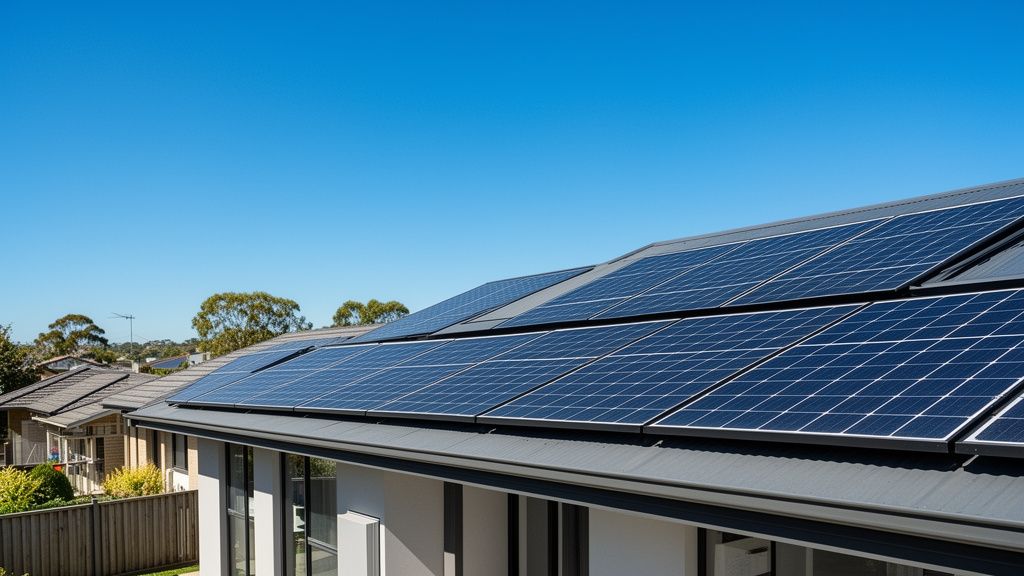
A Virtual Power Plant (VPP) is a sophisticated network that aggregates numerous small-scale distributed energy resources, primarily residential solar battery systems, to operate collectively as a single, larger power plant. Instead of relying on a traditional centralised power station, a VPP intelligently manages the charging and discharging of these home batteries based on real-time grid needs and market prices. This orchestrated approach provides crucial flexibility and stability to the electricity grid, especially in Australia's rapidly evolving energy landscape. When the grid experiences high demand or supply shortages, the VPP can instruct participating batteries to discharge stored energy, effectively injecting power into the network. Conversely, during periods of abundant cheap power, such as midday solar generation, the VPP can direct batteries to charge, absorbing excess electricity. This dynamic balancing act helps to prevent blackouts, reduce reliance on expensive fossil fuel peaker plants, and seamlessly integrate a greater proportion of intermittent renewable energy sources into our national grid.
How VPPs Bolster Grid Stability and Renewable Integration
VPPs play a vital role in enhancing grid stability by rapidly responding to fluctuations in electricity supply and demand. Australia's energy market, managed by the AEMO (Australian Energy Market Operator), increasingly faces challenges from the variability of large-scale renewable energy like wind and solar farms. VPPs offer a fast-acting solution by either injecting power into the grid within seconds to correct frequency imbalances or by absorbing surplus power when generation exceeds demand. This ability to quickly modulate power flow helps to smooth out the intermittency of renewables, making the entire system more reliable. By doing so, VPPs create a more robust and resilient grid that can handle greater penetration of clean energy, ultimately contributing to Australia's emissions reduction targets and ensuring a secure energy future for all.
How Does My Home Battery Earn Money Within a VPP?
Your home battery earns money within a VPP by intelligently responding to signals from the VPP operator, strategically buying and selling electricity to and from the grid. Essentially, the VPP operator acts as a middleman, optimising your battery's operation to participate in wholesale energy markets or provide grid services. This typically involves the VPP program discharging your stored solar energy back into the grid when electricity prices are high – for instance, during evening peaks when everyone is cooking dinner and turning on air conditioners. Conversely, it might instruct your battery to charge during times of low demand and cheap electricity, such as mid-morning on a sunny day when there's an abundance of solar generation. For every kilowatt-hour (kWh) your battery contributes to the grid or for participating in grid stabilisation events, you receive a payment or credit from the VPP provider. This transforms your dormant battery into an active income-generating asset, reducing your overall energy costs and enhancing your return on investment.
Understanding VPP Payment Models and Potential Earnings
VPP programs in Australia offer a range of payment models, designed to incentivise participation and provide a clear financial benefit to homeowners. Some programs offer a fixed payment per month, such as $30-$50, regardless of how often your battery is called upon, providing predictable income. Others might offer a direct credit on your electricity bill for every kWh exported to the grid during a VPP event, often at a rate significantly higher than standard feed-in tariffs. For example, a common VPP might offer 30-50 cents per kWh for exports during peak events, compared to a typical feed-in tariff of 5-10 cents. Annual earnings can vary widely based on your battery's size, the specific VPP program, and grid activity, but many participants report earning an additional $100 to $400+ per year. Some premium programs with larger batteries could potentially see even higher returns, especially if they are heavily engaged in market participation. It's crucial to compare different VPP offerings and understand their terms to maximise your financial gain.
What Are the Requirements for Joining an Australian VPP Program?
To join an Australian VPP program, you generally need a compatible solar battery system, an active internet connection, and often a smart meter, all registered with an approved VPP provider or your electricity retailer. The most critical requirement is having a solar battery system that is compatible with the VPP's technology platform. Many VPPs partner with specific battery manufacturers like Tesla Powerwall, Sonnen, AlphaESS, or Sungrow, so it's essential to check if your existing or planned battery model is on their approved list. Your battery also needs to have a sufficient minimum storage capacity, typically ranging from 5kWh to 10kWh or more, to make a meaningful contribution to the grid. Furthermore, a stable and reliable internet connection is crucial, as this allows the VPP operator to remotely monitor, manage, and dispatch your battery's energy in real-time. Finally, most VPPs require a smart meter installed at your property, which accurately measures electricity flow both into and out of your home, enabling precise billing and remuneration for your VPP contributions. Some programs may also require you to be a customer of a specific electricity retailer.
Key Considerations for Battery Compatibility and Connectivity
When considering VPP participation, battery compatibility is paramount. Not all batteries are created equal in terms of their ability to communicate with VPP platforms. Modern, smart battery systems are generally designed with VPP integration in mind, featuring advanced inverters and communication protocols. If you're purchasing a new battery, explicitly ask your installer about VPP compatibility and which programs it can connect to. For existing systems, it's worth checking with your battery manufacturer or a solar energy expert. Beyond the battery itself, a robust internet connection is non-negotiable. The VPP relies on constant, real-time data exchange to ensure your battery is optimally dispatched. Any disruption in connectivity could mean missed opportunities for earnings or a failure to respond to grid signals, potentially impacting your participation. Ensure your home Wi-Fi network is stable and covers the location of your battery's communication hub.
Are There Any Downsides or Risks to Participating in a VPP?
While generally beneficial, participating in a Virtual Power Plant program does come with a few potential downsides and risks that homeowners should consider before signing up. The primary concern for some is the potential reduction in their battery's autonomy for personal use. While VPPs are designed to optimise for both grid services and your household's needs, there might be instances where your battery is discharged for the VPP when you might have preferred to save that energy for your own consumption, for example, during an impending blackout. Most VPP programs, however, offer settings to specify a minimum reserve level (e.g., 20% or 30%) to ensure you always have some backup power. Another factor is the variability of income; while VPPs offer an additional revenue stream, the exact amount you earn can fluctuate based on grid demand, electricity prices, and the VPP operator's dispatch strategy, making income somewhat unpredictable. Lastly, you are bound by the terms and conditions of your VPP provider, which could include contract lengths, changes to payment structures, or even the provider's ability to adjust your battery's operation.
Balancing Personal Energy Use with VPP Participation
The key to a successful VPP experience lies in finding a balance between maximising your income and maintaining your desired level of energy independence. Most VPP programs are flexible and allow you to configure settings that protect your self-sufficiency. For instance, you can typically set a "minimum reserve" level, ensuring your battery always retains a certain percentage of charge for your household's essential loads during a power outage. This means the VPP will only utilise the available capacity above that reserve. While setting a higher reserve might slightly reduce the energy available for VPP dispatch and thus your earnings, it provides peace of mind. It’s important to review the VPP provider’s app or interface to understand how much control you have over these settings and to adjust them according to your priorities. Open communication with your VPP provider can also help clarify any concerns regarding your battery’s operation.
Key Takeaways
- VPPs monetise your battery: Virtual Power Plants enable homeowners to earn extra income by allowing their solar battery to trade energy with the grid, particularly during peak demand periods.
- Support grid stability: Your VPP-connected battery helps stabilise Australia's electricity network, integrate more renewable energy, and reduce reliance on traditional power sources.
- Diverse income streams: Earnings vary by program but can range from $100 to over $400 annually, typically through fixed payments or enhanced export credits.
- Compatibility is crucial: To join, you need a compatible solar battery (e.g., Tesla Powerwall, Sonnen), a reliable internet connection, and often a smart meter.
- Manage your autonomy: Most VPPs allow you to set a reserve charge to ensure you retain critical backup power, balancing earnings with personal energy security.
Read More
For a comprehensive overview, check out our master guide: Read the Full Guide Here.