TL;DR: A fixed fee of roughly $0.80 to $1.30 a day for being connected to the grid, whether you use any power or not. Solar does not reduce it. For a household that has cut its usage right down, it can end up the largest line on the bill.
What is the Daily Supply Charge on a Sydney Electricity Bill?
A fixed daily fee for having a grid connection, charged separately from the power you use. At $1.00 a day across a 90-day billing period, that is $90.00 before you have consumed a single kilowatt-hour.
It covers the poles, wires, transformers and meters that keep electricity available at your property whether or not you draw on it.
It appears on every bill, it is set by your network distributor rather than your retailer, and no amount of reducing your consumption will make it go away.
Why is the Daily Supply Charge a Fixed Charge?
Because the network costs the same to maintain regardless of how much you use.
Whether you are a heavy user or a solar household exporting most of your generation, the infrastructure has to be built, maintained and ready to supply you at any moment. That standing cost is recovered from every connected customer at a flat rate rather than through usage.
What Does the Daily Supply Charge Actually Pay For?
The distribution network in your area, Ausgrid or Endeavour Energy in Sydney: poles, wires, substations and transformers, plus meter reading, upgrades, emergency repairs and regulatory compliance.
It is the cost of having power available on demand, which includes the ability to export your surplus back into the same network.
The regulated cost base is overseen by the Australian Energy Regulator, which sets what network businesses may recover. That is why the charge does not vary much between retailers in the same area: they are passing through a number they did not set.
How Does the Daily Supply Charge Impact My Overall Electricity Costs?
Sydney households pay roughly $0.80 to $1.30 per day, which is $72 to $117 on a 90-day bill.
For a heavy user that is a modest share of the total. For a solar household that has cut its imports right down, it can be the biggest single line on the bill, and there is nothing you can do about it through consumption.
That is the counter-intuitive part: the better your solar performs, the larger the supply charge looms as a proportion of what you pay.
A household that has driven quarterly usage down to almost nothing can find the supply charge accounts for most of what remains, which is often the moment people ring their retailer assuming there has been a billing error.
Daily Supply Charge vs. Usage Charges: Understanding the Difference
Usage charges are per kilowatt-hour and vary with time of day and season. They pay for the energy itself.
The supply charge is a flat service fee for the connection. It pays for the wires, not the electrons. One you can influence by changing behaviour; the other you cannot.
Typical Daily Supply Charges in Sydney
In the Ausgrid network, expect roughly $0.85 to $1.15 per day. Endeavour Energy customers see similar rates, varying a little by retailer and plan.
Verify the figure on any offer directly, because it is one of the numbers retailers move to make a headline usage rate look better.
Can I Reduce My Daily Supply Charge in Sydney?
Not directly. It is a network cost set by the distributor and passed through. What you can do is choose a plan where it is lower.
Impact of Solar Panels on the Daily Supply Charge
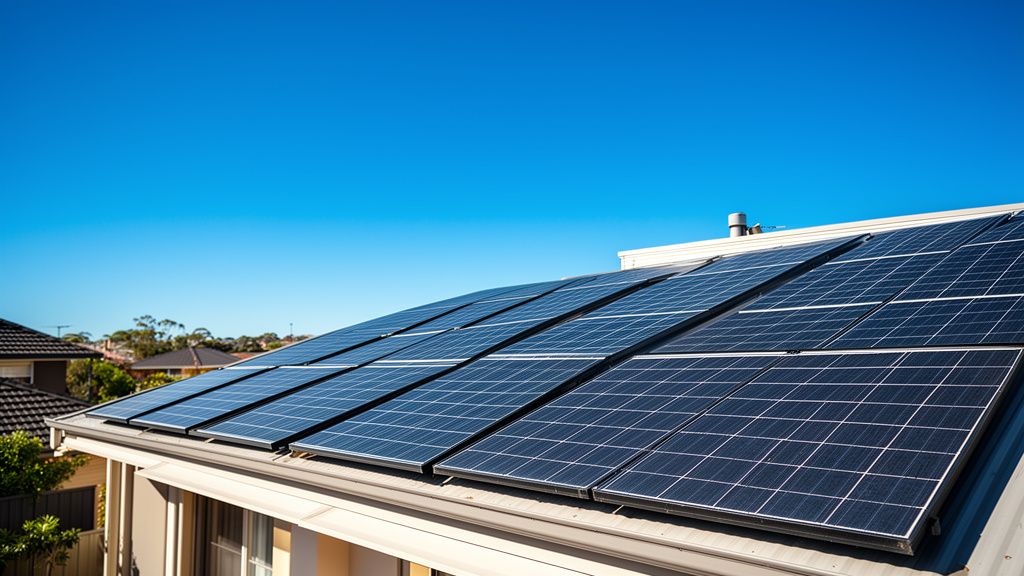
Solar panels cut your usage charges substantially and do nothing at all to the supply charge. You stay connected to draw power at night and to export surplus during the day, so the fee still applies in full.
Anyone expecting solar to eliminate their bill entirely runs into this. Generate every kilowatt-hour you use and you will still receive a bill for the connection.
The only way out is disconnecting from the grid altogether, which means going fully off-grid with enough battery capacity to carry you through a run of overcast days. For a suburban Sydney property that is almost never economic compared with simply paying the connection fee.
Exploring Different Retailers and Plans for Lower Supply Charges
Retailers do price this differently, and the trade-off is usually deliberate: a lower supply charge paired with a higher usage rate, or the reverse.
Which suits you depends on your volume. A low-consumption solar household is generally better off with a low supply charge and a higher usage rate, because it pays the fixed fee every day and buys very few units. A high-consumption household is better off the other way around.
Use the government's Energy Made Easy comparison tool with your own annual figures rather than comparing headline rates.
Why is the Daily Supply Charge Important for the Electricity Grid?
It funds the network that everything else depends on, including your ability to export.
Funding Grid Maintenance and Upgrades
Inspections and repairs to poles and wires, replacing ageing infrastructure, smart grid technology, and capacity to handle what is coming.
Some of that spending is directly about solar. Networks built to push power one way now have to handle it flowing back up from hundreds of thousands of rooftops, and adapting them for that is part of what the charge pays for.
Ensuring Reliability and Future Energy Security
A stable revenue stream is what lets network operators respond to faults quickly and maintain safety standards, rather than deferring maintenance until something fails.
Key Takeaways
- A fixed $0.80-$1.30 per day, or $72-$117 per quarter, charged whether or not you use power.
- It pays for the network connection, not the electricity.
- Solar panels do not reduce it. The better your solar works, the bigger a share of your bill it becomes.
- Retailers trade supply charge against usage rate. Low-consumption solar households usually want a low supply charge and will accept a higher usage rate.
- Compare on total annual cost using your own figures, not on headline rates.
