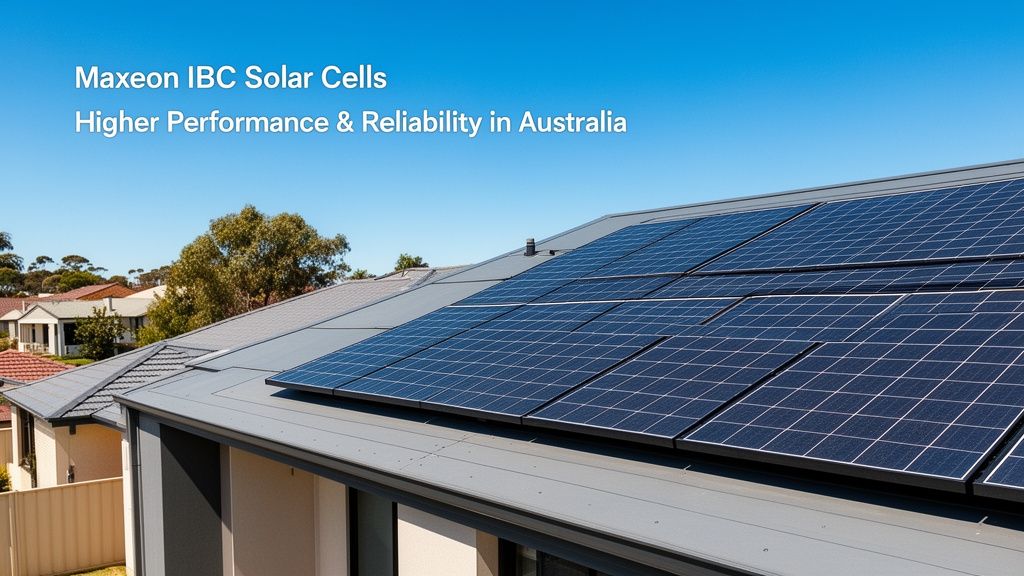
TL;DR: Maxeon's Interdigitated Back Contact (IBC) solar cells move all electrical contacts to the back of the cell. This design eliminates shading on the front, maximises light absorption, and improves electron flow, leading to higher power output, better efficiency, and increased durability for solar panels.
What makes Maxeon's IBC cell design different?
Maxeon's IBC cell design places all electrical contacts on the back of the solar cell, fundamentally changing how the panel collects electricity. Traditional solar cells have thin metal strips, called busbars, running across the front surface to collect electrons. These busbars, while necessary, cast tiny shadows on the cell, blocking a small percentage of incoming sunlight. Maxeon’s engineers re-imagined this, moving all the busbars and contact wires to the back of the silicon wafer. This leaves the entire front surface of the cell free and clear, allowing it to absorb every possible photon of sunlight that hits it. The process is complex, involving hundreds of precision steps to create tiny holes and intricate copper contacts on the back. For Australian homeowners, this design translates directly into more power generated from the same roof space, as the panel works more effectively with the sun it receives. Maxeon's Maxeon 3 and Maxeon 5 series panels use this technology to achieve their industry-leading performance figures.
How does IBC technology boost power output and efficiency?
By eliminating front shading and optimising electron collection, IBC cells convert more sunlight into electricity per square metre than conventional panels. A completely clear front surface means every millimetre of silicon can absorb sunlight, directly increasing the cell's active area. Standard cells lose 3-5% of potential energy due to busbar shading. Maxeon IBC cells reclaim this lost potential. Furthermore, the rear contact design improves the path for electrons. Instead of electrons travelling across the cell to front busbars, they move to optimised rear contacts, reducing internal electrical resistance. This design collects electrons more efficiently and with less energy loss. Maxeon 5 panels, for instance, typically achieve efficiencies above 22%, compared to the 19-20% common for many conventional premium panels on the Australian market. This higher efficiency means a 6.6kW system built with Maxeon panels produces more kilowatt-hours (kWh) over a year, or allows a smaller system size to meet the same energy needs, which is a significant advantage for homes with limited roof space.
What reliability and durability benefits do Maxeon IBC panels offer Australian homes?
Maxeon IBC panels are engineered for Australian conditions, providing enhanced durability and a longer operational life compared to many alternatives. The absence of fragile metal ribbons and solder bonds on the front of the cell removes a major point of failure found in traditional panels. Instead, Maxeon uses a solid copper foundation on the back of each cell, which makes them incredibly resistant to cracking and corrosion. This robust construction helps the panels withstand thermal cycling – the daily expansion and contraction from heat and cold – which often degrades standard panels over time. In Australia’s harsh climate, a panel’s ability to perform well in high temperatures is also crucial. Maxeon panels exhibit a lower temperature coefficient, meaning their power output drops less significantly when ambient temperatures soar above 25°C. Most Australian retailers cut feed-in tariffs below 5c/kWh in 2024, making self-consumption critical. Investing in a durable, high-performing panel like Maxeon, which typically costs between $10,000 and $14,000 for a 6.6kW system (compared to $5,000-$8,000 for standard systems), pays off in consistent energy generation over its extended lifespan. Maxeon offers an impressive 40-year warranty, reflecting confidence in their product’s longevity and lower degradation rates compared to the industry standard.

Key Takeaways
- Maxeon's IBC technology places all electrical contacts on the back of the solar cell, eliminating front shading.
- This design significantly increases the active light-absorbing area, boosting panel efficiency above 22%.
- Rear contacts optimise electron flow, reducing electrical resistance and maximising power output per square metre.
- The robust, copper-backed cell design enhances durability, reduces degradation, and improves performance in hot Australian climates.
- Maxeon panels come with a 40-year warranty, offering a long-term, reliable investment despite a higher upfront cost compared to standard systems.
Read More
For a comprehensive overview, check out our master guide: Read the Full Guide Here.