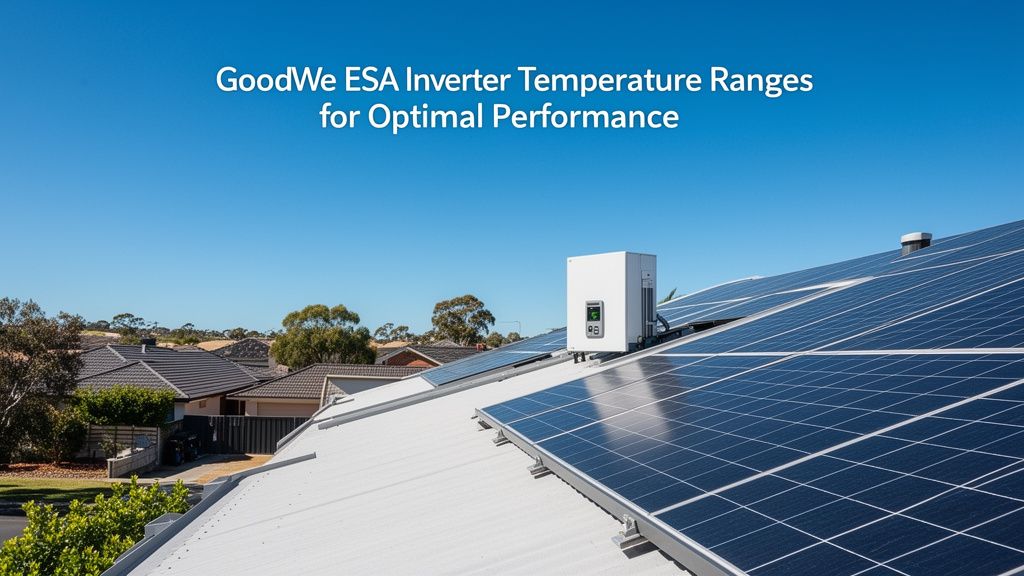
TL;DR: GoodWe ESA inverters, vital for Australian solar, have specific operating temperature ranges (typically -25°C to 60°C). Exceeding these, common in Australia's hot climate, causes thermal derating, reducing power output and lifespan. Strategic installation with ample shade and ventilation is crucial to maintain optimal performance and protect your investment.
What are GoodWe ESA Inverters and Why is Their Temperature Range Important?
GoodWe ESA inverters are sophisticated hybrid inverters designed to manage solar power generation, battery storage, and grid interaction, making them a popular choice for Australian homes and businesses looking for energy independence. Their temperature range is crucial because all electronic components have optimal operating temperatures, and straying outside this window significantly impacts performance, reliability, and the overall lifespan of the unit. In Australia's often scorching climate, understanding and managing this is not just a recommendation, it's a necessity to ensure your solar system delivers maximum bang for your buck, year after year. Pushing an inverter beyond its thermal limits can lead to reduced power output, premature component failure, and costly replacements.
GoodWe ESA's Role in Australian Solar Systems
GoodWe ESA (Energy Storage A-series) models like the GW5000-EH or GW10K-ET are central to modern Australian solar setups, especially those incorporating battery storage. These units seamlessly convert the DC power from your solar panels into AC power for your home, while also managing the charging and discharging of your battery bank. They're the brains of the operation, ensuring you use your self-generated power efficiently, export excess to the grid for a feed-in tariff, and have backup power during outages. Their ability to handle both solar PV and battery management in a single unit simplifies installation and optimises energy flow, making them a fair dinkum choice for integrated energy solutions across the country.
How Temperature Impacts Electronic Components
Heat is the sworn enemy of electronics, and inverters are no exception. Inside a GoodWe ESA inverter, sensitive components like capacitors, IGBTs (Insulated Gate Bipolar Transistors), and microprocessors generate heat during operation. The manufacturer designs the inverter to dissipate this internal heat effectively under normal conditions. However, when the ambient temperature outside the inverter is consistently high, the internal temperature rises further. This accelerated thermal stress can cause materials to degrade faster, solder joints to weaken, and the efficiency of power conversion to drop, leading to reduced electricity generation and a shorter operational life for your entire system.
What are the Specified Operating Temperature Ranges for GoodWe ESA Models?
GoodWe ESA inverters typically specify an operating temperature range from around -25°C up to 60°C. However, it's absolutely vital to understand that "operating" doesn't always mean "optimal performance." While the inverter might function at the upper end of this scale, its efficiency will almost certainly be compromised. For instance, a GoodWe ESA might be rated to handle 60°C, but its peak performance is generally achieved at much cooler temperatures, often below 45°C. Beyond this point, the inverter will likely begin to derate its power output to protect its internal components, meaning you're generating less power than your system is capable of, costing you money in lost electricity or reduced feed-in tariff earnings.
Standard Operating vs. Derating Temperatures
The "standard operating temperature" refers to the range where the inverter can operate safely and efficiently without significant performance degradation. For many GoodWe ESA models, this ideal window sits somewhere between -10°C and 45°C. Once the ambient temperature around the inverter climbs above this point, typically around 45°C or 50°C depending on the specific model, the inverter initiates a process called thermal derating. This means it intentionally reduces its maximum power output to prevent overheating and potential damage. Imagine your car's engine reducing power when it gets too hot – it's the same principle. In Australian summers, particularly in inland areas or poorly ventilated spots, exceeding these derating thresholds is a common occurrence.
Specific GoodWe ESA Model Variations
While the general range of -25°C to 60°C is common, specific GoodWe ESA models might have slightly different derating curves or thresholds. For example, a commercial-grade GoodWe ET series inverter might be designed with more robust cooling mechanisms or a slightly higher thermal tolerance than a smaller residential EH series unit. Always check the datasheet for your specific GoodWe ESA model, often found on the GoodWe Australia website or provided by your installer, to understand its exact temperature specifications and derating behaviour. Your installer should also consider these specifics when recommending placement to avoid issues, especially in areas like Perth or Darwin where sustained high temperatures are the norm.
How Does Australia's Climate Challenge GoodWe ESA Performance?
Australia's climate presents a significant challenge to the optimal performance of GoodWe ESA inverters, primarily due to our consistently high summer temperatures, particularly in vast inland regions and even in urban centres like Sydney's western suburbs or Adelaide. A residential roof or wall in direct sunlight can easily reach temperatures far exceeding 45°C, creating an incredibly harsh environment for an inverter. When the ambient air temperature consistently pushes above 40°C, the inverter's internal cooling fans and heatsinks struggle to dissipate the operational heat effectively, leading directly to the aforementioned thermal derating. This means your 6.6kW solar system might only be producing 5kW or even less during the hottest parts of the day, right when solar output should be at its peak.
Impact of Ambient vs. Internal Temperatures
It's crucial to differentiate between the ambient air temperature and the internal operating temperature of the inverter. Even on a 35°C day, an inverter mounted in direct sunlight can have its casing reach 60°C or more. This external heat then significantly raises the internal temperature, causing the electronics to work harder and less efficiently. The internal components might be operating at temperatures exceeding 70°C or 80°C, significantly accelerating wear and tear. While the ambient air temperature might be within the "operating range," a poorly located inverter exposed to direct solar radiation will experience far greater thermal stress, directly impacting its longevity and daily energy harvest.


Regional Temperature Extremes Across Australia
Australia is a continent of climatic extremes. Areas like the Pilbara in Western Australia, parts of the Queensland Outback, or the northern territories regularly see daily highs well into the 40s during summer, sometimes even touching 50°C. Even major cities experience severe heatwaves. Melbourne and Adelaide have seen 45°C days, and parts of New South Wales routinely hit 40°C+. These sustained high temperatures put GoodWe ESA inverters under immense strain. An inverter installed without adequate shade or ventilation in these regions is virtually guaranteed to derate significantly and suffer a reduced lifespan, potentially requiring a costly replacement, which could set you back anywhere from $1,500 to $3,000 or more, much sooner than expected.
What Strategies Can Ensure Optimal GoodWe ESA Performance in High Australian Temperatures?
Ensuring optimal GoodWe ESA performance in high Australian temperatures boils down to strategic installation and proactive maintenance. The primary goal is to keep the inverter as cool as possible, preventing it from reaching its derating thresholds and prolonging its lifespan. This involves careful consideration of the inverter's mounting location, ensuring it's shielded from direct sun and has ample airflow, as well as regular checks to keep its cooling system running efficiently. Investing a bit more thought and effort during installation can save you a fair bit of money and headaches down the track by maximising your solar yield and preventing premature equipment failure.
Strategic Installation Location and Shading
The most effective strategy is to install your GoodWe ESA inverter in a cool, shaded location. Ideally, this would be on a south-facing wall (in the Southern Hemisphere) under an eaves overhang, inside a garage or carport, or even within a well-ventilated shed. If an external wall is the only option, ensure it's on a side of the house that receives minimal direct afternoon sun, which is typically the hottest part of the day. Artificial shading, such as a custom-built awning or sunshade, is also an excellent investment if a naturally shaded spot isn't available. Even a simple shade can significantly drop the surface temperature of the inverter casing, providing a much cooler environment for its internal components.
Importance of Adequate Ventilation and Airflow
Beyond shading, adequate ventilation is paramount. GoodWe ESA inverters use passive cooling (heatsinks) and active cooling (fans) to dissipate heat. Ensure there's sufficient clear space around the inverter as specified in the manufacturer's manual – typically 300mm to 500mm above and below, and at least 100mm on the sides. Avoid mounting the inverter in enclosed spaces without cross-ventilation, such as small, unventilated cupboards, as this will trap heat and exacerbate the problem. In some extremely hot or enclosed scenarios, active ventilation solutions like small exhaust fans can be considered, but generally, good natural airflow around a shaded unit is sufficient to keep things ticking over nicely.
Regular Monitoring and Maintenance Checks
Regular monitoring and maintenance are the unsung heroes of optimal inverter performance. Modern GoodWe ESA inverters come with app-based monitoring, allowing you to track its performance, including temperature readings if available. Keep an eye on consistent dips in power output during hot periods – this could be a sign of derating. Physically, ensure the inverter's vents are clear of dust, spiderwebs, or debris, especially after windy periods. A quick wipe-down with a damp cloth every few months can prevent build-up that chokes airflow. If your inverter has external cooling fins, ensure they are free from obstruction. These simple, quick checks can make a big difference in maintaining efficiency and extending the life of your valuable GoodWe ESA inverter.
Key Takeaways
- GoodWe ESA inverters have an optimal operating temperature range; exceeding it causes thermal derating and reduces lifespan.
- Australian summers frequently push inverters beyond their ideal thermal limits, especially in direct sunlight or poorly ventilated areas.
- Strategic installation in a shaded location, ideally on a south-facing wall or under an eaves, is crucial.
- Ensure ample clear space around the inverter for proper airflow and ventilation, as specified by GoodWe.
- Regularly monitor your inverter's performance via the app and keep its vents and cooling fins clear of dust and debris.
Read More
For a comprehensive overview, check out our master guide: Read the Full Guide Here.