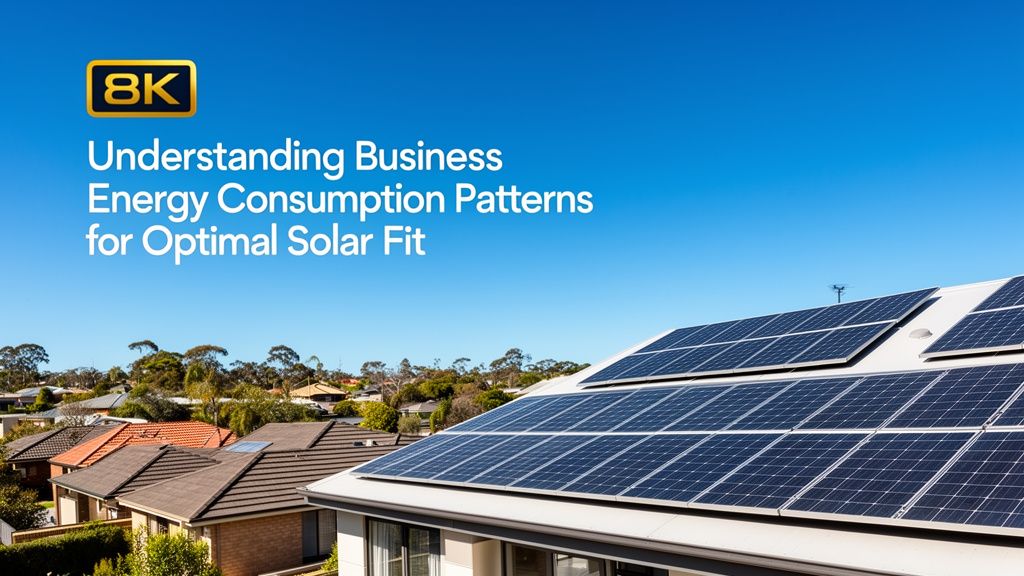
Understanding Business Energy Consumption Patterns for Optimal Solar Fit
Australian businesses are constantly seeking ways to cut costs and enhance sustainability. With our abundant sunshine, commercial solar power has emerged as a clear frontrunner. However, simply slapping panels on the roof isn't enough to guarantee maximum returns. The real magic, and the biggest savings, come from a deep understanding of your business's unique energy consumption patterns. Getting this right is the cornerstone of an optimal solar fit.
The Aussie Business Energy Landscape
Here in Australia, businesses face some of the highest electricity prices in the world. From surging peak demand charges to complex time-of-use tariffs, the cost of keeping the lights on and machinery running can significantly impact your bottom line. Solar offers a compelling solution, transforming sunlight into a predictable, clean energy source that can dramatically reduce your operating expenses. But the effectiveness of your solar system hinges on how well it aligns with when and how much power your business uses.
Deconstructing Your Energy Usage
Before investing a cent, you need to become an expert on your own energy habits. This involves looking beyond the total kWh on your bill and diving into the specifics:
Peak Demand: This is a crucial metric, often measured in kilowatts (kW), representing the highest amount of power your business draws from the grid at any given moment. Many commercial tariffs include significant charges based on your peak demand. An intelligently designed solar system can significantly shave these peaks, leading to substantial savings. If your peak demand regularly occurs during sunny hours, solar is your best mate.
Base Load: This is the minimum amount of power your business consumes continuously, often overnight or during periods of inactivity. While solar won't directly offset your night-time base load, understanding it helps determine the overall system size required and whether battery storage might be a worthwhile addition for continuous operations or evening shift work.
Daily and Weekly Variations: Does your business operate 9-5, five days a week, like an office? Or do you run multiple shifts, perhaps with higher consumption on weekends, like a manufacturing plant or a busy restaurant? An office with high daytime usage is an ideal candidate for direct solar offset, while a facility with significant evening or weekend loads might need a hybrid solar-plus-storage solution.
Seasonal Fluctuations: Do your energy needs spike in summer for air conditioning or in winter for heating? Businesses like cool rooms or agricultural operations might have distinct seasonal energy demands. Your solar proposal should account for these changes to ensure year-round optimisation.
Time-of-Use (TOU) Tariffs: Many Australian businesses are on TOU tariffs, meaning electricity costs more during "peak" periods (e.g., late afternoon/early evening) and less during "off-peak" (e.g., overnight). If your business uses a lot of energy during peak tariff times, and those times align with solar production, the financial benefits of solar are amplified significantly.
How to Analyse Your Business's Consumption Data
Don't guess – get the data!
Review Your Electricity Bills: Look at historical bills for at least 12-24 months. These provide valuable information on total consumption (kWh), peak demand (kW), and often show usage patterns across different times of day or seasons.

Smart Meter Data: If your business has a smart meter, you can often access granular, 30-minute interval data directly from your energy retailer. This is gold! It allows you to see exactly when your energy spikes and dips, providing an accurate footprint for solar system design.
Energy Audits: For larger or more complex operations, a professional energy audit can provide a detailed breakdown of where and how energy is being used, identifying inefficiencies and informing solar design.
Matching Solar to Your Business's Rhythm
Once you understand your patterns, you can design a solar system that works for your business, not just on your roof.
High Daytime Usage: If your business consumes most of its power during daylight hours (e.g., retail, offices, schools, workshops), a grid-connected solar PV system is an absolute winner. It directly offsets your most expensive power, reducing reliance on the grid when it matters most, leading to a quick return on investment.
Evening or Night Usage: For businesses with significant operations outside of daylight hours (e.g., restaurants, factories with night shifts, refrigerated storage), integrating battery storage with your solar system becomes a game-changer. Batteries store excess solar generated during the day for use when the sun isn't shining, maximising self-consumption and further reducing grid reliance during peak tariff periods.
Variable Usage: If your usage is highly variable, an experienced solar consultant can help you size a system that balances direct offset with potential for feed-in tariffs. While feed-in tariffs in Australia have generally decreased, exporting surplus solar power can still provide a modest credit on your bill, especially if your system is sized to cover your base daytime load and then some.
Beyond Direct Offset: The Broader Benefits
An optimally designed solar system does more than just reduce your power bill.
Demand Charge Reduction: By generating power during peak demand periods, your solar system can significantly lower your peak demand from the grid, directly impacting these often-hefty charges.
Energy Independence and Resilience: Reducing reliance on the grid provides a buffer against future price hikes and offers a degree of energy security. With battery storage, you can even maintain essential operations during grid outages.
Environmental and ESG Benefits: Demonstrating a commitment to sustainability enhances your brand reputation, attracts eco-conscious customers, and contributes positively to your environmental, social, and governance (ESG) goals. It's a clear win-win.
Don't Go It Alone: Seek Expert Advice
While understanding your consumption patterns is crucial, designing and installing a commercial solar system is a complex undertaking. It's not a DIY job. Engage with reputable Australian solar professionals who specialise in commercial installations. They'll use your consumption data, conduct site assessments, and design a bespoke system that perfectly matches your business's unique energy footprint, ensuring you get the best bang for your buck.
In the sunburnt country, solar power for business is a no-brainer. But like any smart investment, it requires careful planning and a data-driven approach. By truly understanding your business's energy consumption patterns, you'll unlock the full potential of solar, transforming your operating costs and powering a more sustainable, profitable future.
Read More
For a comprehensive overview, check out our master guide: Read the Full Guide Here.