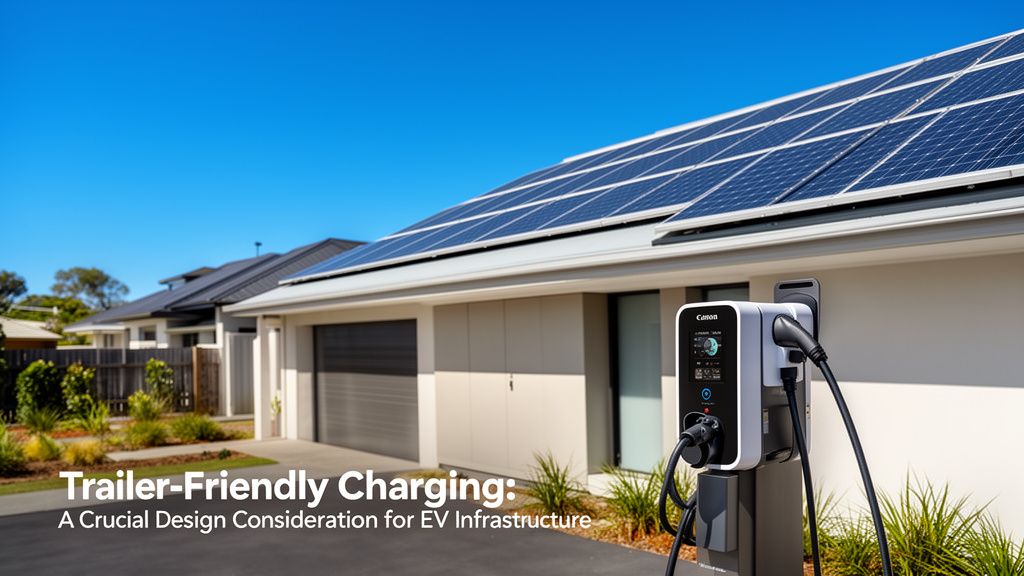
The hum of an electric vehicle (EV) is becoming an increasingly common sound on Australian roads, and it’s a welcome one for those of us passionate about a sustainable future powered by the sun. As EV adoption rapidly accelerates across the country, driven by a growing awareness of environmental benefits and the increasing availability of renewable energy, our national charging infrastructure needs to evolve with it. We’re moving beyond simply needing more charging stations; we need smarter ones. And for a nation that loves its weekends away, its caravanning adventures, and its tradies moving gear, "trailer-friendly charging" isn't just a nicety – it's an absolute necessity.
The Unique Australian EV Landscape
Australia's vast distances and unique lifestyle present particular challenges and opportunities for EV adoption. Unlike many densely populated urban centres overseas, our country thrives on road trips, camping, and the freedom of the open highway. Caravanning and camping are national pastimes, with hundreds of thousands of registered caravans, camper trailers, and motorhomes hitting the road annually. Think about the iconic images: a family SUV towing a caravan up the coast, a ute laden with tools heading to a job site in regional Queensland, or a 4x4 with a boat trailer making its way to a fishing spot. These aren’t niche activities; they're central to the Australian way of life and economy.
Currently, the vast majority of our EV charging infrastructure isn't designed with these trailer-towing drivers in mind. This oversight is creating a significant roadblock to broader EV adoption, particularly for those who rely on towing for work or leisure.
The Frustration of Current Charging Setups
Imagine this scenario: you’ve just driven your EV, hitched to your family caravan, for several hundred kilometres. The caravan has added a fair bit of weight and aerodynamic drag, meaning your battery is thirstier than usual. You pull into a public charging station, relieved to finally top up. But what greets you? Tight, angled parking bays designed for solo cars. The charging cables are too short to reach your port without unhitching – a time-consuming, awkward, and often impossible task in a busy car park. There are no pull-through options, forcing you to attempt a complex reverse manoeuvre with a long trailer, potentially blocking other chargers or even traffic.
This isn’t just an inconvenience; it’s a source of immense frustration that actively discourages EV ownership for a substantial segment of the Australian population. Tradies need reliability and efficiency; they can't afford to waste an hour unhitching and re-hitching a trailer filled with equipment just to charge. Holidaymakers want relaxation, not a charging nightmare.
Why Trailer-Friendly Charging is Essential
Addressing this design flaw offers a multitude of benefits for the Australian EV ecosystem and beyond:
Broader EV Adoption
By accommodating trailer users, we unlock the EV market for a huge demographic – caravanners, boat owners, and tradies – who currently might view EVs as impractical for their needs. This accelerates Australia's transition away from fossil fuels.
Enhanced User Experience
Convenience is king. Easy, stress-free charging encourages more frequent and longer EV journeys, reducing range anxiety, especially when towing, which significantly impacts battery range.
Economic Boost for Regional Australia
Easily accessible charging for tow vehicles means more EV owners will confidently travel to regional and remote areas. This supports local businesses, caravan parks, and tourism operators, fostering economic growth in communities often bypassed by current EV infrastructure plans. Think about the boom in local spending if EV caravanners can reliably charge at their destination or along the way.


Future-Proofing Infrastructure
Investing in trailer-friendly designs now means our charging network will be robust and relevant for decades to come, adapting to evolving vehicle types and user needs. It's a proactive approach to sustainable infrastructure planning.
Key Design Considerations for Trailer-Friendly Stations
What does a truly trailer-friendly charging station look like? It’s not rocket science, but it requires thoughtful planning:
Pull-Through Bays
This is the single most critical feature. Chargers should be positioned at the end of a row or in dedicated zones, allowing vehicles with trailers to pull in, charge, and pull out without needing to reverse or unhitch.
Generous Space
Wider bays and ample turning radii are crucial. A standard parking bay simply won't cut it for an SUV towing a 20-foot caravan. We need space for safe manoeuvring.
Longer Charging Cables
Many current cables are designed for solo vehicles. Longer, more flexible cables provide the necessary reach for various vehicle and trailer configurations, accommodating different charging port locations.
Strategic Location
Locate trailer-friendly chargers away from high-traffic entrances or tight corners within car parks. Easy access from main roads is also paramount.
Clear Signage
Clearly mark trailer-friendly charging bays with appropriate signage to guide drivers and prevent misuse by non-towing vehicles.
Solar Integration: The Australian Advantage
This is where our solar blog truly shines. Imagine these new, expansive charging stations not just as power points, but as energy hubs integrated with local solar generation. Large pull-through bays can easily accommodate solar canopies, providing shade for vehicles while generating clean, renewable energy directly into the charging network. Battery storage co-located with these solar-powered stations can further enhance reliability, especially in regional areas, ensuring power availability even during peak demand or cloudy days. This synergy between solar generation and intelligent EV infrastructure design is a win-win for sustainability and convenience. We're not just charging cars; we're building a decentralised, resilient, and green energy future.
Looking Ahead: A Brighter, Greener Road Trip
The shift to electric vehicles in Australia is more than just a technological upgrade; it's a cultural transformation. To ensure everyone can be part of this exciting journey, from the weekend adventurer with their caravan to the diligent tradie heading to their next job, our EV infrastructure must reflect the unique demands of the Australian lifestyle.
By prioritising trailer-friendly design, backed by smart solar integration, we can dismantle a significant barrier to EV adoption, accelerate our transition to renewable energy, and ensure that the joys of Australian road trips and efficient work travel are accessible to all, now and for generations to come. It’s time for planners, developers, and government bodies to recognise that a truly effective EV charging network isn't just about kilowatts; it's about thoughtful design that caters to the diverse needs of every Australian driver. Let's make sure our future road trips are powered by the sun and designed for convenience.
Read More
For a comprehensive overview, check out our master guide: Read the Full Guide Here.