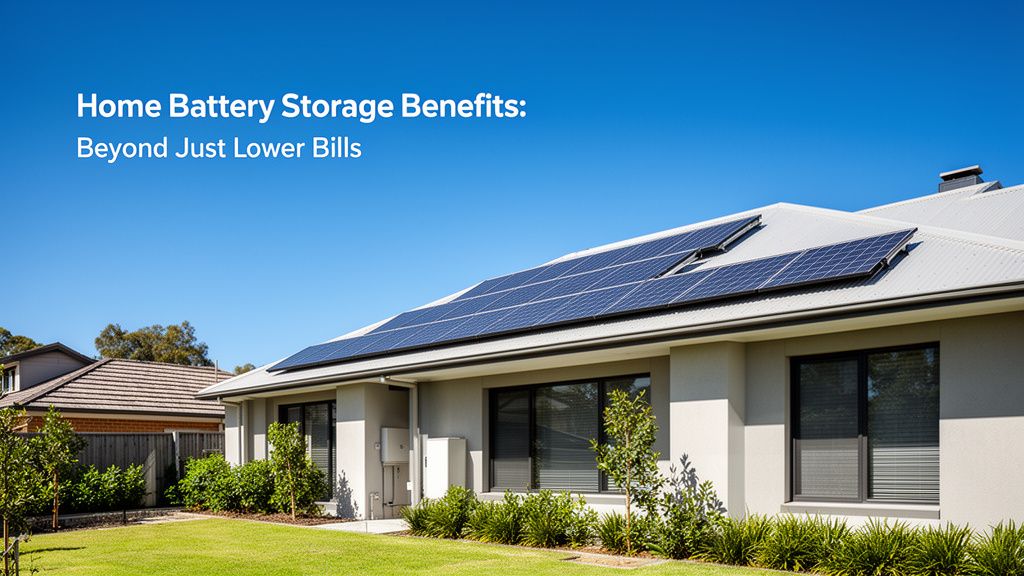
TL;DR: Home battery storage offers more than just lower electricity bills. It provides energy independence by storing your solar power for night-time use, ensures your home has backup power during grid blackouts, and allows participation in virtual power plants to support grid stability. These benefits create a more resilient and cost-effective energy system for your home.
How do home batteries increase your energy independence?
Home battery storage significantly boosts your energy independence by storing excess solar electricity generated during the day for use when the sun isn't shining. Without a battery, any surplus solar power automatically exports to the grid, typically earning a low feed-in tariff, often around 4-6 cents per kilowatt-hour (kWh) from retailers like AGL or Origin in 2024. Your home then imports grid power at a much higher rate in the evenings, potentially 25-40 cents/kWh. A battery allows you to consume your own free, self-generated electricity during peak evening hours, rather than buying expensive grid power. This direct consumption means you rely less on external energy suppliers and price fluctuations, giving you greater control over your household energy supply.
Maximising Self-Consumption
A home battery system lets you maximise your solar self-consumption, meaning you use a higher percentage of the electricity your panels produce. For example, a typical 6.6kW solar system on an average Australian home might only achieve 30-40% self-consumption without a battery. Adding a 10kWh battery can push this figure to 70-90% or even higher, depending on your energy usage patterns and system sizing. This shift from exporting cheap and importing expensive power directly translates into greater savings and a faster return on your solar investment. It essentially turns your home into a miniature power station, storing its own fuel.
Can home batteries provide backup power during blackouts?
Yes, many home battery systems offer backup power capabilities, providing a reliable electricity supply during grid outages. While a standard solar system shuts down during a blackout for safety reasons (to prevent back-feeding the grid while technicians work on it), a battery setup with a compatible inverter and an emergency power supply (EPS) or 'blackout box' continues to operate. This means your critical appliances, such as refrigerators, lights, and charging points, stay functional when the neighbourhood goes dark. This feature offers peace of mind and avoids disruptions to daily life, a significant advantage in areas prone to storm-related outages or an aging grid infrastructure.
Maintaining Essential Services
The ability to maintain essential services during a blackout is a primary non-financial benefit of battery storage. Imagine a summer storm knocking out power for hours; with a battery, your food stays cold, medical equipment remains powered, and you have lighting. Most battery systems capable of backup power will allow you to select specific circuits for backup, prioritising crucial loads to maximise the battery's runtime. For instance, you might choose to back up your fridge, a few lights, and a power point for charging phones, rather than trying to run your air conditioner, which would drain the battery quickly. This targeted approach ensures that your most important needs are met until grid power restores.
How do home batteries support the electricity grid?
Home batteries support the electricity grid by participating in Virtual Power Plants (VPPs) and offering demand response services, which help stabilise the network. VPPs aggregate distributed battery storage systems across many homes into a single, coordinated network. When the grid faces high demand or low supply, your battery can discharge a small amount of stored energy back into the grid, helping to balance the load. In return, VPP operators, often major retailers like Origin or AGL, provide financial incentives to participating homeowners, such as credits on their electricity bills or cash payments. This dynamic interaction helps manage grid stability, reduces the need for expensive peak power plants, and effectively turns individual solar homes into contributors to the national energy infrastructure.
Monetising Stored Energy Through VPPs
VPPs offer a way to monetise your stored energy beyond just self-consumption. Instead of receiving a minimal feed-in tariff for exported solar, VPP participants can earn significantly more by strategically exporting power during periods of high grid demand, often when wholesale electricity prices are higher. For example, a VPP might instruct your battery to discharge power between 5 PM and 7 PM on a hot day when everyone runs their air conditioning. This earns you a premium payment for that exported energy, directly offsetting your energy costs and improving the financial returns of your battery investment. It transforms your battery from a passive storage unit into an active participant in the energy market, contributing to a more resilient and decentralised power system for Australia.
Key Takeaways
- Home battery storage significantly increases your solar self-consumption, reducing reliance on expensive grid power, especially during peak evening rates.
- Batteries provide reliable backup power during grid blackouts, keeping essential home appliances operational and offering peace of mind.
- Participating in Virtual Power Plants (VPPs) allows your battery to support grid stability and earn you additional income through smart energy exports.
- Investing in battery storage future-proofs your home against rising electricity prices and offers greater control over your household's energy use.
Read More
For a comprehensive overview, check out our master guide: Read the Full Guide Here.