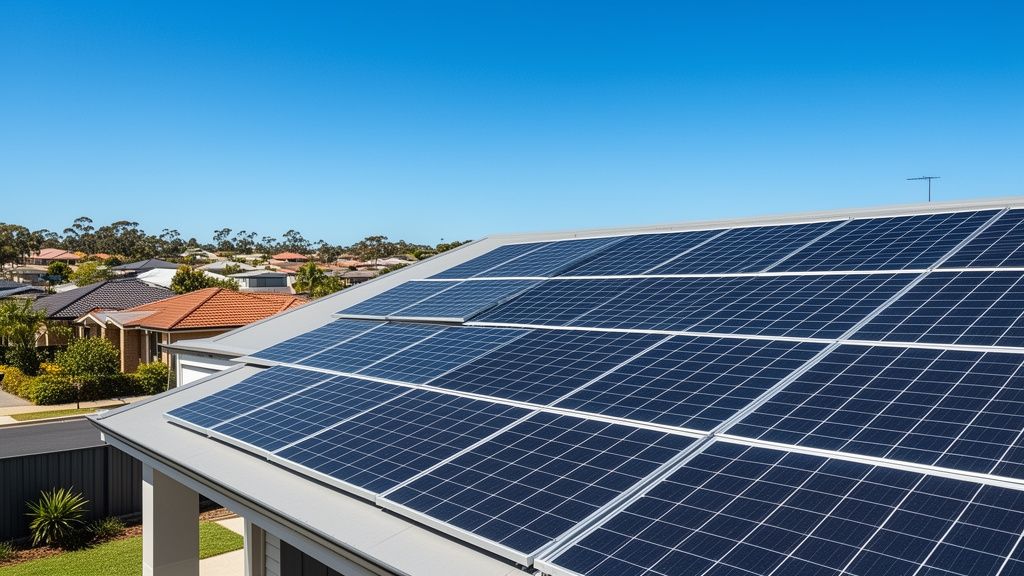
Australia, the sunburnt country, has embraced solar power like no other. From the sprawling rooftops of our suburban homes to vast solar farms baking in the Outback, we’re harnessing the power of the sun at an astonishing rate. It’s a ripper of an achievement, putting us right up there globally in renewable energy adoption. But with great power comes… well, great responsibility in managing it. The sun, as we all know, doesn’t shine 24/7, and those pesky clouds have a mind of their own. This variability presents a unique challenge: how do we keep our power grid stable and efficient when our primary energy source is constantly fluctuating? The answer lies in something incredibly sophisticated, yet easily overlooked: precision solar forecasting. It’s about those tiny squares of data making a huge impact on our energy future.
The Sunny Side Up: Australia's Solar Revolution
Walk down any street in an Australian suburb, and you’ll see them: solar panels glinting on rooftops, silently generating clean energy. With over three million households now sporting solar, we're not just dabbling; we're leading the charge. Large-scale solar farms are popping up from Queensland to Western Australia, adding gigawatts of capacity to our national grid. This massive uptake is fantastic for reducing emissions and lowering our reliance on fossil fuels. However, integrating so much variable renewable energy into a grid originally designed for baseload power plants running 24/7 is a bit like trying to fit a square peg in a round hole without a bit of clever engineering. When a big cloud bank rolls in over a major city, the sudden dip in solar generation can cause headaches for grid operators, potentially leading to instability or costly reliance on backup generators.
The Forecast: More Than Just Blue Skies
Imagine knowing exactly how much sunshine will hit your rooftop or a solar farm in the next hour, or even the next five minutes. Sounds like science fiction, right? Not anymore. Precision solar forecasting is the technological wizardry that makes this possible. It's far more advanced than your average weather app, which might tell you "mostly sunny." This technology uses a potent mix of satellite imagery, ground-based sensors, advanced atmospheric models, and cutting-edge artificial intelligence to predict solar irradiance with incredible accuracy. It breaks down vast geographical areas into "tiny squares" – often just a few square kilometres – providing hyper-local, real-time forecasts. This granular detail is what makes the difference between an educated guess and a robust, actionable prediction.
How Tiny Squares Make a Huge Difference
So, what exactly does this high-tech crystal ball achieve? By knowing precisely when and where the sun will shine – or hide behind a cloud – energy producers and grid operators can make smarter decisions. For large-scale solar farms, it means optimising their output, anticipating dips, and coordinating with other energy sources. For the broader electricity network, it means managing supply and demand more effectively, avoiding sudden imbalances that could lead to price spikes or even blackouts. It allows them to fire up or power down conventional generators with greater foresight, saving millions in operational costs and ensuring a more reliable energy supply for everyone. Think of it as the ultimate traffic controller for our energy highways, ensuring a smooth, uninterrupted flow.
Your Home, Your Hip Pocket: Direct Benefits for Aussies
While much of the talk about precision forecasting often focuses on big power grids, the ripple effect reaches right into your home and impacts your wallet. For the average Aussie household with solar panels, better forecasting can unlock significant savings. Imagine your smart home knowing that a massive cloud will cover your area in 30 minutes, drastically reducing your solar generation. Instead of letting that precious, free energy go to waste or selling it back to the grid for a low feed-in tariff (often around 5-10 cents per kWh), your smart energy system could automatically kick-start your washing machine, charge your electric vehicle, or heat your hot water system before the cloud arrives.


This intelligent scheduling maximises self-consumption of your own generated power, which is far more valuable than exporting it (saving you from buying electricity at 30-40 cents per kWh). For homes with batteries, forecasting is a game-changer. Your battery can be charged strategically when solar is abundant and cheap, then discharged when grid prices are high, potentially saving you hundreds of dollars on your quarterly bill.
Keeping the Lights On: Benefits for the Grid
Beyond individual households, the impact of precision forecasting on our national grid is monumental. Australia's grid is vast, traversing thousands of kilometres, and its stability is paramount. Accurate solar forecasts enable:
- Enhanced Grid Stability: By anticipating fluctuations, grid operators can proactively adjust other generation sources or demand, preventing voltage sags or surges that could threaten reliability.
- Reduced Reliance on 'Peaker' Plants: These are often gas-fired power stations that quickly ramp up to meet sudden demand or cover unexpected solar dips. Forecasting reduces the need for these expensive and emissions-intensive plants.
- Optimised Energy Markets: Better predictability means energy retailers and wholesalers can trade electricity more efficiently, leading to more stable and potentially lower prices for consumers.
- Smarter Infrastructure Planning: Understanding future solar availability helps in planning new transmission lines, battery storage, and other essential grid upgrades.
All these benefits ultimately translate to a more robust, reliable, and affordable electricity supply for every single Australian.
The Aussie Edge: Why It Matters Down Under
Australia's unique characteristics make precision solar forecasting particularly vital. We have some of the highest solar irradiance in the world, leading to massive installed capacity. Our vast continent experiences diverse weather patterns, from tropical storms in the north to clear desert skies, all impacting solar output differently. Our long, thin grid also means that localised generation fluctuations can have far-reaching effects. With our ambitious targets for renewable energy – aiming for 82% renewables in the National Electricity Market by 2030 – sophisticated tools like precision forecasting aren't just an advantage; they're an absolute necessity to ensure a smooth transition and keep the lights on for everyone.
What's Next on the Horizon?
The technology is continually evolving, becoming even more accurate and granular. We're seeing advancements in real-time sensor networks, even more powerful AI algorithms, and deeper integration with smart home energy management systems. Imagine a future where your appliances not only talk to each other but also to the weather satellites, automatically optimising their operation based on the exact amount of sunshine expected in your backyard, down to the minute. This level of interconnected intelligence promises an even more efficient, resilient, and truly renewable energy future.
The Future is Bright
Those "tiny squares" of data, powered by advanced technology, are having a huge, transformative impact on how Australia powers its homes, businesses, and industries. Precision solar forecasting is the unsung hero of our renewable energy revolution, silently working behind the scenes to ensure that our sunny ambitions translate into a stable, affordable, and sustainable power supply for generations to come. It truly is a clever bit of kit, helping us make the most of our abundant sunshine and secure a brighter future for the Lucky Country.
Read More
For a comprehensive overview, check out our master guide: Read the Full Guide Here.