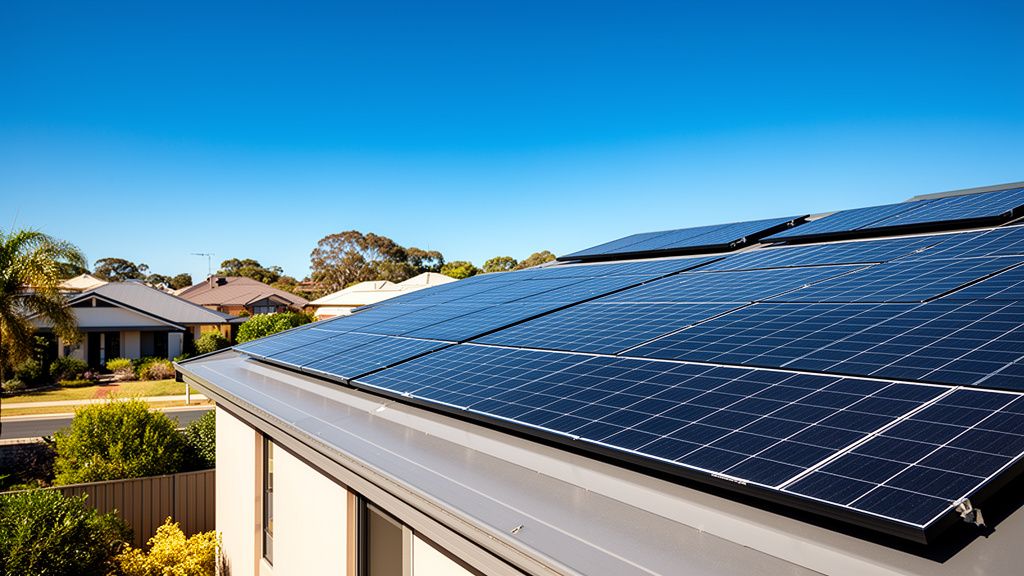
TL;DR: Australia generates a lot of cheap solar power, but the existing electricity grid struggles to move it efficiently from remote renewable zones to major cities. This lack of adequate transmission infrastructure creates bottlenecks, driving up wholesale energy prices and ultimately increasing household power bills despite abundant clean energy.
What Is Australia's Renewable Energy Push Missing?
Australia's rapid uptake of rooftop solar and large-scale renewable projects misses a critical piece for cheaper clean energy: an upgraded transmission network. While we lead the world in household solar adoption, with over 3.6 million systems installed, the grid infrastructure built for a centralised, fossil-fuel system struggles to manage the influx of distributed and remote renewable generation. This mismatch means perfectly good, cheap solar energy often can't reach the homes and businesses that need it, leading to wasted potential and higher costs. The Australian Energy Market Operator (AEMO) identifies significant transmission upgrades as essential to unlock our renewable future, connecting new Renewable Energy Zones (REZs) to demand centres. Without these "energy highways," the full benefit of our clean energy investments remains out of reach.
Why Solar is Booming, But Grid Stability Isn't
Australian homeowners embraced solar because it directly reduces their electricity bills, with a 6.6kW system in Sydney typically offsetting 60-80% of a household's daytime usage. This decentralised generation, coupled with huge utility-scale solar and wind farms in areas with strong resources, means Australia now has abundant clean energy capacity. However, the national electricity market (NEM) was designed around large coal generators close to major cities. Renewable energy zones are often far from these cities, requiring long new transmission lines. When these lines are insufficient, parts of the grid can become unstable, or generators must be "curtailed," meaning they are paid to switch off even when they could produce cheap power. This inefficiency prevents the grid from fully harnessing our clean energy boom.
The Grid's Current State and Future Needs
The current grid faces challenges from ageing infrastructure and a design unsuited to modern energy flows. Many existing transmission lines run north-south, connecting coal stations in one state to cities in another. The future demands more east-west connections and stronger links between states to share diverse renewable resources like wind and solar. AEMO's Integrated System Plan (ISP) details the urgent need for billions of dollars in new transmission infrastructure. This includes projects that strengthen existing interconnectors and build entirely new ones, like the HumeLink in New South Wales or Project EnergyConnect between South Australia and New South Wales. These upgrades are not just about capacity; they are about resilience, allowing energy to flow freely and reliably across the continent, reducing the risk of blackouts and price spikes.
How Does Insufficient Transmission Affect Your Power Bill?
Insufficient transmission directly impacts your household power bill by creating bottlenecks that drive up wholesale electricity prices. When the grid cannot move cheap renewable energy from where it is generated to where it is consumed, older, more expensive fossil fuel generators often have to run longer or ramp up production. This scenario increases the overall cost of electricity in the wholesale market, which retailers then pass on to consumers. For example, during periods of high demand or transmission constraints, wholesale prices in a specific region might spike to hundreds of dollars per megawatt-hour, even while abundant solar or wind power sits idle elsewhere on the grid. This means you pay more for electricity than you should, despite living in a country rich in renewable resources.
Congestion Costs and Energy Prices
Congestion on the transmission network prevents low-cost renewable power from reaching the market. Imagine a highway with too many cars; traffic slows to a crawl. In electricity terms, this "traffic jam" means power can't flow freely. When a transmission line reaches its capacity, cheaper generators that could supply power must reduce their output, or more expensive generators closer to the demand centre must step in. This economic inefficiency is called "congestion cost." AEMO estimates these costs can run into hundreds of millions of dollars annually across the NEM. These added costs eventually filter down to the consumer through higher retail prices and network charges, negating some of the savings solar offers. Addressing congestion lets us use the cheapest power available, reducing everyone's bill.
The Hidden Cost of Untapped Renewable Potential
Australia boasts some of the world's best solar and wind resources, particularly in regional areas. Yet, without robust transmission, much of this potential remains untapped. Developers build large-scale solar and wind farms in sunny or windy regions, but if they cannot connect reliably to the grid or export their power consistently, these projects become less viable. This discourages investment in new, cheap renewable generation. Furthermore, when transmission lines are constrained, renewable generators sometimes get "curtailed," meaning they are forced to stop producing electricity, even when it is sunny or windy, because the grid cannot handle the volume. This wastes clean energy and the investment made in those farms, adding a hidden cost to our transition away from fossil fuels.


What Are the Major Transmission Projects Underway?
Australia has several major transmission projects underway or planned to address the grid's limitations and facilitate the clean energy transition. These projects are crucial for connecting new Renewable Energy Zones (REZs) to population centres and strengthening interstate links. They represent billions of dollars in investment aimed at building a robust, modern grid capable of handling the distributed and intermittent nature of renewable energy. AEMO's Integrated System Plan (ISP) outlines these priority projects, recognising their urgency in unlocking cheaper, cleaner electricity for all Australians. Getting these projects built on time and within budget will directly determine how quickly and affordably we decarbonise our energy supply.
Project EnergyConnect and VNI West
Project EnergyConnect is a new 900km interconnector linking South Australia and New South Wales. This project will allow greater sharing of renewable energy between the states, improving grid reliability and reducing wholesale prices by an estimated $120 million per year. South Australia, with its high renewable penetration, will gain a stronger connection to the NEM, while NSW will access more diverse generation. VNI West, or the Victoria-NSW Interconnector West, is another critical project designed to enhance electricity transfer between Victoria and NSW. This link will enable greater renewable energy flows, especially from the Murray River REZ and other proposed zones, helping to balance supply and demand across both states and ease congestion on existing lines. Both projects are vital for creating a more resilient and efficient national grid.
HumeLink and Marinus Link's Role
HumeLink is a major transmission upgrade in New South Wales, building 360km of new 500kV power lines to connect Snowy 2.0 and new renewable energy projects in the South West and Central West REZs to the grid. It acts as a superhighway, boosting transfer capacity and ensuring that the significant generation from Snowy 2.0 and other renewables can reach consumers. Without HumeLink, much of Snowy 2.0's benefits would be constrained. Marinus Link involves two new undersea and underground cables connecting Tasmania's hydro and wind resources to Victoria. This project will allow Tasmania to export its clean, reliable hydropower to the mainland, acting as a "battery" for the NEM, and also allows Victoria to import renewable energy when needed. These projects collectively form the backbone of Australia's future energy system, ensuring energy security and driving down costs.
Key Takeaways
- Australia's electricity grid needs major upgrades to effectively transport abundant, cheap renewable energy from remote areas to cities.
- Inadequate transmission infrastructure causes grid congestion, forcing expensive fossil fuel generators to run longer and increasing wholesale electricity prices.
- These higher wholesale prices directly translate into higher power bills for Australian households and businesses.
- Key projects like EnergyConnect, VNI West, HumeLink, and Marinus Link are essential to unlock renewable energy zones and stabilise the grid.
- Investing in transmission infrastructure is the "missing piece" to fully realise the economic benefits of Australia's transition to clean energy.
Read More
For a comprehensive overview, check out our master guide: Read the Full Guide Here.