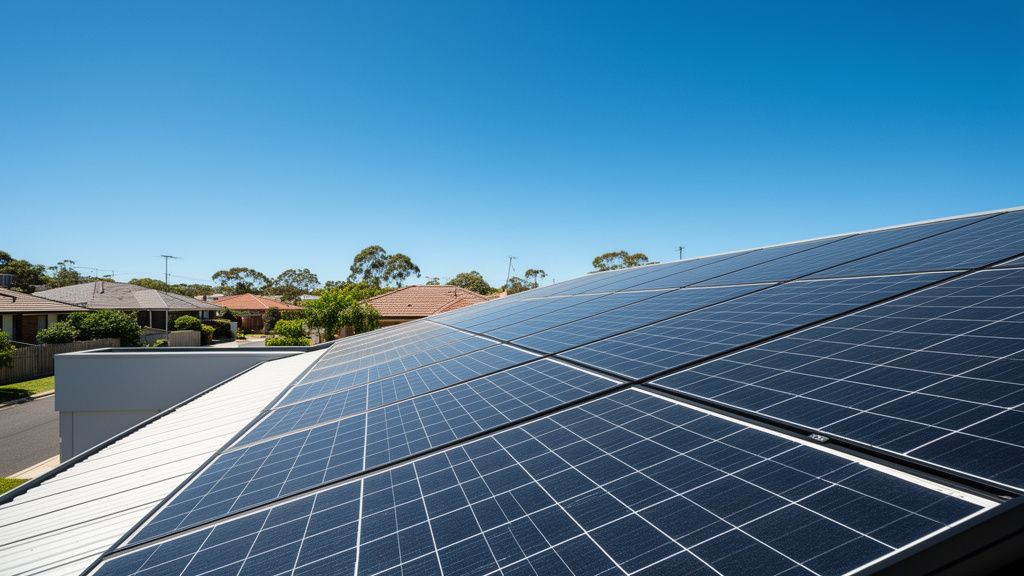
TL;DR: Australia's impressive rooftop solar growth has positioned it as a global leader, yet millions of renters and apartment dwellers remain locked out. The innovative Solar Sharer Offer provides a crucial solution, enabling broader access to solar benefits without roof ownership, ultimately accelerating our clean energy transition and strengthening the grid.
What is the Current State of Rooftop Solar Adoption in Australia?
Australia leads the world in per capita rooftop solar adoption, with over 3.8 million systems installed across homes and businesses, covering more than one in three households. This remarkable uptake has fundamentally reshaped our energy landscape, demonstrating a strong national commitment to renewable energy and energy independence. The collective capacity of these systems is now well over 30 gigawatts (GW), playing a critical role in meeting peak demand and significantly reducing reliance on fossil fuel generation, especially during sunny daylight hours. This widespread decentralised generation is not just an environmental win; it's a testament to savvy homeowners looking to slash their power bills and contribute to a greener future. The sheer scale of this transformation is undeniable, making rooftop solar a cornerstone of Australia's energy grid.
Unprecedented Growth Figures and Market Penetration
The growth curve for rooftop solar in Australia has been nothing short of exponential. In 2023 alone, over 300,000 new rooftop solar systems were installed, adding a further 3.1 GW of capacity. This consistent upward trend, sustained over more than a decade, shows no signs of slowing. From the sunny coasts of Queensland to the bustling suburbs of Melbourne, the sight of solar panels has become commonplace, representing a significant shift in how Australians power their lives. This deep market penetration highlights a strong consumer appetite for sustainable energy solutions, driven by both financial incentives and a growing environmental consciousness.
Driving Factors: Costs, Tariffs, and Environmental Concerns
Several key factors have fuelled Australia's solar boom. Firstly, the dramatic decrease in solar panel costs over the last decade has made systems incredibly affordable, with a typical 6.6kW residential system now costing between $6,000 and $10,000 after rebates, compared to double that price years ago. Secondly, government incentives, like the Small-scale Renewable Energy Scheme (STCs), combined with robust feed-in tariffs (FiTs) in many states, have made the financial case for solar compelling, allowing homeowners to earn credits for excess electricity exported to the grid. Finally, a heightened awareness of climate change and a desire for energy independence have motivated many households to invest in clean energy, seeking to reduce their carbon footprint and take control of their electricity bills.
What Challenges Remain Despite Widespread Solar Adoption?
Despite Australia's world-leading rooftop solar penetration, significant barriers prevent millions of households from accessing its benefits, particularly those who don't own their homes or live in multi-residential dwellings. The current model primarily caters to owner-occupiers with suitable roof space, leaving a substantial portion of the population on the sidelines of the clean energy revolution. This exclusion creates an inequitable two-tiered energy system where some enjoy drastically reduced electricity bills and environmental benefits, while others remain fully exposed to rising energy costs without the option to generate their own power. Addressing these systemic hurdles is crucial for achieving truly universal access to renewable energy.
The Rental Market Dilemma
Renters constitute roughly one-third of Australian households, a demographic largely excluded from the rooftop solar boom. Landlords often lack the financial incentive to invest in solar for their rental properties, as the tenant reaps the primary benefit of reduced electricity bills, while the landlord bears the upfront cost. Conversely, tenants cannot install solar panels on a property they do not own. This fundamental disconnect leaves millions of Australians, who often have tighter budgets and are more susceptible to energy price hikes, unable to access the cost-saving and environmental advantages of solar power. Innovative solutions are desperately needed to bridge this gap.
Apartment Living and Strata Complex Hurdles
Residents of apartments, townhouses, and other strata-titled properties face equally complex challenges. Even if an individual unit owner desires solar, the shared ownership and governance structures of strata complexes make individual installation virtually impossible. Installing a communal system requires agreement from a significant majority of owners, often a difficult feat due to varying priorities, financial capacities, and administrative complexities. This means thousands of buildings, many with ample roof space, remain untapped renewable energy resources, locking out a considerable urban population from participating in the solar transition.
How Does the Solar Sharer Offer Address These Access Barriers?
The Solar Sharer Offer provides an innovative and elegant solution to these long-standing access barriers by allowing individuals to benefit from solar energy without needing to own the roof or the physical solar system. It creates a mechanism for connecting solar system owners (the 'sharers') with those who want to use solar power (the 'sharers'). This model effectively unbundles the benefits of solar from the requirement of property ownership, democratising access to clean energy and opening up the solar market to a vast, previously underserved segment of the Australian population. It's a fair dinkum way to ensure more Aussies can get a slice of the solar pie.
Unpacking the Mechanism: How it Works
At its core, the Solar Sharer Offer facilitates a direct or indirect agreement where a solar system on one roof can supply electricity to another nearby property, or where the financial benefits of a system are shared amongst multiple parties. For renters, this could involve a system being installed on the landlord's property, with a structured agreement ensuring both parties benefit, perhaps through a shared reduction in electricity bills or a premium rental rate that covers solar amortisation. For apartment dwellers, it could involve a central system whose output is virtually allocated to individual units, allowing residents to pay for and receive a portion of the solar generation, akin to a community solar garden but often local. The aim is to create transparent, equitable arrangements that overcome traditional ownership hurdles.


Financial Benefits and Accessibility for All
The primary draw of the Solar Sharer Offer is its ability to extend the financial benefits of solar to those traditionally excluded. Renters could see immediate reductions in their power bills without any upfront investment. Apartment residents could access cheaper, cleaner electricity without the headache of strata approvals for individual installations. This not only makes solar accessible but also makes it a more appealing option for a wider demographic, driving higher adoption rates. The offer aims to provide a win-win scenario: property owners can monetise unused roof space, while energy users gain access to affordable, renewable power, all without the complexities of direct ownership or installation.
What Are the Broader Benefits of Increased Solar Sharing for Australia?
Widespread adoption of solar sharing initiatives like the Solar Sharer Offer offers significant advantages for Australia's energy grid, economy, and environment, extending far beyond individual bill savings. By unlocking previously inaccessible roof space and connecting more consumers to renewable energy, these programs accelerate our transition away from fossil fuels, enhance grid resilience, and foster community-level energy independence. This is a crucial step towards a more sustainable and equitable energy future for the entire nation, leveraging our abundant sunshine more effectively and efficiently.
Grid Stability and Reduced Reliance on Fossil Fuels
Increasing the number of homes and businesses participating in solar generation, even indirectly through sharing models, injects more clean, decentralised power into the grid. This helps to stabilise the network, particularly during peak demand periods when the grid is most stressed. By reducing reliance on large, centralised fossil fuel power plants, solar sharing contributes to lower wholesale electricity prices, less strain on transmission infrastructure, and a more resilient energy system overall. It also means fewer emissions, aligning with Australia's climate targets and contributing to cleaner air for everyone.
Economic Opportunities and Community Empowerment
The expansion of solar sharing creates new economic opportunities, from system installation and maintenance for shared systems to the development of innovative sharing platforms and financial models. It also empowers communities by giving more individuals a stake in renewable energy generation, fostering a sense of collective responsibility and participation in the energy transition. This empowerment can lead to stronger, more sustainable local economies, reducing vulnerability to global energy price fluctuations and promoting energy independence at a community level. It’s about building a cleaner, fairer energy future for all Aussies, not just those with their own roof and a spare ten grand.
Key Takeaways
- Australia is a global leader in rooftop solar adoption, but millions remain excluded.
- Renters and apartment dwellers face significant barriers to accessing solar's financial and environmental benefits.
- The Solar Sharer Offer is an innovative model designed to overcome these barriers by enabling shared access to solar energy.
- Implementing solar sharing broadly will accelerate Australia's clean energy transition, enhance grid stability, and create new economic opportunities.
- It’s crucial for Australia to embrace solutions like the Solar Sharer Offer to ensure equitable access to renewable energy for all citizens.
Read More
For a comprehensive overview, check out our master guide: Read the Full Guide Here.


