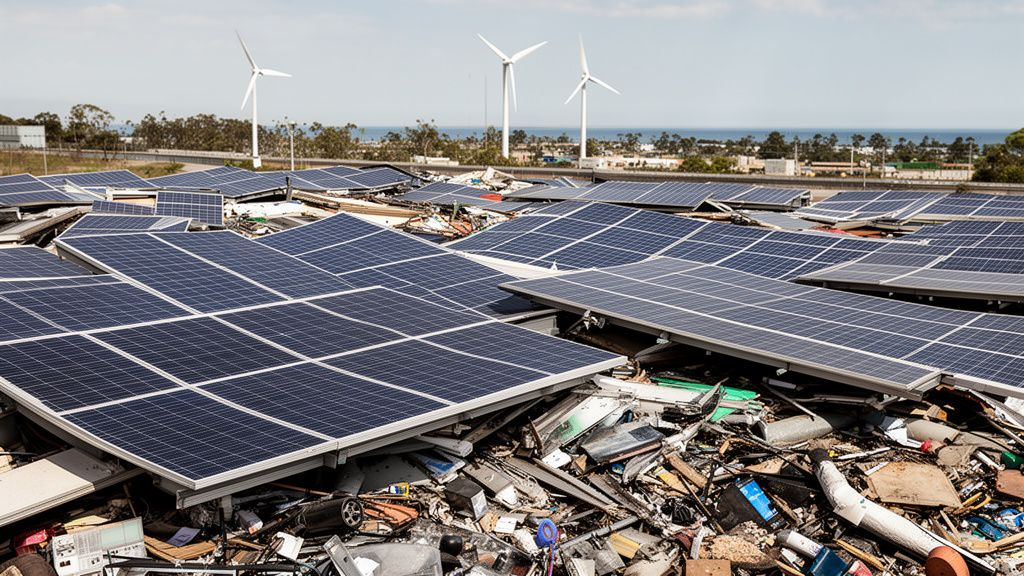
TL;DR: Australia is facing an escalating waste crisis as over 4 million solar panels are discarded into landfills annually. A critical $25 million federal pilot program designed to establish a domestic recycling network has been indefinitely paused due to a tender dispute, leaving the nation without an organized solution to recover valuable metals and prevent toxic materials from leaching into the environment.
The Scale of Australia's Panel Waste
Australia has established itself as a global leader in per-capita solar adoption, with over 4 million homes—one in three households—fitted with rooftop solar. This massive network contributes 28 gigawatts (GW) of capacity to the grid, surpassing the 22 GW generated by all remaining coal-fired power plants. However, this rapid rollout has created a severe end-of-life waste problem.
The solar industry estimates that at least 4 million solar panels are removed from rooftops and commercial solar farms every year. Although high-quality panels are designed to last for more than 25 years before environmental exposure degrades their silicone cells, the average age of panels currently discarded in Australia is only eight years. Homeowners frequently scrap fully functional systems early to upgrade to larger, higher-capacity, and more efficient systems.
Historically, up to 2 million used panels were exported from Australia annually to developing economies for reuse. However, this export market has completely collapsed. Rising global shipping costs combined with the extremely low price of brand-new, Chinese-manufactured panels have made exporting second-hand panels economically unviable, forcing almost all discarded panels directly into local landfills.
The Paused $25 Million Pilot Program
To prevent millions of panels from entering landfills, the federal Albanese government announced a $25 million recycling pilot program in January. This initiative was designed to kick-start a domestic recycling industry, establish approximately 100 dedicated collection points across Australia, and collect and recycle 250,000 panels over a three-year period. The primary environmental goal was to safely recover highly valuable materials embedded in the panels, specifically:


- Copper
- Silver
- Aluminium
Despite the urgent need, the Department of Climate Change, Energy, the Environment and Water (DCCEEW) paused the administrator selection process in May. This indefinite freeze occurred after an industry stakeholder lodged an undisclosed complaint regarding the competitive tender process. While federal Environment Minister Murray Watt has stated that the government remains fully committed to the pilot and is working to appoint an administrator to start the program as soon as possible, the delay remains unresolved.
Environmental Risks and Industry Concerns
The ongoing lack of recycling infrastructure poses a direct threat to the social licence of the renewable energy sector. Solar panels contain hazardous materials, including small quantities of lead and cadmium. When millions of panels are crushed in standard landfills, these heavy metals can leach into the soil, posing a long-term risk of contaminating local water tables. Some states and territories have proactively banned solar panels from landfills, but without a national collection system, enforcement is difficult.
Suzanne Toumbourou, Chief Executive of the Australian Council of Recycling, has expressed deep disappointment regarding the ongoing pause. Toumbourou warned that the lack of clear timelines and collection capabilities means that thousands of panels are being unnecessarily discarded every week, with no clear tracking of where they end up, raising the risk of illegal dumping or illegal export.
Key Takeaways
- Massive Waste Stream: Over 4 million solar panels are discarded annually in Australia, with an average disposal age of just eight years due to early homeowner upgrades.
- Export Collapse: The export of 2 million second-hand panels per year to developing countries has stopped due to high shipping costs and cheap Chinese imports.
- Policy Gridlock: The federal government's $25 million recycling pilot program was paused in May following a tender complaint, leaving the country without a coordinated recycling network.
- Environmental Threat: Discarded panels contain toxic lead and cadmium, which risk leaching into water tables, threatening the green credentials of the solar industry.