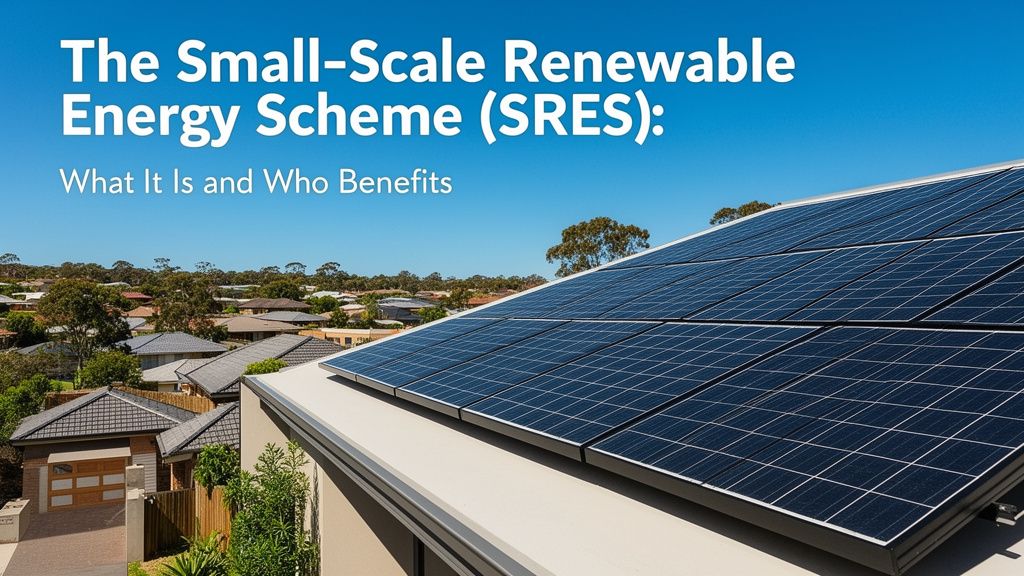
The Small-Scale Renewable Energy Scheme (SRES): What It Is and Who Benefits
For many Australians, the dream of harnessing the sun's power to slash electricity bills and contribute to a cleaner future is a strong one. However, the initial investment in a solar power system can seem daunting. That's where the Small-Scale Renewable Energy Scheme (SRES) steps in – a vital government initiative designed to make solar more accessible and affordable for countless homes and small businesses across the country. But what exactly is SRES, and who stands to benefit most from its provisions? Let's delve into this cornerstone of Australia’s renewable energy policy.
What is the Small-Scale Renewable Energy Scheme (SRES)?
The SRES is a federal government program established under the Renewable Energy Target (RET). Its primary goal is to encourage the uptake of small-scale renewable energy systems by providing a financial incentive. While it primarily focuses on rooftop solar photovoltaic (PV) systems, it also supports the installation of eligible solar water heaters and air source heat pumps. The scheme works by creating a market for Small-Scale Technology Certificates, or STCs.
When an eligible small-scale renewable energy system is installed – say, a new set of solar panels on your roof – it is deemed to generate a certain number of STCs. Each STC represents one megawatt-hour (MWh) of renewable electricity generated or displaced by the system over its accredited lifespan, which is currently set at up to 10 years. These STCs are a tradable commodity, and their value is what ultimately translates into a direct financial benefit for the system owner.
How Do STCs Work? The Financial Benefit
This is where the rubber meets the road for homeowners and small businesses considering solar. You, as the end-user, don't typically engage in the complex process of creating and selling STCs yourself. Instead, your chosen solar installer will handle this for you. They will calculate the number of STCs your system is eligible for, based on its size, location (Australia is divided into four STC zones, each with a different deeming period multiplier), and the deeming period remaining for the scheme.
The financial benefit comes into play when the installer then applies the value of these STCs as an upfront discount on the total cost of your solar system. This means you pay less out of pocket right from the start. For example, a common 6.6kW solar system installed in Sydney (which is in STC Zone 3) would typically be eligible for around 91 STCs over the current 10-year deeming period. If the market value of an STC is, for instance, $38, that translates to a discount of approximately $3,458 off the total purchase price (91 STCs x $38/STC).
This is a significant saving, often reducing the overall cost of a quality 6.6kW system from, say, $7,000-$8,000 down to $3,500-$4,500. The exact discount will fluctuate with the market price of STCs, which can vary daily, but it consistently makes solar power a much more financially viable option for many Australians. This immediate reduction in capital outlay dramatically improves the return on investment and shortens the payback period for your solar installation.
Who Benefits from SRES?
The benefits of the SRES ripple across several key groups:
Homeowners: This is perhaps the most obvious beneficiary. SRES makes installing solar PV systems, solar hot water, and heat pumps significantly more affordable. This upfront discount means lower electricity bills for decades, increased property value, and a tangible contribution to environmental sustainability without breaking the bank.
Small Businesses: Similar to residential properties, small businesses can leverage SRES to reduce their operational costs by installing commercial solar systems up to 100kW. Lower electricity expenses directly improve profit margins and demonstrate a commitment to green practices.
The Environment: By incentivising the widespread adoption of renewable energy, SRES plays a crucial role in reducing Australia's reliance on fossil fuels. This leads to a decrease in greenhouse gas emissions and helps the nation move towards its climate targets, contributing to a cleaner, more sustainable future for everyone.
The Renewable Energy Industry: The scheme drives demand for solar panels, inverters, and associated equipment, stimulating growth and innovation within the Australian renewable energy sector. It supports thousands of jobs for installers, manufacturers, retailers, and consultants, fostering a robust and competitive market.
Eligibility Requirements
To be eligible for SRES and generate STCs, your system must meet several criteria:
System Type and Size: Eligible systems include solar PV systems up to 100kW, solar water heaters, and air source heat pump water heaters. Installer Accreditation: Your solar PV system must be designed and installed by a Clean Energy Council (CEC) accredited professional. This ensures high standards of safety and quality. Component Approval: All major components, such as solar panels and inverters, must be approved by the CEC to ensure they meet Australian standards. Location: The system must be installed at an eligible premises in Australia, typically a residential home or small business.
The Future of SRES
It's important to note that the SRES is a declining scheme. The deeming period for which STCs are generated reduces annually until the scheme phases out completely in 2030. This means that each year, new systems will be eligible for slightly fewer STCs than the year before, progressively reducing the upfront discount. For instance, a system installed in 2024 will be deemed for 6 years, not 10.
This declining nature means that there's a strong incentive to act sooner rather than later if you're considering solar. The greatest financial benefits from the SRES are available now, before the scheme continues to wind down towards its eventual conclusion.
Conclusion
The Small-Scale Renewable Energy Scheme has been instrumental in democratising solar power in Australia, making it a viable and attractive option for millions. By providing a significant upfront discount through the creation and trading of STCs, it effectively lowers the barrier to entry for homeowners and small businesses looking to embrace clean energy. If you've been contemplating solar, understanding the SRES and its benefits is the first step towards a brighter, more sustainable, and more affordable energy future for your household or business. Don't miss the opportunity to maximise these incentives while they're still strong.
Read More
For a comprehensive overview, check out our master guide: Read the Full Guide Here.